House of Savoy
A dynasty that reigned over Savoy, Piedmont, Sardinia and Italy from the 11th century until 1946, and that made Turin its capital from 1563.
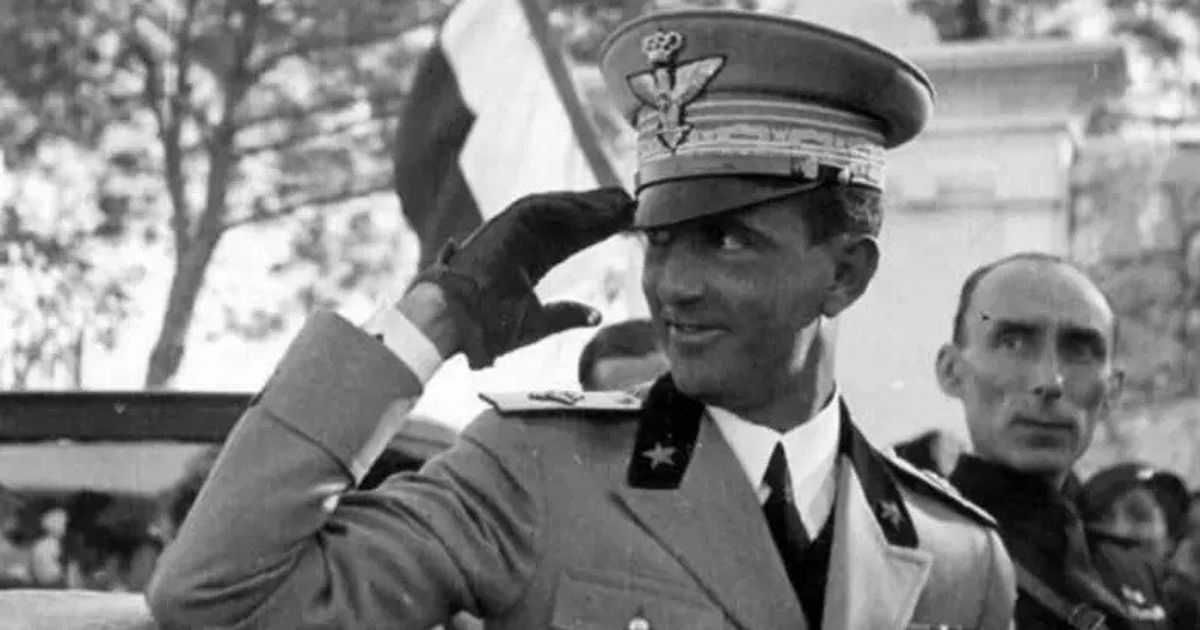
The House of Savoy is the dynasty that for nearly nine centuries governed first an alpine county straddling the western Alps, then the Duchy of Savoy, the Kingdom of Sardinia and finally, from 1861 to 1946, the Kingdom of Italy. For Turin it is the family that made it a capital: from 1563 the city took shape around the court, and the palaces, churches, squares and hunting residences that define its face today are largely the work of Savoy patronage.[1]
From the Alps to Piedmont
The recognized founder of the line is Umberto I, known as Biancamano, who died around 1047-1048 and is remembered as the first Count of Savoy: a feudal lord of the Vienne area who expanded his holdings through imperial grants.[1][2] The turn toward Italy came with his son Oddone, who married Adelaide, heiress to the march of Turin: the marriage brought vast Piedmontese and Ligurian lands on this side of the Alps into the family’s orbit.[1][2]
Between the 13th and 14th centuries, through marriages, purchases and wars, the counts added Vaud, Bresse, Ivrea and Nice. In 1416 Emperor Sigismund granted Amedeo VIII the title of duke.[1]
Turin as capital
For centuries the state’s center of gravity remained beyond the Alps. It was Emanuele Filiberto (1528-1580) who shifted it toward Piedmont.[1] The duke fought in the service of Spain against France, and with the Peace of Cateau-Cambrésis in 1559 he recovered Piedmont; in 1563 he entered Turin, which from then on was the capital of the Savoy states.[3] To the city the duke first gave a fortress, the Cittadella. But the court attracted courtiers, artists, musicians and merchants, and by 1570 Turin already had about 14,000 inhabitants.[3] The vow made at the Battle of San Quintino (1557) to build a church to Saint Lawrence gave rise to the Royal Church of San Lorenzo in piazza Castello.[3]
With the capital came to Turin also the family’s most precious possession, the Shroud. The cloth had probably come into the hands of the Savoys in 1453, when Marguerite de Charny ceded it to Duke Ludovico, and from 1506 it was kept in the chapel of Chambéry Castle. Emanuele Filiberto had it brought to Turin on 9 September 1578, and to venerate it Archbishop Carlo Borromeo made a pilgrimage on foot from Milan.[4] To house it the Savoys commissioned the chapel designed by Guarino Guarini between the Cathedral and the ducal palace.[4]
The crown and the “crown of delights”
The royal title came with Vittorio Amedeo II, who from the War of the Spanish Succession obtained the crown of Sicily in 1713 and had to exchange it for that of Sardinia in 1720.[1] From then on the Savoy sovereigns bore the title of King of Sardinia.[2]
The most visible sign of those centuries is the system of Savoy residences: a “zone of command” in the city center, with the Royal Palace, the Armoury, the State Archive and the offices of government, and around it, arranged like spokes, the “crown of delights” of castles and hunting and leisure villas, from Valentino to Stupinigi, from Moncalieri to Rivoli and La Venaria. In all 22 buildings, eleven in the city and eleven outside it.[5] The project, begun with the transfer of the capital, was carried forward between the 17th and 18th centuries by court architects such as Filippo Juvarra and Benedetto Alfieri; in 1997 UNESCO inscribed the complex on the World Heritage list.[6][5]
Also by Juvarra is the Basilica of Superga, built between 1717 and 1731, in whose crypt lie the tombs of the kings and princes of the House of Savoy from Vittorio Amedeo II to Carlo Alberto; the funerary monuments are the work of Piedmontese, Genoese and Tuscan sculptors, among them Ignazio and Filippo Collino and Santo Varni.[7]
From Piedmont to Italy
In 1831 the throne passed to the cadet branch of Savoy-Carignano with Carlo Alberto, who in 1848 granted the Statuto. His son Vittorio Emanuele II, with the government of Cavour, led unification and in 1861 was proclaimed King of Italy.[1] Turin was the new state’s first capital, but only briefly: in 1864 a convention between Italy and France called for moving the government to Florence. The news set off protests in the city, and the repression of 21 and 22 September, concentrated around piazza San Carlo, left 52 people from Turin dead and 187 wounded.[8]
1946: the end of the monarchy
On 9 May 1946, at the Villa Maria Pia in Naples, Vittorio Emanuele III abdicated in favor of his son Umberto II.[9] The institutional referendum of 2 June gave victory to the Republic by a margin of about two million votes, and on 13 June the king left from Ciampino for Cascais, Portugal, without abdicating.[10] In his proclamation to Italians he wrote:
“[…] not wishing to oppose force to injustice, nor to make myself complicit in the illegality the government has committed, I leave the soil of my country, in the hope of sparing Italians further mourning and further grief.”
The Constitution settled accounts with the dynasty in its 13th transitional provision: “Members and descendants of the House of Savoy are not electors and may not hold public office or elective positions”; former kings, their consorts and male descendants were barred from entering or residing in Italy, and their property on national territory was seized by the State.[11] Umberto II died in exile on 18 March 1983 and in his will left the Shroud to the Pope; the Holy See accepted on 18 October of that same year, and custody remained in Turin, entrusted to the archbishop.[4]
The return and the lawsuits
In 2002 a constitutional law repealed the provision’s first two clauses: the Senate approved it on 15 May, the Chamber of Deputies on 11 July with 347 votes in favor. On 15 March 2003 Vittorio Emanuele, son of Umberto II, and his son Emanuele Filiberto landed in Naples, after 57 years of exile.[12] Vittorio Emanuele died in Geneva on 3 February 2024; the funeral was held on 10 February in Turin Cathedral, after a lying-in-state in the church of Sant’Uberto at the Reggia di Venaria, and burial took place privately in the royal crypt of Superga.[13]
Still unresolved is the matter of the Crown Jewels, tiaras and diamonds that an official of the Royal House deposited with the Bank of Italy on 5 June 1946, with instructions that they be handed over “to whom of right.” On 15 May 2025 the Civil Court of Rome rejected the heirs’ request for their return: according to the judges, those assets “moreover never belonged to King Umberto II, having been the property of the State ever since the time of the Statuto Albertino.”[14]
The parliamentary question on the sale of chivalric honors (September 2026)
In September 2026 the Alleanza Verdi e Sinistra deputy Marco Grimaldi submitted a parliamentary question on the sale of chivalric honors by the Royal House of Savoy during an event in Turin, while in the Piedmont Region the participation of vice president Maurizio Marrone in the same event was criticized.
The parliamentary question on the sale of chivalric honors (September 2026)
Timeline
- — An event at the Lingotto and a gala dinner at the Reggia di Venaria for the awarding of dynastic honors, with donations of up to 30,000 euros, causes a public rift within the House of Savoy between Aimone of Savoy and Emanuele Filiberto. → CronacaQui Torino CronacaQui Torino
Related articles: Basilica di Superga, Marco Grimaldi, Maurizio Marrone, Parliamentary Question on the Sale of Chivalric Orders by the Royal House of Savoy (September 2026), Umberto II, Vittorio Amedeo II
Pages linking here
- 2026 Feast of the Chapel of the Assumption at Castello di Castellamonte
- Agnolotti piemontesi
- Alba
- Alessandria
- Assedio di Torino del 1706
- Asti
- Avigliana
- Barolo (wine)
- Basilica di Maria Ausiliatrice
- Basilica di Superga
- Biella
- Borromean Islands
- Canavese
- Cappella della Sindone
- Carlo Alberto
- Carmagnola
- Casale Monferrato
- Castello di Agliè
- Castello di Moncalieri
- Castello di Rivoli
- Chieri
- Chivasso
- Claviere
- Collegno
- Cuneo
- Emmanuel Philibert
- Filippo Juvarra
- Galleria Sabauda
- Gazzetta del Popolo
- Giuseppe Luigi Lagrange
- Gran Madre di Dio
- Gran Paradiso National Park
- Grissino torinese
- Guarino Guarini
- Ivrea
- Kingdom of Sardinia
- La Venaria Reale
- Lake Maggiore
- Limone Piemonte
- Marco Grimaldi
Sources
- Treccani
- Treccani
- MuseoTorino
- La Voce e il Tempo
- Commissione Nazionale Italiana per l'UNESCO — 24 October 2016
- Piemonte Italia (Regione Piemonte)
- Touring Club Italiano
- CittAgorà – Consiglio comunale di Torino
- AGI — 8 May 2026
- AGI — 10 June 2026
- Voci Costituzionali
- Il Post — 15 March 2023
- Sky TG24 — 4 February 2024
- Il Fatto Quotidiano — 15 May 2025
- TorinoOggi — 28 September 2026
- TorinoToday — 28 September 2026
- Quotidiano Piemontese — 28 September 2026