Camillo Benso di Cavour
Turinese statesman (1810-1861), the political architect of Italian unification and first head of government of the Kingdom, born and died in the family palazzo on via Cavour.
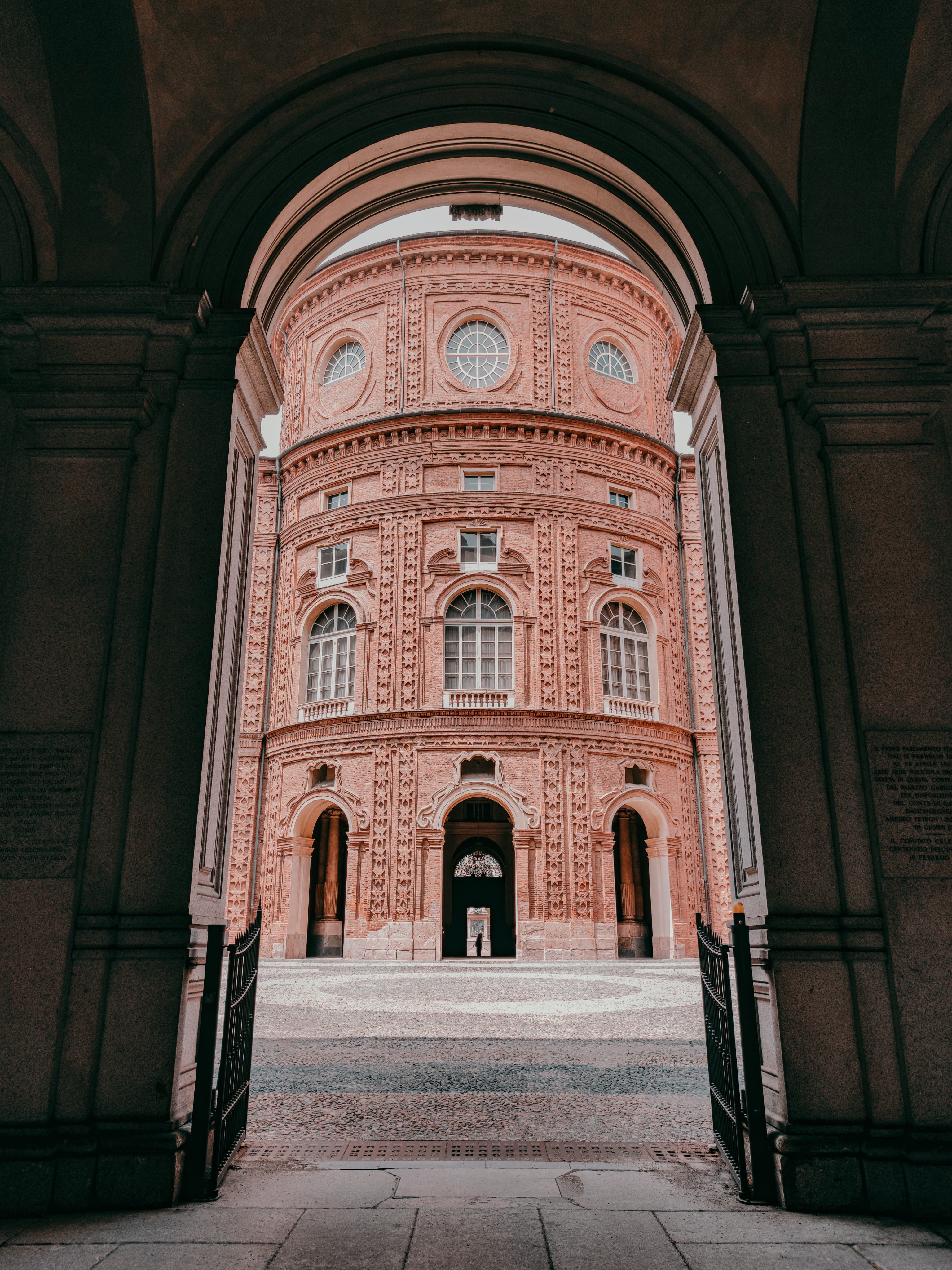
Camillo Benso, Count of Cavour (Turin, 10 August 1810 – Turin, 6 June 1861) was the chief political architect of Italian unification and the first head of government of the Kingdom of Italy[1]. Turinese by birth, he lived and died in the same family palazzo on via Cavour[2], a short distance from Palazzo Carignano, where in 1861 the unity of Italy was proclaimed[3].
Family and education
The second son of the Marquis Michele Benso and of Adèle de Sellon, he grew up in a family of the Piedmontese aristocracy dominated by the figure of his grandmother, the Marchioness Filippina[1]. The family home was the palazzo built in 1729 by his grandfather Michele Antonio, a gentleman at the court of Carlo Emanuele III, to a design by Giovanni Giacomo Plantery, on the corner of today's via Cavour and via Lagrange[2].
In April 1820 he entered the Royal Military Academy and in August 1826 obtained the rank of second lieutenant; as an engineer officer he worked on fortifications in Piedmont, Savoy and on the Riviera[1]. Having left the military career, from 1832 he managed the family estates at Grinzane, near Alba, and from 1835 the Leri estate in the Vercelli area, after a long study trip through France, England and Belgium[1]. He wrote as a "practical man" for the journal of the Associazione Agraria Subalpina, founded in 1842[1].
Journalist and deputy
On 15 December 1847 the first issue of Il Risorgimento appeared, the newspaper of the Turinese moderates of which Cavour was the true driving force[1]; according to MuseoTorino the paper was born in the family palazzo itself, where "the fate of the new Italian homeland" was debated[2]. With the Statute granted by Carlo Alberto in 1848, he was elected in June of that year as deputy for a Turin constituency[1]. The Chamber met at Palazzo Carignano, where the ballroom had been converted into a chamber: it is the only parliamentary chamber from 1848 to survive intact in Europe[3].
He was minister of Agriculture, Commerce and the Navy from October 1850 and of Finance from April 1851[1]. In February 1852 he struck with Urbano Rattazzi the agreement with the centre-left that went down in history as the "connubio"; on 2 November of the same year he became president of the Council of the Kingdom of Sardinia[1].
The diplomacy of unification
In January 1855, having also taken on the Foreign Ministry, he brought Piedmont into the Anglo-French alliance against Russia in the Crimean War; at the Congress of Paris in April 1856 he secured that the question of the Papal States be placed before the European powers[1]. On 20 and 21 July 1858 he met Napoleon III at Plombières, where the alliance against Austria was agreed[1]. After the armistice of Villafranca, in July 1859, he left government; he returned as president of the Council on 20 January 1860, led the annexation of Emilia and Tuscany, sanctioned by plebiscites, and the ceding of Savoy and Nice to France, and, in September 1860, decided on the expedition into the Marche and Umbria, which opened the way to the south conquered by Garibaldi[1].
Turin as capital, and Rome
On 18 February 1861 the Eighth Legislature, the first of the Italian Parliament, opened at Palazzo Carignano, and on 17 March the Kingdom of Italy was proclaimed with Victor Emmanuel II as king[4][3]. A few days later, on 27 March, the Chamber, meeting in Turin, voted for Rome as capital, still in the hands of the Pope, after speeches in which Cavour argued that the Church would be freer without temporal power[5]:
«It remains to persuade the pontiff that the Church can be independent while losing temporal power.»
In those speeches Cavour made his own the formula "a free Church in a free State"[5], which, according to the Dizionario Biografico degli Italiani, he had borrowed from a liberal Catholic[1].
Death and the city's mourning
He fell ill on 29 May 1861. On 5 June he called to his bedside Father Giacomo da Poirino and told him: «Dear friend, we must part. You well know that I am a Catholic and I wish to die a true Catholic»[6]. The friar administered the sacraments without asking him to retract his political positions, for which he was summoned to Rome by Pius IX[6]. Cavour died on 6 June in the palazzo where he had been born, less than three months after the proclamation of the Kingdom; he was not yet 51 years old[7].
Federico Sclopis noted: «The shops closed of their own accord, the theatres closed. I have never seen such marks of respect in Turin»; the funeral on 7 June struck him as «as solemn as that of a king»[6]. Cavour, who never married, was buried in the family chapel of the castle of Santena, built by the Benso family between 1712 and 1720; the tomb has been a national monument since 1911[8].
Cavour's Turin today
The palazzo where he was born, at number 8 via Cavour, bears a plaque on its façade dedicated to the statesman[2]. On piazza Carignano, the Del Cambio restaurant, which opened in 1757 as a café, owes much of its fame to the count's frequent visits, and one of its small rooms is known as the "Cavour room"[9]. The chamber of the Subalpine Parliament is part of the route of the Museo Nazionale del Risorgimento Italiano, housed in Palazzo Carignano since 1938[3].
On piazza Carlo Emanuele II, known as "la Carlina", stands the monument by Giovanni Duprè, chosen through a competition in 1863 among 124 designs and unveiled on 8 November 1873 in the presence of Victor Emmanuel II: a kneeling figure of Italy offers the count a civic crown, while he holds a sheet inscribed "a free Church in a free State"; Turinese nicknamed it the "paperweight"[10]. The castle of Santena, left to the City of Turin under a 1946 codicil to his will, has been linked since 1955 to the Camillo Cavour Foundation and houses the Cavour Memorial[8][7]. His elder brother Gustavo also left his mark on the city: he lived at Palazzo Lascaris, on via Alfieri, today the seat of the regional council of Piedmont[11].
Pages linking here
- Arturo Brachetti
- Bardonecchia
- Barolo (wine)
- Bicerin
- Caffè Fiorio
- Camillo Olivetti
- Carlo Alberto
- Castello del Valentino
- Chivasso
- Cinzano
- House of Savoy
- Kingdom of Sardinia
- Langhe
- Massimo d'Azeglio
- Mole Antonelliana
- Museo Nazionale del Risorgimento Italiano
- Nebbiolo
- Palazzo Carignano
- Parco del Valentino
- Piazza Carlo Emanuele II
- Piazza Castello
- Piemonte
- Residenze sabaude
- Ristorante Del Cambio
- Val di Susa
- Vermouth di Torino
- Victor Emmanuel II
Related articles: Carlo Alberto, Cinzano, Museo Nazionale del Risorgimento Italiano, Palazzo Carignano, Palazzo Reale, Piazza Carlo Emanuele II
Sources
- Treccani – Dizionario Biografico degli Italiani
- MuseoTorino
- Museo Nazionale del Risorgimento Italiano
- Torino Oggi — 16 March 2022
- Globalist — 27 March 2017
- La Voce e il Tempo — 8 June 2021
- La Voce e il Tempo — 6 June 2021
- Fondazione Camillo Cavour Santena
- MuseoTorino
- MuseoTorino
- Consiglio regionale del Piemonte — 14 March 2019