Kingdom of Sardinia
The House of Savoy's state from 1720 to 1861: the title came from the island, but the capital was Turin, where the Statute and the first Italian Parliament were born.
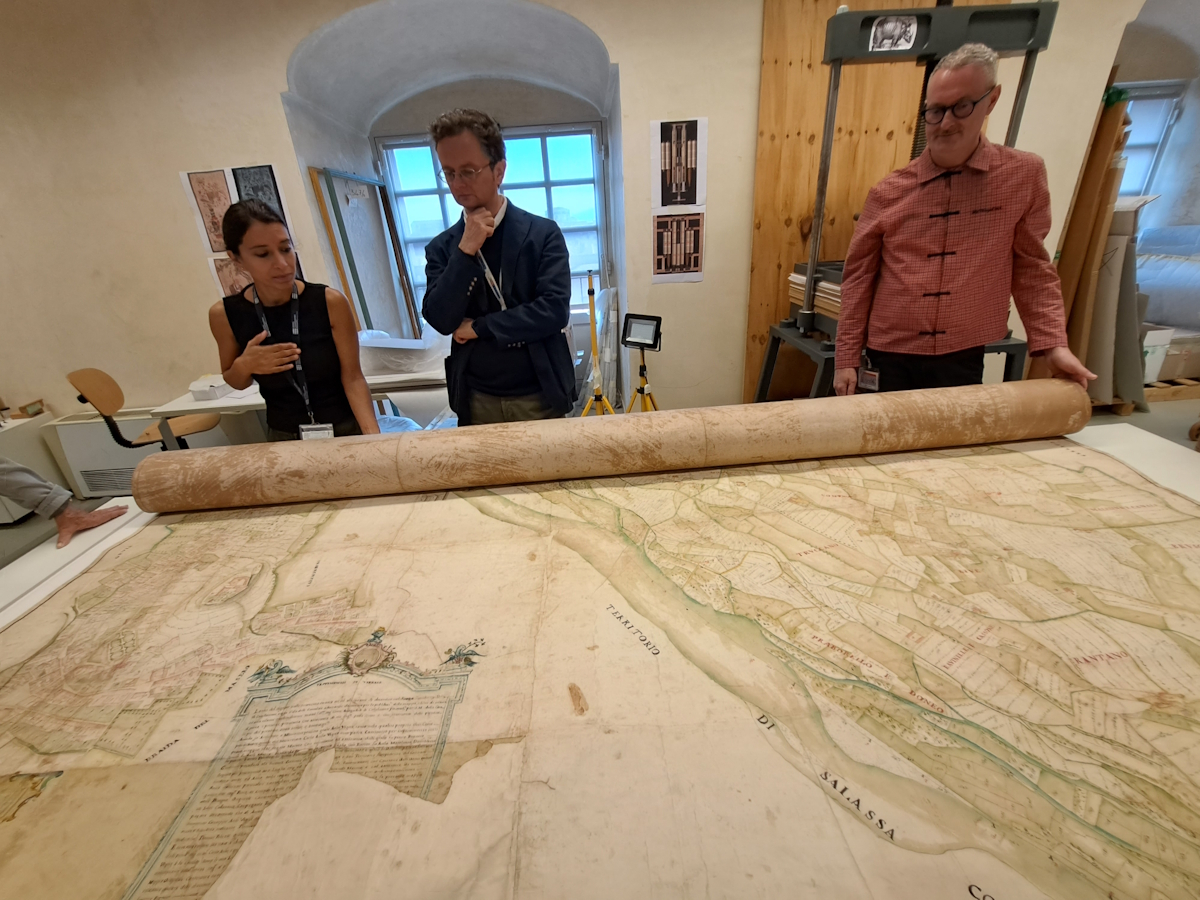
The Kingdom of Sardinia was the state through which the House of Savoy governed, from 1720 to 1861, the island of Sardinia together with its mainland dominions: Piedmont, Savoy, Nice and, after 1815, Liguria. The title came from the island, but the centre of power was in Turin: for this reason, in common usage the name came to denote all the territories under Savoy rule.[1] The kingdom ended in March 1861, when its king was proclaimed King of Italy.[1][2]
From the crown of Sicily to that of Sardinia
The title of King of Sardinia was an old one: it had been created by Federico II for his son Enzo in 1239, and the island later passed for centuries under the Aragonese.[1] The Savoys arrived there by an indirect route. In the War of the Spanish Succession they sided with Austria, and at the end of the conflict Duke Vittorio Amedeo II obtained in 1713 the crown of Sicily and expanded the borders in Italy with Monferrato and other eastern provinces.[2] With the Treaty of Utrecht, Turin also became the capital of an island kingdom, and the dukes were granted the royal title.[3]
Sicily remained with the Savoys for only a few years: the sovereign was forced to give it up in exchange for Sardinia.[2] According to MuseoTorino, the exchange was decided in 1718;[3] the transfer took effect with the Treaty of The Hague of 1720, from which the Savoys took the title of King of Sardinia.[1][2]
The eighteenth century: a royal capital
The new rank showed above all in Turin. On 15 December 1714 Filippo Juvarra was named first royal architect, tasked with renewing the capital's image through architecture, while Vittorio Amedeo II launched deep reforms of the state's institutions.[3] Towards the middle of the century it was the pairing of Carlo Emanuele III and the architect Benedetto Alfieri that redrew the city's profile.[3]
Carlo Emanuele III, king from 1730 to 1773, took part in the wars of the Polish Succession (1733-1738) and the Austrian Succession (1740-1748) and, with the Peace of Aix-la-Chapelle of 1748, pushed the eastern border as far as the Ticino.[1][2]
Revolution, exile and the Restoration
The war against revolutionary France overturned the situation. In 1796 Napoleon's campaign ended with the Armistice of Cherasco and the Peace of Paris, which forced the Savoys to cede territories to France.[1][2] In 1798 the French forced the abdication of Carlo Emanuele IV;[2] on 9 December of that year the French compelled him to leave Turin for exile in Sardinia.[4] The island, thanks to England's naval support, remained under Savoy control.[1]
On the mainland, after the French victory at Marengo on 14 June 1800, Turin returned under Napoleon's control, and on 21 September 1802 Piedmont was annexed to France.[4] With the emperor's fall, the dynasty returned to Turin in 1814.[4] The Congress of Vienna assigned Vittorio Emanuele I the territories of the Republic of Genoa, while part of the original Savoy was lost.[2][1] The constitutional uprisings of March 1821 were suppressed with Austrian intervention.[1]
Carlo Alberto and the Statute
The reign of Carlo Alberto (1831-1849) was a season of reforms. In Sardinia, an edict of 21 May 1836 eliminated feudal jurisdiction and abolished personal obligations, with compensation to the feudal lords borne by the communities and advanced by the State; on 20 June 1837 the civil code was promulgated, a compromise between Napoleonic legislation and Savoy law.[5] In the autumn of 1847 the privileges of forum were abolished, except for the ecclesiastical one, and the elective principle was introduced for administrative offices.[5]
On 4 March 1848 the king signed the Statute at Palazzo Reale,[6] promulgated the following day: two legislative chambers and the Catholic religion as the State's only religion.[5] The text presented itself as the "Statute and Fundamental, Perpetual and Irrevocable Law of the Monarchy" and set out a principle that was new for the king's subjects:[7]
"All subjects of the Kingdom, whatever their title or rank, are equal before the law."
For the Chamber of Deputies, Palazzo Carignano was chosen: the architect Carlo Sada transformed the seventeenth-century elliptical hall into a parliamentary chamber in little more than a month,[8] and on 8 May 1848 the legislative activity of the Subalpine Chamber began there.[6] The First War of Independence ended with the defeat at Novara: on 23 March 1849 Carlo Alberto abdicated in favour of his son.[5]
From Turin to Italy
With Vittorio Emanuele II on the throne and Camillo Benso di Cavour in government, the kingdom modernised and took its place within the European system of alliances.[1] The war of 1859 and the annexations of the following year united most of the peninsula with the kingdom.[1] In 1860, Nice and Savoy, the dynasty's land of origin, were ceded to France.[2]
The chamber of Palazzo Carignano, by then too small for the deputies of the new State, held its last sitting on 28 December 1860.[8] On 18 February 1861 the 8th legislature opened in Turin, the first of the Italian Parliament, and on 17 March 1861 the Kingdom of Italy was proclaimed.[6] The Kingdom of Sardinia thus ceased to exist, and its last king became the first King of Italy.[1]
What remains in Turin
Turin remained the capital for only a few years. In September 1864 news of the transfer to Florence sparked protests in Piazza San Carlo: in the clashes of 21 and 22 September, 52 people from Turin died and 187 were injured.[9] The historian Giorgio Cavallo recalled that the transfer "was not discussed in Parliament, but slipped in deceitfully in a convention between France and Italy."[9]
The chamber of the Subalpine Parliament is the only one from 1848 to survive intact in Europe and is a national monument; it is part of the route of the National Museum of the Italian Risorgimento, housed in the same Palazzo Carignano.[8]
Pages linking here
- Alessandria
- Alessandro Antonelli
- Amedeo Avogadro
- Assedio di Torino del 1706
- Bardonecchia
- Camillo Benso di Cavour
- Carlo Alberto
- Casale Monferrato
- Cesare Lombroso
- Claviere
- Compagnia di San Paolo
- Francesco Gonin
- Giuseppe Benedetto Cottolengo
- Giuseppe Luigi Lagrange
- Gran Madre di Dio
- Grissino torinese
- House of Savoy
- Lake Maggiore
- Limone Piemonte
- Massimo d'Azeglio
- Moncalieri
- Monferrato
- Monte Rosa
- Museo Nazionale del Risorgimento Italiano
- Novara
- Palazzo Carignano
- Piccola Casa della Divina Provvidenza
- Piemonte
- Pinerolo
- Salesian Society of Saint John Bosco
- Stresa
- Stupinigi Hunting Lodge
- Susa
- Torino
- Val di Susa
- Vercelli
- Victor Emmanuel II
- Vittorio Alfieri
- Vittorio Amedeo II
Related articles: Assedio di Torino del 1706, Camillo Benso di Cavour, Carlo Alberto, Emmanuel Philibert, House of Savoy, Vittorio Amedeo II