Novara
Provincial capital of eastern Piedmont, under Savoy rule from 1738: here in 1849 Charles Albert lost the war and the crown, and Antonelli raised the dome of San Gaudenzio.
Novara is a municipality in eastern Piedmont, capital of the province of the same name, built on a rise overlooking the Po Valley at 162 metres above sea level, beside the Agogna stream; in 2020 it had 103,287 inhabitants[1]. A border city between Piedmont and Lombardy, tied for centuries to the fortunes of Milan, it came under Savoy rule only in 1738. For Turin its name chiefly evokes the defeat of 23 March 1849, which ended the First War of Independence and cost Charles Albert his crown; but Novara is also the city of the dome of San Gaudenzio, the work on which Alessandro Antonelli laboured until his death, and the capital of Gorgonzola.
From Novaria to the Lombard League
Ancient Novaria, a city of Augustan Transpadana, had pre-Roman origins, perhaps more Gallic than Ligurian; it became a municipium assigned to the Claudian tribe and stood on the great road that in the late Empire joined Milan to Vercelli, protected by a solid circuit of walls[2]. In the fourth century it became a bishop's seat[1]. After being besieged and destroyed by Maximus, it was rebuilt under Theodosius the Great at the request of Bishop Gaudentius[2].
In the tenth century Novara was the capital of a county, and at the start of the eleventh it constituted itself as a free commune[1]. In 1110 Emperor Henry V inflicted very serious damage on it; in 1167 the city joined the Lombard League against Frederick Barbarossa[2]. After long disputes with neighbouring Vercelli, in the fourteenth century it submitted to the Visconti[1].
Milanese, Spanish, Savoy
From then on Novara followed the fortunes of Milan: first the Torriani, then the Visconti, with the brief interlude of an occupation by Marquess John II of Montferrat in 1356[2]. During the Italian Wars the city was twice a battlefield. In 1500 Ludovico il Moro retook it from the French but lost it again, betrayed by Swiss mercenaries; a few years later it was the Swiss themselves who drove out the French and proclaimed Maximilian, son of Ludovico il Moro, Duke of Milan[2]. In 1538 Novara was raised to a marquisate and granted to Pier Luigi Farnese, before reverting to Spain[2]; in 1714 it passed to Austria[1].
The turning point came with the Treaty of Vienna of 1738: Novara, together with Tortona, was acquired by Charles Emmanuel III, King of Sardinia, and thus entered the state of the House of Savoy governed from Turin[2]. In the Napoleonic era it was the capital of the Agogna department, and in 1814 it returned to the Kingdom of Sardinia[2].
The Battle of 23 March 1849
On 23 March 1849, with war against Austria resumed, the Piedmontese army lined up south of the city. Nominal command belonged to King Charles Albert, but effective command lay with the Polish general Chrzanowski; facing them were the Austrians under Field Marshal Radetzky[2]. The Piedmontese deployed three divisions in the front line and two in reserve along a ridge cut by ditches that made movement difficult; the heart of the battle was the locality of La Bicocca, held by the Austrians, charged in vain by the cavalry, and long contested[2]. After some initial success, the Piedmontese were defeated[3].
The king sent General Fecia di Cossato to ask for an armistice, but the Austrian terms were extremely harsh and the generals declared it impossible to go on fighting: that same evening, in Novara, Charles Albert abdicated in favour of his son Victor Emmanuel II[3][4]. During the night of 23-24 March he left incognito, with a passport made out to the Count of Barge, heading for Vercelli and then France, Spain and Portugal[3]. To Cadorna, who had prepared the passport for him, he said[4]:
«My prayers will always be for the health and happiness of our country. I have faith that better days will come for Italy.»
He reached Oporto on 19 April according to the Dizionario Biografico degli Italiani[3], on the 20th according to the Enciclopedia Italiana[4], and died there on 28 July 1849[3]. The defeat, the same Enciclopedia Italiana notes, «had great importance in the history of the Italian Risorgimento»[2]: it pushed Piedmont towards the military and political reforms that ten years later made possible the new war against Austria[2].
Antonelli and the dome of San Gaudenzio
Alessandro Antonelli, the future architect of the Mole Antonelliana, was born on 14 July 1798 at Ghemme, in the Novara area, and worked in Novara for his whole life[5]. In 1833 he designed the high altar of the cathedral, with the sculptural decoration entrusted to the collaboration of Thorvaldsen; between 1840 and 1845 he built houses on corso Cavour and corso Alberto and Palazzo Avogadro near San Marco; in 1850 he worked on the Ospedale Maggiore and from 1854 rebuilt the cathedral, which had remained unfinished[5]. The present cathedral, redone in 1865-1869, stands beside the octagonal baptistery, probably rebuilt between the tenth and eleventh centuries, with its frescoes of the Apocalypse[1][2].
His major work is the dome of the basilica of San Gaudenzio, which houses paintings by Gaudenzio Ferrari and Morazzone[1]. According to the Dizionario Biografico, work began in 1841 and continued until the architect's death[5]; the Enciclopedia Italiana dates the «very tall dome, adorned with galleries» to between 1844 and 1888[2]. According to the Dizionario Biografico, the dome expresses in dramatic fashion the impossibility of fusing structure and form into a unified image: a gap that is softened, though not entirely overcome, in the Turin Mole[5]. The judgment is harsher on the Broletto, the old town hall, which according to the same encyclopedia was restored to the point of becoming «a notable monument of modern fake Gothic»[2].
Rice, Gorgonzola and industry
In the early twentieth century Novara was a first-rank industrial centre, with large textile and chemical plants and rice mills fed by the intensive rice-growing of the plain[2]. The population rose from about 23,500 inhabitants in 1871 to 55,021 in 1931, and four-fifths of Italy's Gorgonzola production then passed through the city's grain and cheese market[2].
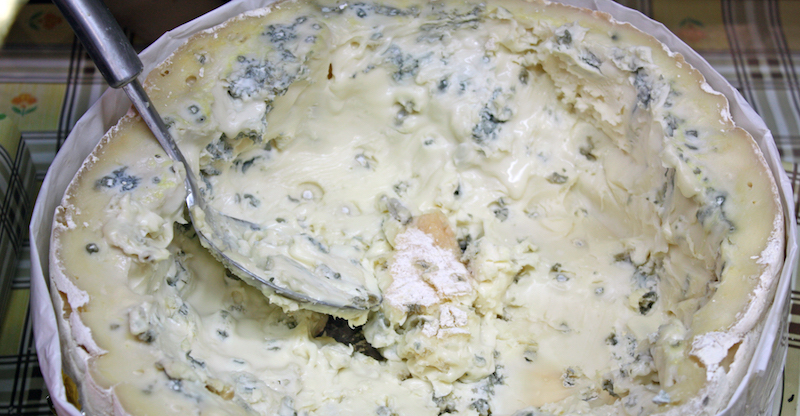
The link with the veined cheese has grown stronger: Gorgonzola, born according to tradition in the village of the same name on the outskirts of Milan, is today produced for the most part in the Novara area, and since 1970 Novara has been home to the Consortium for the Protection of Gorgonzola[6]. In 2019 the Ministry of Health ordered the recall of some batches of sweet Gorgonzola sold under different brands but all produced at a plant in Cameri, in the province of Novara[7]. The province, which in 2020 had 364,980 inhabitants, still lives on textiles, publishing, specialized mechanical engineering and materials chemistry[1].
The city today
In 1998 the University of Eastern Piedmont was established, with campuses in Alessandria, Novara and Vercelli[1], named after the Turin-born physicist Amedeo Avogadro[8]. In June 2011, when Novara Calcio returned to Serie A after 55 years and ten thousand people celebrated in the square until three in the morning, the managing director of Banca Popolare di Novara, Nico De Angelis, put it this way to La Stampa: «The pride of being from Novara is back; without it we are reduced to being a dormitory town for Milan and Turin»[9]. In the same weeks the centre-left, with Andrea Ballarè, won the Municipality after a decade of Lega-led administrations[9].
Timeline
- — Silicon Box will begin construction in spring on its new semiconductor plant in Novara, a 3.2-billion-euro investment expected to create 1,600 jobs. → ANSA Piemonte Quotidiano Piemontese
- — The state police of Novara arrest a 25-year-old for attempted murder, identified as responsible for stabbing a man in the throat under the arcades of piazza Garibaldi on the evening of 10 September, followed by a getaway on a scooter. ANSA Piemonte Quotidiano Piemontese
- — In Novara, the body of an unidentified person is found near the Novara-Vercelli railway line, interrupting traffic on the Milan-Turin line and causing disruption for commuters. → Quotidiano Piemontese CronacaQui Torino
- — Forestry carabinieri confiscate two servals, wild cats whose private keeping is banned by law, from a home in Adro, in the Brescia area, and transfer them to an authorized zoological facility in the Novara area. → ANSA Piemonte Quotidiano Piemontese
- — In Novara a 43-year-old man is arrested aboard a train bound for Naples after robbing and assaulting an elderly couple in the «fake carabiniere» scam, carrying with him gold, cash and a pistol. → Quotidiano Piemontese CronacaQui Torino
Related articles: Alessandro Antonelli, Charles Albert, Gorgonzola (cheese), Mole Antonelliana, Kingdom of Sardinia, Vercelli
Pages that link here
- 387 new PNRR electric buses in Piedmont (September 2026)
- Stabbing in piazza Garibaldi, Novara
- Alessandria
- Alessandro Antonelli
- Arpa Piemonte
- Arrest for attempted murder in Novara (September 2026)
- ATL Terre dell'Alto Piemonte
- Autotorino
- Basilica of Maria Ausiliatrice
- Borgomanero
- Silicon Box construction site in Novara (2026)
- Charles Albert
- Casale Monferrato
- Castle of Moncalieri
- Chieri '76 win on a tie-break at Scandicci on the first day of Serie A1
- Chivasso
- Monumental Cemetery of Turin
- Circolo dei lettori
- Confiscation of two servals in a home in Adro (October 2026)
- Protest against the Fratelli d'Italia stand in Barriera di Milano
- Protests against the Fratelli d'Italia and Futuro Nazionale stands in Barriera di Milano (19 September 2026)
- Corriere di Novara
- Experimenta::::::2001
- Federalberghi Piemonte
- Felice Casorati
- ForzaNovara.net
- Francesco Faà di Bruno
- Foiled theft from a car on corso Novara (October 2026)
- Fratelli d'Italia and Futuro Nazionale stands protested in Barriera di Milano (19 September 2026)
- Giampiero Boniperti
- Gianni Rodari
- Gorgonzola (cheese)
- Igor Gorgonzola Novara
- Independent Book Tour
- Invitalia
- Juventus Women
- La Sesia
- La Voce Novara e Laghi
- Lake Orta
- Lake Maggiore
Sources
- Treccani
- Treccani - Enciclopedia Italiana
- Treccani - Dizionario Biografico degli Italiani
- Treccani - Enciclopedia Italiana
- Treccani - Dizionario Biografico degli Italiani
- Consorzio per la tutela del formaggio Gorgonzola
- Il Post — 7 February 2019
- Università del Piemonte Orientale
- Il Post (da La Stampa, Giuseppe Salvaggiulo) — 14 June 2011