Verbania
A city on the Piedmontese shore of Lake Maggiore, created in 1939 by the merger of Intra and Pallanza, capital of Verbano-Cusio-Ossola since 1992.
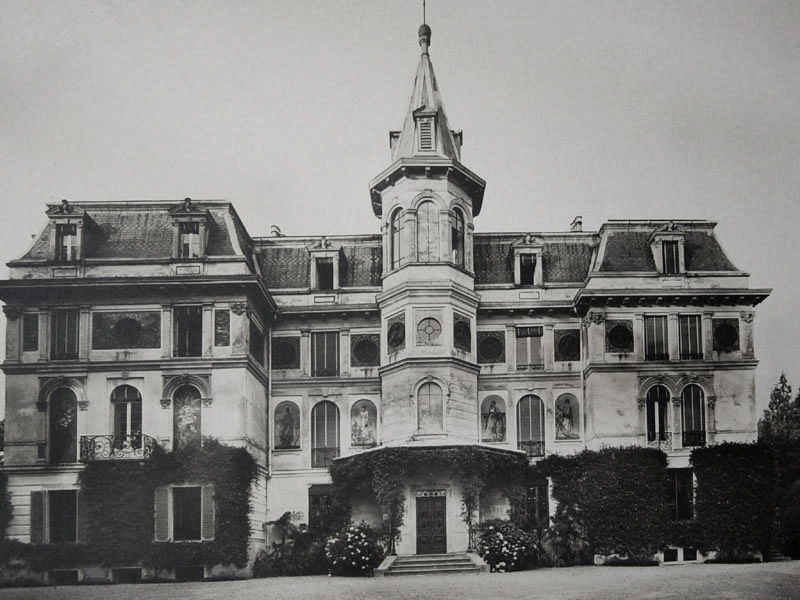
Verbania is a city in Piedmont on the western shore of Lake Maggiore, capital of the province of Verbano-Cusio-Ossola. It has about 30,300 inhabitants (30,293 in 2020) over 37.6 km², and its town hall stands 197 metres above sea level[1]. It is a young city built on two ancient towns: it was created in 1939 by the merger of Intra and Pallanza, two centres separated by the Castagnola headland and by centuries of rivalry, one industrial and the other given to tourism and administration[1][2].
Two medieval towns
The first mention of a castrum on the Isolino facing Pallanza dates to 999[2]. In the early Middle Ages the Intra valley was dependent on royal monasteries of Pavia and Arona; the parish of San Vittore appears in documents from 916, and lordship later passed to the Counts of Castello, recognised by the Empire in 1152[3]. In the 13th century the commune of Novara bought the rights to the area and in 1270 founded and fortified the town of Sant'Ambrogio, populating it with people from the valley to counterbalance Pallanza[3][2]. In the 14th century the territory came under the Visconti; from 1466 Intra and Trobaso were a fief of the Borromeo family, while Pallanza kept its status as a royal borough[2].
Intra looked mainly to Milan: in the 18th century its merchants controlled almost the whole wine trade on the Milanese market and much of the timber trade, and the town had been working glass since the Middle Ages[3].
The "Manchester of Verbano" and the lake of grand hotels
The Napoleonic Simplon road, opened in 1806, changed the fate of the two shores of the Castagnola[2]. In 1808 Intra saw the first mechanised cotton mill in Italy, followed by engineering works, glassworks and paper mills: the town earned the nickname "Manchester of Verbano"[2]. In 1927 it counted 349 businesses with 5,667 workers, mostly in cotton mills, hat factories and engineering workshops[3].
Pallanza took a different path: from the second half of the 19th century it became one of the leading holiday resorts of northern Italy, with hotels and villas lined up along the shore and a speciality in nurseries of exotic plants[2][4]. Industry arrived here too, however: rayon, cotton and jute factories were built on the alluvial plain of the San Bernardino stream[4]. In 1927 the municipality absorbed Suna and Cavandone, and by 1931 it had 8,707 inhabitants[4].
The 1939 merger
By royal decree of 4 April 1939, Intra and Pallanza were united into a single municipality, named Verbania[2]. The plan called for the intermediate strip, where the Rhodiatoce plant had been built, to become the city's new administrative centre; after the war that space was instead filled with residential neighbourhoods, and the urban-planning scheme was never carried out[2]. Over the 20th century the municipality also came to include Arizzano Inferiore, Trobaso, Unchio and Zoverallo, together with Cavandone and Suna already joined to Pallanza: the result was a polycentric city, which it has remained[2].
The Fondotoce massacre
On 20 June 1944, forty-six partisans captured in the preceding days during the round-up of Val Grande were tortured and marched in a column from Intra to Fondotoce, by the channel linking Lake Mergozzo to Lake Maggiore[5]. Three were spared at the last moment, forty-three were shot. Only one, Carlo Suzzi, survived and went back to fighting under the nom de guerre "Quarantatré" (Forty-three)[5]. On the site of the massacre now stand the "Parco della Memoria e della Pace" memorial and the Casa della Resistenza[5], based in via Filippo Turati, which runs a library, including a digital one, and a documentation centre with a photographic archive and archival collections[6].
Gardens, churches and museums
In 1931 the Scottish captain Neil McEacharn bought a villa with a garden in Pallanza and turned it, in works completed in 1940, into an English-style botanical garden; he named it Villa Taranto in memory of an ancestor, Marshal Macdonald, made Duke of Taranto by Napoleon, and donated it to the Italian State[7]. The gardens have been open to the public since 1952 and hold about a thousand non-native plants and twenty thousand varieties and species; visitors number more than 150,000 a year[7]. The founder, who died on 18 April 1964 and is buried in a chapel inside the park, summed up his idea this way:
"A beautiful garden need not be large, but it must be the realisation of your dream, even if it is only a couple of square metres and sits on a balcony."
In 1909 Antonio Massara founded the Museo del Paesaggio in Pallanza, today housed in the 18th-century Palazzo Viani Dugnani on via Ruga: it was not meant to collect natural views but, in the founder's own words, "the intimate and deep aspect, continually changing under the imprint of human life, of the visible scene of the world"[8]. It holds the plaster-cast collection of the sculptor Paolo Troubetzkoy (1866-1938), including a nearly three-metre sketch for a monument to Garibaldi, a picture gallery with works by Daniele Ranzoni, Carlo Fornara and Arnaldo Ferraguti, and a large group of sculptures by Arturo Martini[8].
Among the churches, Madonna di Campagna in Pallanza is a three-nave Renaissance building from the first half of the 16th century, attributed to Giovanni Beretta da Brissago, with frescoes by Bernardino Lanino and his workshop, by Carlo Urbino and Aurelio Luini, and a wooden choir from 1582[9]. In Intra, the basilica of San Vittore, mentioned in a parchment of 1031, was rebuilt in works lasting more than two centuries and inaugurated on 8 September 1889; its 19th-century bell tower holds eight bells from the Mazzola foundry of Valduggia[10].
The lake, the theatre, the city today
The economy still rests on industry, from man-made textile fibres to paper and food, alongside a substantial tourism sector[1]. In 1992 Verbania became the capital of the new province of Verbano-Cusio-Ossola, which has 74 municipalities and about 156,000 inhabitants and traditionally has three historic reference centres: Verbania, Omegna and Domodossola[11]. In June 2016, at the point where the San Bernardino stream flows into the lake, the events centre Il Maggiore opened, designed by a team led by the Madrid architect Salvador Pérez Arroyo: four volumes clad in titanium like river pebbles, a 560-seat hall, a 120-seat one and an outdoor arena for up to 2,000 spectators[12].
The relationship with the lake also has its downside: on 12 November 2014, after days of rain, Lake Maggiore overflowed its banks and water flooded the lakeside promenade as far as Pallanza's town hall[13]. The cultural tie with Turin, by contrast, runs through joint initiatives: in June 2023, for example, piazza Garibaldi in Pallanza hosted a day of talks by Il Post, organised with the municipality and with Turin's Circolo dei lettori[14].
Pages linking here
- Autotorino
- Borromean Islands
- Intesa Sanpaolo Skyscraper
- Lake Maggiore
- Lake Orta
- Macugnaga
- Ossola 24
- OssolaNews.it
- Police raid in Verbania after the Fondotoce assault
- RuparPiemonte
- Stresa
- Suicide of an inmate at Ivrea prison (September 2026)
Related articles: Lake Maggiore, Lake Orta
Timeline
- — In Verbania, police and the Guardia di Finanza carry out overnight searches of the homes of eight people suspected of a violent assault on 5 August near a venue in Fondotoce, which had injured five people, seizing improvised weapons, ammunition and more than 20 grams of hashish and marijuana. → CronacaQui Torino
Sources
- Treccani
- ViviVerbania - Comune di Verbania
- Treccani
- Treccani
- Casa della Resistenza
- Casa della Resistenza
- Fondazione Giardini Botanici Villa Taranto
- ViviVerbania - Comune di Verbania
- ViviVerbania - Comune di Verbania
- ViviVerbania - Comune di Verbania
- Treccani
- ViviVerbania - Comune di Verbania
- Il Post — 13 November 2014
- Il Post — 11 May 2023