Umberto II
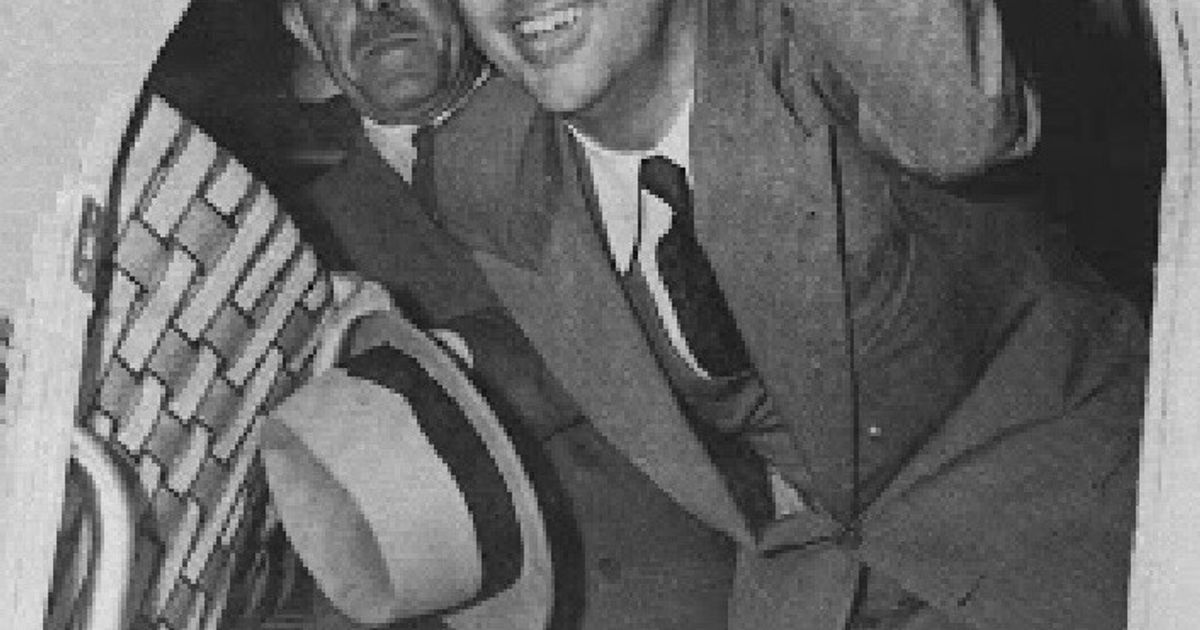
Umberto II of Savoy (Racconigi, 15 September 1904 – Geneva, 18 March 1983) was the last king of Italy. The son of Vittorio Emanuele III and Elena of Montenegro, he reigned from 9 May to June 1946, a few weeks that earned him the nickname «the May King»[1][2]. Born at a Piedmontese residence of the dynasty and, as a young officer, a resident of the Palazzo Reale in Turin, he remains linked to the city also through his will, which left the Shroud to the Holy See and the historical archive of the House of Savoy to the State, destined for the Turin State Archives[2].
Racconigi and his upbringing
The prince was born in Racconigi, in the Cuneo area[1], site of the castle that once belonged to the marquesses of Saluzzo, rebuilt in the seventeenth century to designs by Guarino Guarini and remodeled in neoclassical form at the behest of Carlo Alberto starting in 1834[3]. As heir to the throne he received a rigorous education, in keeping with dynastic tradition, entrusted to private tutors under the guidance of Admiral Attilio Bonaldi; in 1919 he entered the Military College in Rome and in 1925 completed his studies at the Military Academy[1].
The young officer at Palazzo Reale
Sent to Turin as a lieutenant in the 91st regiment of the Basilicata brigade, he took up residence in a wing of the Palazzo Reale, which he had modernized to suit the tastes of the time[1]. During these same years, preparations were underway for his marriage to Princess Maria José of Belgium, daughter of King Albert I. On 24 October 1929 in Brussels, during a ceremony connected to the engagement, the antifascist Fernando De Rosa broke through the cordon of troops and fired a pistol shot at him that missed; the trial before the Brussels assize court concluded in 1930 with a five-year sentence[4]. The wedding was celebrated in Rome on 8 January 1930[1][2].
The marriage had a Turin echo: on that occasion, in 1931, the Shroud was exhibited to the public, and the prince saw it again at the 1933 exposition, held for the extraordinary Holy Year. He was the last Savoy to witness an exposition of the cloth, which at the time still belonged to the family[5].
General, marshal, lieutenant general
Promoted to general in 1931, he was transferred to Naples, where he remained until 1935; in 1942 he attained the rank of marshal of Italy[1]. When Italy entered the war in June 1940, he was given command of the armies deployed along the French border, at a moment when the French army was already close to collapse[1]. During the crisis of 25 July 1943, which led to Mussolini's downfall, he played no active role; after the armistice of 8 September he followed the court in its move to Brindisi[1].
On 5 June 1944, the day after the liberation of Rome, his father transferred his powers to him with the title of lieutenant general of the Realm, a post created for the occasion[2][6]. In this capacity, on 18 March 1946 he signed the decree setting 2 June as the date for the elections to the Constituent Assembly and the referendum on the form of the State[1].
The May King
Vittorio Emanuele III abdicated on 9 May 1946 and Umberto ascended the throne[6]. The referendum of 2–3 June gave victory to the republic by a margin of roughly two million votes; on 10 June the Court of Cassation read out the provisional results and postponed the final proclamation and the examination of appeals until 18 June, while on 11 June in Naples, on Via Medina, clashes between monarchists and republicans left nine dead and 120 wounded[7]. During these days of transition, on 5 June, the so-called Crown Jewels were deposited with the Bank of Italy. Governor Luigi Einaudi noted in his diary the conversation he had with the sovereign[8]:
«The King receives me as usual, perhaps a little more serious, and informs me that, as a consequence of events, he wishes that the so-called Crown Jewels not pass immediately into the hands of a commissioner (…) He wishes them to be deposited with the Bank of Italy, to be handed over later to whoever is entitled to them»
In May 2025 the Civil Court of Rome ruled that those jewels belong to the State and not to the heirs of the family[8].
At dawn on 13 June 1946 the Council of Ministers provisionally assigned the functions of head of state to President Alcide De Gasperi. Umberto responded with a proclamation accusing the government of having «carried out a revolutionary act, unilaterally and arbitrarily assuming powers that do not belong to it», and announced his departure: «I am leaving the soil of my country, in the hope of sparing Italians further grief and sorrow»[7]. That afternoon he took off from Ciampino aboard a Savoia-Marchetti bound for Portugal[7].
Exile in Cascais
He settled in Cascais, near Lisbon, with the title of Count of Sarre[2]. From 1947 he lived apart from his wife[1]. The republican Constitution, in its thirteenth transitional and final provision, established that «the former kings of the House of Savoy, their consorts and their male descendants are forbidden to enter or reside in national territory» and confiscated their assets in Italy for the State[9]. Umberto wished to die in his homeland, but the rule was not changed in time[1]: he died in a clinic in Geneva on 18 March 1983[1]. The effects of the first two clauses were lifted only by a constitutional law published in the Official Gazette on 15 July 2002, which allowed his descendants to return[10].
The Shroud, the archive, and the tomb
In his will of 27 March 1981, Umberto decreed that, after his death, ownership of the Shroud should pass to the Holy See; the Church accepted the bequest on 18 October 1983, and the Cardinal Secretary of State gave formal notice of it on the following 14 November[5]. The cloth has remained in Turin, kept in the Cathedral[2]. To the State, instead, he left the historical archive of the dynasty, on condition that it be kept in the Turin State Archives[2].
He does not rest among the sovereigns buried in the Basilica of Superga: his tomb is in the abbey of Hautecombe, in French Savoy, where counts and dukes of the dynasty are also buried, and where Maria José lies beside him[11][10]. For his son Vittorio Emanuele, who died in Geneva on 3 February 2024, a funeral was instead held in Turin Cathedral, with burial, in a private ceremony, in the royal crypt of Superga[12]. On the throne, before him, he had been preceded by his great-grandfather Vittorio Emanuele II and his grandfather Umberto I.
Pages linking here
- Bicerin
- Cappella della Sindone
- House of Savoy
- Racconigi Castle
- Sauze d'Oulx
- Shroud of Turin
- Stadio Filadelfia
- Turin Cathedral
- Umberto I
- Val di Susa
Related articles: Basilica di Superga, Carlo Alberto, Guarino Guarini, House of Savoy, Turin Cathedral, Vittorio Amedeo II
Sources
- Treccani – Dizionario Biografico degli Italiani
- Treccani – Enciclopedia on line
- Treccani – Enciclopedia on line
- Treccani – Dizionario Biografico degli Italiani
- La Voce e il Tempo
- Treccani – Dizionario di Storia
- AGI — 10 June 2026
- Il Fatto Quotidiano — 15 May 2025
- Voci Costituzionali
- Il Post — 15 March 2023
- Il Mattino — 4 February 2024
- Sky TG24 — 4 February 2024