Castello di Moncalieri
A Savoy residence on the hill of Moncalieri, home to Victor Emmanuel II and the site of the 1849 Proclamation; a UNESCO World Heritage site since 1997 and home to the Carabinieri.
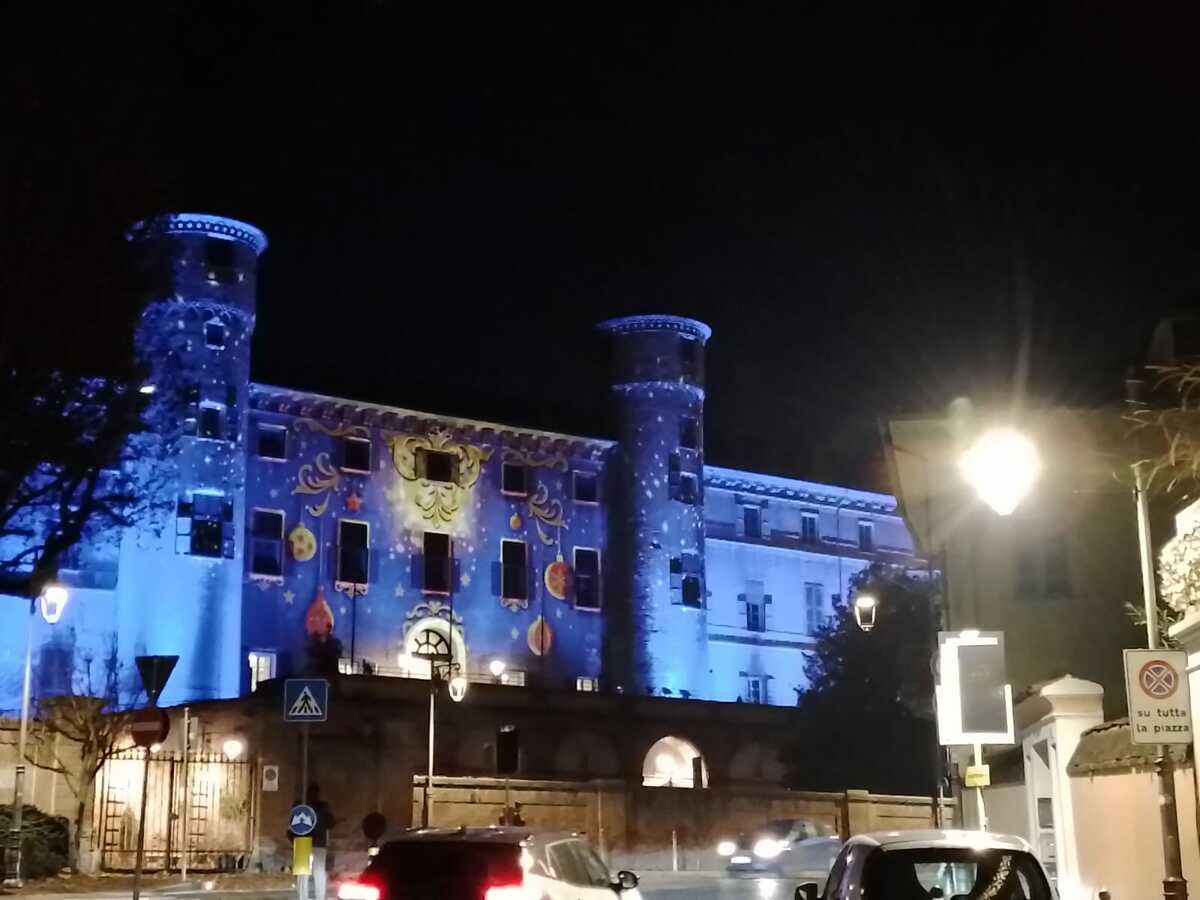
The Castello di Moncalieri (Moncalieri Castle) is a Savoy residence that looks down from its hilltop over the historic centre of Moncalieri, a few kilometres south of Turin. Built as a medieval fortress on the road to the Po and transformed in the seventeenth century into a court palace, it was the favourite home of Victor Emmanuel II until the Unification of Italy, and the place from which the king signed the 1849 Proclamation of Moncalieri. Since 1997 it has formed part of the Residences of the Royal House of Savoy inscribed on the UNESCO World Heritage List[1]. Today it is shared between the Carabinieri corps, which is based there, and the Ministry of Culture, which manages the royal apartments[2].
From fortress to residence
According to the account published by the castle itself, the first stone was laid in 1277 on the orders of Thomas III of Savoy, known as Tommasino[2]; the 1934 Enciclopedia Italiana instead attributes the fifteenth-century building to Amadeus IX and Yolande of France, who are said to have built it on the ruins of an older castle[3]. Yolande of Valois chose it as her own residence in the mid-fifteenth century[4], and in 1475 signed a treaty there with Charles the Bold, Duke of Burgundy, and Galeazzo Maria Sforza, Duke of Milan[2].
Its transformation into a palace began in 1610 under Charles Emmanuel I, who turned the stronghold into a residence with a "French-style" plan, with corner pavilions[4]. The work continued for about sixty years under Victor Amadeus I and above all under the regent Christine of France, the first "Madama Reale", directed by Amedeo di Castellamonte, Andrea Costaguta and Carlo Morello: it was then that the castle took on the layout it still has today[2]. In the eighteenth century Benedetto Alfieri and Francesco Martinez carried out further embellishments[4]; according to Treccani, the chapel is also owed to Martinez[3].
A king's prison, a refuge for the House of Savoy
In 1730 Victor Amadeus II, the first member of the House of Savoy to hold the title of king, abdicated in favour of his son Charles Emmanuel III; the following year he settled at Moncalieri and asked for the abdication to be revoked, and his son had him arrested. He died in captivity in 1732[5].
At the end of the eighteenth century French troops occupied the castle, using it first as a bivouac and then as a hospital[2]. In 1817 Victor Emmanuel I began its restoration, adding the monumental three-flight staircase in Carrara marble and the riding hall[4]. The king's daughter, Maria Christina, also stayed there from 1821 to 1824, before becoming queen of the Two Sicilies[6].
The castle of Victor Emmanuel II
Victor Emmanuel II, born in Turin in 1820, spent his childhood and youth at the castle under the guidance of the abbot Andrea Chavaz, and lived there by preference until the Unification[6]. With his wife Adelaide of Austria, whom he married in 1842 at the Stupinigi hunting lodge, he renovated and furnished the two apartments in the taste of the day; in the grounds the Roccolo Tower and a large cistern on the parade ground were built, and the eighteenth-century nymphaeum was enlarged[2]. The interiors were redone in eclectic style by the architect Domenico Ferri, with contributions from craftsmen such as the cabinetmaker Gabriele Capello[4]. The queen, a keen botanist, tended the Rose Garden herself[6].
After the defeat at Novara and a clash with a Chamber of Deputies opposed to ratifying peace with Austria, on 20 November 1849 the king signed at the castle the Proclamation of Moncalieri, countersigned by Massimo d'Azeglio, dissolving the Chamber of Deputies[4] and inviting voters to choose a moderate majority. For Treccani, by making that choice rather than a coup d'état, the king ended up saving the Constitution[7].
The "Saint of Moncalieri"
The last members of the House of Savoy to live in the castle were Maria Clotilde, eldest daughter of Victor Emmanuel II, and her daughter Maria Letizia Bonaparte[2]. Married in 1859 to Prince Napoléon Joseph Charles Paul Bonaparte, a cousin of Napoleon III, Maria Clotilde returned to Italy after the fall of the Second Empire and lived at Moncalieri for thirty-three years, from 1878 until her death on 25 June 1911, as a Dominican tertiary: popular memory remembers her as the "Saint of Moncalieri". She is buried at Superga[6].
Carabinieri, fire and restoration
In 1934 the castle housed the military college for officer cadets[3]; during the Second World War it again became a hospital[2]. Since 1945 it has been home to a Carabinieri cadet battalion, from 1967 the 1st Carabinieri Battalion, which became the "Piemonte" battalion, and from 2014 the 1st Carabinieri Regiment "Piemonte". In 1991 the royal apartments and the chapel were opened to the public for the first time[4].
At dawn on 5 April 2008 a fire broke out in the south-east tower, where the Soprintendenza had works under way: the roof collapsed and the flames spread down to the royal apartments on the second floor, including the room of the Proclamation. About thirty fire brigade teams worked on the blaze; no one was hurt[8]. The rooms of Maria Adelaide and Victor Emmanuel, the mirror room and the wardrobe room were also nearly destroyed; investigations never conclusively established the cause of the fire[9]. The mayor at the time, Angelo Ferrero, called it[8]:
"An inestimable loss, a disaster for humanity"
Today
After restoration carried out by the Ministry's architects with the support of the Compagnia di San Paolo, the castle reopened on 10 November 2017, with visits from 11 November to the apartments of Princesses Maria Letizia and Maria Clotilde, to the royal chapel and to the apartment of Victor Emmanuel II[10]. The mayor, Paolo Montagna, remarked: "We are reclaiming a piece of history, but also of the future"[9]. After a further closure, the apartments reopened on 3 July 2020 thanks to an agreement between the Carabinieri, the regional Museums Directorate, the Consortium of the Savoy Royal Residences and the municipality[11]. In 2023-2024, with Art Bonus donations from the Amici del Real Castello e del Parco di Moncalieri association, from another cultural association and from private donors, with co-financing from the Ministry, a fireplace set with chinoiserie and the screen from the queen's bedroom, damaged in the 2008 fire, were restored[12]. The Rose Garden belongs to the Ministry but is entrusted to the municipality of Moncalieri, which also owns the large park behind the castle[2].
Pages linking here
- Castello del Valentino
- Castello di Agliè
- Castello di Rivoli
- House of Savoy
- Massimo d'Azeglio
- Moncalieri
- Residenze sabaude
- Victor Emmanuel II
Related articles: Massimo d'Azeglio, Moncalieri, Residenze sabaude, Victor Emmanuel II
Sources
- UNESCO World Heritage Centre
- Castello di Moncalieri (sito ufficiale)
- Treccani – Enciclopedia Italiana —
- Direzione regionale Musei nazionali Piemonte
- Treccani
- Castello di Moncalieri (sito ufficiale)
- Treccani – Dizionario di Storia
- Quotidiano Nazionale — 5 April 2008
- Torino Oggi — 5 April 2022
- Direzione regionale Musei nazionali Piemonte — 4 November 2017
- Teatrionline — 2 July 2020
- Ministero della Cultura – Art Bonus