Biblioteca civica centrale
Turin's new public library, being set up in the redeveloped Torino Esposizioni spaces in Valentino park, due to open to the public on 11 December 2026.
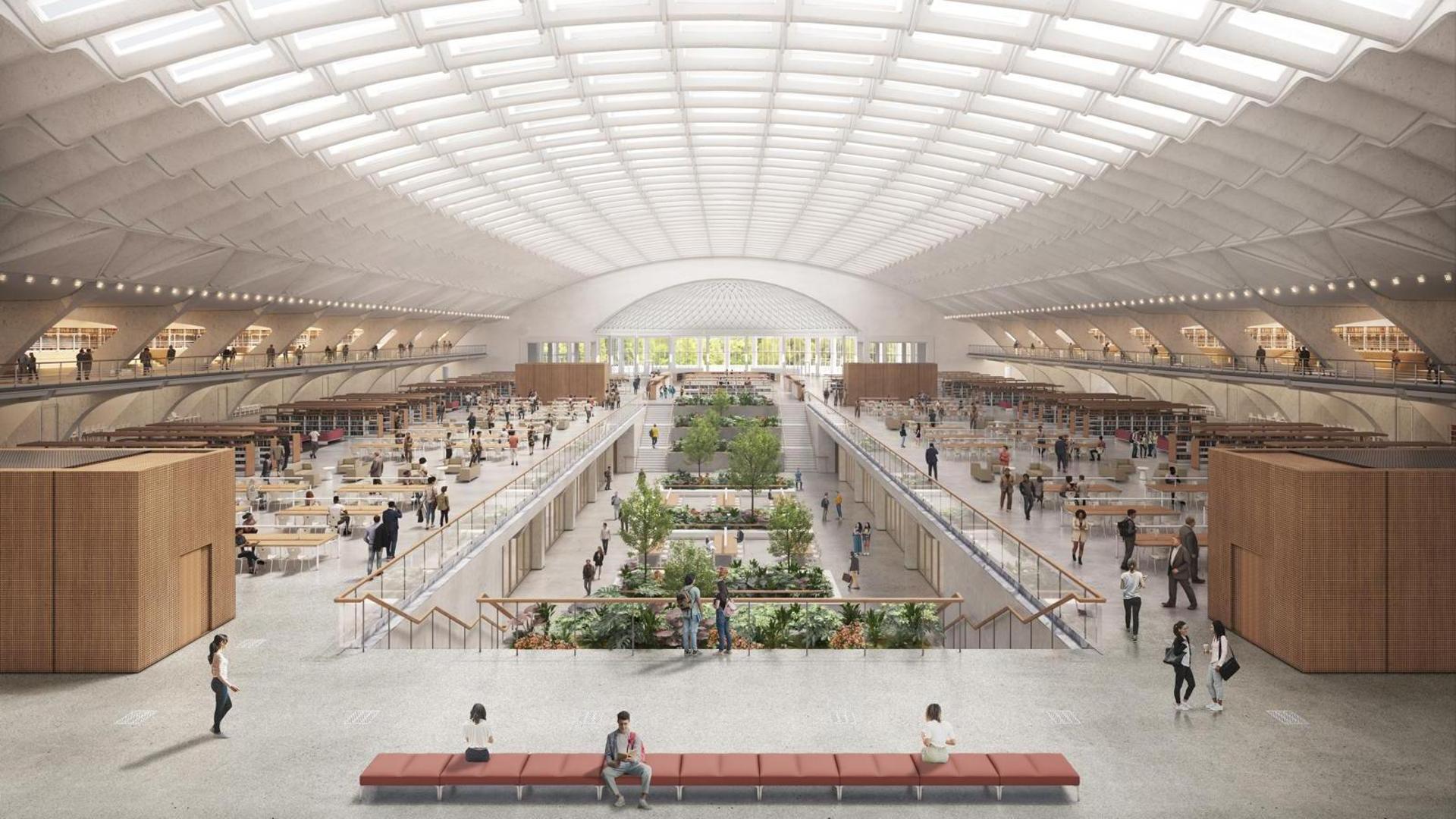
The Biblioteca civica centrale is Turin's new public library, under construction in the redeveloped spaces of the former Torino Esposizioni, in Valentino park. It is the heart of the VALE project, the distributed cultural hub announced on 16 September 2026 that links the park, the Teatro Nuovo, the Borgo Medievale, the Botanical Garden, the new campus of the Politecnico di Torino and the university spaces on corso Massimo d'Azeglio [1][2].
Opening and programme
The library will open to the public on 11 December 2026 [1]. Ahead of the inauguration, from 5 November 2026 the first events linked to the VALE project are scheduled, hosted in other symbolic sites of the city's culture, while the hub's full programme will get under way at the start of 2027 [1][2]. The events can be found on the dedicated website, www.valetorino.it [2].
The VALE project
The new Biblioteca civica centrale is presented as the central element of the VALE system, an acronym for Valentino, which networks the park, the Teatro Nuovo, the Borgo Medievale, the new Politecnico campus (also planned in the pavilions of the former Torino Esposizioni), the Botanical Garden and the University's spaces on corso Massimo d'Azeglio [2][3]. According to Turin's mayor Stefano Lo Russo, the project represents "one of the largest urban projects in Turin's recent history", able to bring together culture, university, research, training, nature and public space [2].
Funding
The Fondazione CRT contributed to building the library's new premises, stepping in with an investment of 7 million euros for work linked to the transformation of Valentino park and the construction of the new premises [2]. The chair of Fondazione CRT, Anna Maria Poggi, stated that the initiative represents "an investment in knowledge, in accessibility and in the city's future" [2]. As part of the same overall project, the Compagnia di San Paolo foundation is engaged in a public-private partnership agreement for the enhancement and management of the Borgo Medievale, with an investment of 24 million euros plus around 2 million euros a year for management, in partnership with the company XKE SI [2].
The opening on 11 December 2026
Mayor Stefano Lo Russo announced 11 December 2026 as the day the new Biblioteca civica centrale opens to the public, in the renovated Torino Esposizioni complex. The library is conceived in dialogue with the rest of Valentino park: the Teatro Nuovo, the Borgo Medievale, the Politecnico campus planned in the same pavilions, the Botanical Garden and the University's spaces on corso Massimo d'Azeglio.
The new hub's first cultural events are scheduled from November in other places around the city, while programming inside the library itself begins in January. The overall project, called «Vale», is backed by the Fondazione Compagnia di San Paolo and the Fondazione CRT.
The Vale project at the Valentino
Turin's new Biblioteca Civica Centrale will open to the public on 11 December 2026 and is the hub of the wider "Vale" cultural centre (short for Valentino), which will bring together Parco del Valentino, the Teatro Nuovo, the Borgo Medievale, the new Politecnico campus, the Botanical Garden and the university spaces on corso Massimo d'Azeglio.1
The project's overall value exceeds 200 million euros: the Compagnia di San Paolo has allocated more than 24 million euros to restoring the Borgo Medievale, while the Fondazione Crt has invested a further 7 million there, adding to the 32 million already allotted earlier for the city; the building's conversion project is signed by the engineering firm Icis and by the Isolarchitetti studio of Turin and Rafael Moneo of Madrid. Cultural activities are entrusted to Maurizia Rebola, previously director of the Circolo dei Lettori and, at the time of her appointment, head of the Ogr.1
While awaiting the opening, an "off" calendar titled "La Biblioteca Immaginaria" offers meetings between November and December with Chiara Valerio, Boosta and Matteo Caccia, and Paolo Giordano; the following spring the new hub will also host the tenth edition of Biennale Democrazia and events of the Torino Jazz Festival, Salone del Libro, MiTo and the Giornate della Legalità.2
Opening and funding of the new hub (2026)
The new Biblioteca civica centrale opens to the public on 11 December 2026, as part of the wider "Vale" cultural hub which includes Parco del Valentino, the Teatro Nuovo, the Borgo Medievale, the new Politecnico campus, the Botanical Garden and the university spaces on corso Massimo d'Azeglio. The project's overall value exceeds 200 million euros, with the involvement of the City, the foundations and the universities: the Compagnia di San Paolo has allocated more than 24 million euros to restoring the Borgo Medievale, while the Fondazione Crt has allotted a further 7 million, adding to the 32 million already paid earlier for the city, as noted by chair Annamaria Poggi.
Direction of the cultural programme has been entrusted to Maurizia Rebola, previously director of the Circolo dei Lettori and head of the Ogr, who described the new hub as a "permanent laboratory of citizenship and culture". While awaiting the opening, an "off" calendar of events titled «La Biblioteca Immaginaria» offers readings of classics, including talks by Chiara Valerio on «The Name of the Rose» by Umberto Eco and by Paolo Giordano on «The Library of Babel» by Jorge Luis Borges.1
The «Vale» cultural hub and the opening on 11 December 2026
The Biblioteca civica centrale opens to the public on 11 December 2026, the heart of the new «Vale» cultural hub (short for Valentino) that unites the whole area of Valentino park: besides the library, the Teatro Nuovo, the Borgo Medievale, the new Politecnico campus, the Botanical Garden and the university spaces on corso Massimo d'Azeglio.1
The cultural programme is entrusted to Maurizia Rebola, previously director of the Circolo dei Lettori and of the Ogr, who described the new hub as «a permanent laboratory of citizenship and of culture»; the programme for the three years 2026-2028 is backed by Reale Mutua and in spring 2027 will host the tenth edition of Biennale Democrazia as well as events of the Torino Jazz Festival, Salone del Libro and MiTo.21
The opening on 11 December 2026 and the «Vale» programme
The new hub, renamed «Vale», opens to the public on 11 December 2026 in Valentino park, on the banks of the Po; direction of the cultural programme is entrusted to Maurizia Rebola, and the first part of the programme, for the three years 2026-2028, is backed by Reale Mutua. While awaiting the opening, a series of meetings titled «La Biblioteca Immaginaria» offers readings of classics: on 5 November at the Gallerie d'Italia Chiara Valerio speaks about «The Name of the Rose» by Umberto Eco, on 10 November at the Ogr Boosta and Matteo Caccia present «Le città inudibili» in dialogue with «Invisible Cities» by Italo Calvino, on 12 November in the Reale Mutua auditorium Paolo Giordano reads from «The Library of Babel» by Jorge Luis Borges.
The opening on 11 December 2026 and the programme for the first months
The building's conversion project is signed by the engineering firm Icis and by the Isolarchitetti studio of Turin and Rafael Moneo of Madrid; among the funders are the Compagnia di San Paolo, with more than 24 million euros earmarked for the Borgo, and the Fondazione CRT, with a further 7 million added to the 32 million already invested in the city.
While awaiting the opening, an "off" series titled «La Biblioteca Immaginaria» offers meetings at the Gallerie d'Italia, at the OGR and in the Reale Mutua auditorium; from February 2027 the «Bosco Civico» series, in the library's Sala Nervi, will host among others Dacia Maraini, Telmo Pievani and Stefano Mancuso, while in spring the hub will host the tenth edition of Biennale Democrazia and events of the Torino Jazz Festival, Salone del Libro and MiTo.
The opening on 11 December 2026 and the conversion project
Turin's new Biblioteca Civica Centrale, in Valentino park, opens to the public on 11 December 2026; the overall project, which exceeds 200 million euros funded by the City, the foundations and the universities, is signed by the engineering firm Icis and by the Isolarchitetti studio of Turin and Rafael Moneo of Madrid.1
The «Vale» cultural hub and the opening on 11 December 2026
The programme, backed for the three years 2026-2028 by Reale Mutua, provides from November 2026 for a series of "off" meetings titled «La Biblioteca Immaginaria» and, from February 2027, the «Bosco Civico» series; during 2027 the new hub will also host events of Biennale Democrazia, the Torino Jazz Festival and the Salone del Libro.2
The "off" programme and the designers ahead of the opening
The Biblioteca Civica Centrale's cultural activities are directed by Maurizia Rebola, previously director of the Circolo dei Lettori and of the OGR.
The cultural programme and Maurizia Rebola's direction
The new hub, nicknamed «Vale», was described by its management as a «permanent laboratory of citizenship and culture»; the programme for the three years 2026-2028 is backed by Reale Mutua.
While awaiting the opening, an "off" series of events titled «La Biblioteca Immaginaria» offers rereadings of literary classics: on 5 November at the Gallerie d'Italia Chiara Valerio speaks about «The Name of the Rose» by Umberto Eco, on 10 November in the Sala Fucine at the Ogr Boosta and Matteo Caccia present «Le città inudibili» in dialogue with «Invisible Cities» by Italo Calvino, and on 12 November in the Reale Mutua auditorium Paolo Giordano rereads «The Library of Babel» by Jorge Luis Borges. From February 2027 the «Bosco Civico» series is also planned, devoted to dialogue between nature, science and literature.
The opening on 11 December 2026 and the "off" programme ahead of the inauguration
Cultural activities are entrusted to Maurizia Rebola, previously director of the Circolo dei Lettori and, at the time of her appointment, director of the Ogr, who describes the new hub as a «permanent laboratory of citizenship and culture».
While awaiting the opening, an "off" series titled «La Biblioteca Immaginaria» asks writers and artists to reread a great classic: on 5 November 2026 at the Gallerie d'Italia Chiara Valerio speaks about «The Name of the Rose» by Umberto Eco, on 10 November in the Sala Fucine at the Ogr Boosta and Matteo Caccia present «Le città inudibili» alongside «Invisible Cities» by Italo Calvino, on 12 November in the Reale Mutua auditorium Paolo Giordano rereads «The Library of Babel» by Jorge Luis Borges. From February 2027 the «Bosco Civico» series, in the library's Sala Nervi, hosts among others Dacia Maraini on 12 February, the philosopher Telmo Pievani on 16 February and the scientist Stefano Mancuso on 25 February. In spring 2027 the library becomes the headquarters of the tenth edition of Biennale Democrazia and hosts events of the Torino Jazz Festival, Salone del Libro, MiTo and the Giornate della Legalità.
The architectural project and the funding of the new Biblioteca civica centrale
Funding, which exceeds 200 million euros overall between contributions from the City, the foundations and the universities, included the Compagnia di San Paolo with more than 24 million euros for the Borgo and the Fondazione Crt with 7 million, adding to the 32 million already allotted to the city.
The opening cultural programme, from the "autumn warm-up" to the 2026-2028 season
Ahead of the opening to the public on 11 December 2026, an "off" series of events titled «La Biblioteca Immaginaria» offers readings of classics by writers and artists; the programme in the new premises, backed for the three years 2026-2028 by Reale Mutua, will get fully under way from February with the «Bosco Civico» series in the Sala Nervi.
The «Vale» project and the opening calendar (2026)
The conversion project is signed by the engineering firm Icis and by the Isolarchitetti studio of Turin and Rafael Moneo of Madrid, and is part of a wider cultural hub called «Vale» (short for Valentino), which also includes Parco del Valentino, the Teatro Nuovo, the Borgo Medievale, the new Politecnico Campus, the Botanical Garden and the university spaces on corso Massimo d'Azeglio.
Before the opening, from November 2026 a calendar of "off" events is planned in other places around the city, with guests such as Chiara Valerio, Boosta and Matteo Caccia, and Paolo Giordano; from February 2027 programming will move to the new premises, with meetings featuring among others Dacia Maraini, Telmo Pievani and Stefano Mancuso.
Funding and design of the «Vale» hub
The overall project, which exceeds 200 million euros thanks to contributions from the City, the foundations and the universities, includes besides the library the whole Valentino area: the Park, the Teatro Nuovo, the Borgo Medievale, the new Politecnico campus, the Botanical Garden and the university spaces on corso Massimo d'Azeglio. The conversion project for the library building is signed by the engineering firm Icis together with the Isolarchitetti studio of Turin and Rafael Moneo of Madrid.
Opening on 11 December 2026 and the Vale project
It is the hub of a cultural centre worth more than 200 million euros, funded by the City, the foundations and the universities, called «Vale» (short for Valentino), which involves the whole surrounding area: the Park, the Teatro Nuovo, the Borgo, the new Politecnico Campus, the Botanical Garden and the university spaces on corso Massimo d'Azeglio. The library's cultural offering is directed by Maurizia Rebola and will be backed for the three years 2026-2028 by Reale Mutua; while awaiting the opening, an "off" series of events titled «La Biblioteca Immaginaria» invites writers and artists to reread a great classic, starting on 5 November 2026 at the Gallerie d'Italia.
The «Vale» cultural hub: funders, project and programme before the opening
The new «Vale» hub's (short for Valentino) cultural activities are entrusted to Maurizia Rebola, previously director of the Circolo dei Lettori and, at the time of her appointment, director of the OGR; the project area includes Parco del Valentino, the Teatro Nuovo, the Borgo Medievale, the new Politecnico campus and the Botanical Garden.
The opening on 11 December 2026
Direction of the cultural offering is entrusted to the culture manager Maurizia Rebola, under whom the programme is also expected to include evening openings.
Opening planned for 11 December
Turin's new Biblioteca civica centrale, a cultural hub worth more than 200 million euros in the Valentino area, will open on 11 December 2026.
«Vale»: funding, architects and cultural direction of the new hub
Direction of the hub's cultural offering, which will be backed for the three years 2026-2028 by Reale Mutua, is entrusted to Maurizia Rebola, previously director of the Circolo dei Lettori and, at the time of her appointment, director of the Ogr.
Chronology
- — At the Valentino, VALE is born, the new distributed cultural hub that networks the park, the Teatro Nuovo, the Borgo Medievale, the universities and the future Biblioteca civica centrale in the redeveloped spaces of Torino Esposizioni. → La Stampa TorinoClick
- — Turin's new Biblioteca civica centrale, a cultural hub worth more than 200 million euros in the Valentino area, will open on 11 December. → la Repubblica Torino ANSA Piemonte
Related articles: Inauguration of VALE at the Valentino, Parco del Valentino, Presentation of the Vale Project in Turin, Stefano Lo Russo, VALE, VALE, the Valentino Cultural Hub, is Born
Pages linking here
- Borgo Medievale
- Inauguration of VALE at the Valentino
- Parco del Valentino
- Politecnico di Torino
- Presentation of the Vale Project in Turin
- Stefano Lo Russo
- Teatro Nuovo
- Torino Esposizioni
- VALE
- VALE, the Valentino Cultural Hub, is Born
Sources
- La Stampa — 17 September 2026
- TorinoClick — 16 September 2026
- Politecnico di Torino - Poliflash — 16 September 2026
- La Stampa — 16 September 2026
- la Repubblica Torino — 17 September 2026
- ANSA Piemonte