
Borgo Medievale
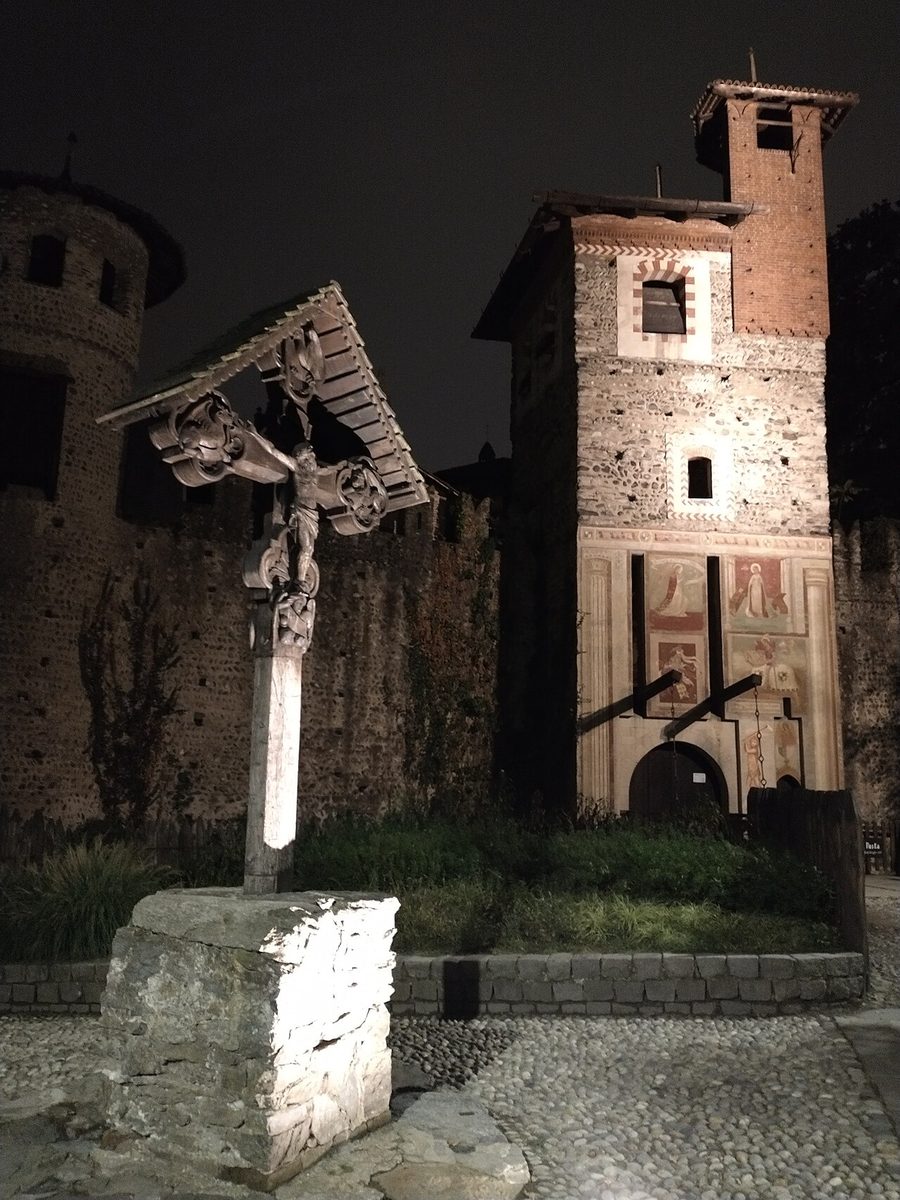

The Borgo Medievale (Medieval Village) stands inside the Parco del Valentino (Valentino Park) in Turin, along the Po. Since September 2026 it has been part of VALE, the new widespread cultural hub that links the park, the Teatro Nuovo, the Borgo itself, Turin's universities, the Botanical Garden and the future Central Civic Library, the latter housed in the refurbished spaces of the former Torino Esposizioni[1][2].
The VALE project
VALE, whose name is short for Valentino, was presented on 16 September 2026 as a permanent workshop of citizenship and culture covering the whole Valentino area: the park, the Teatro Nuovo, the Borgo, the new campus of the Politecnico di Torino (planned in the pavilions of the former Torino Esposizioni), the Botanical Garden and the university buildings on corso Massimo d'Azeglio[2]. At the heart of the project is the new Central Civic Library, due to open to the public on 11 December 2026; the first events of the run-up programme began on 5 November 2026, while VALE's full programme is announced for early 2027[1].
Investment in the Borgo
Within VALE, the Compagnia di San Paolo foundation is committed to a project to enhance and run the renewed Borgo Medievale, through a special public-private partnership agreement in which the company XKE SI is the special partner. The agreement provides for an investment of 24 million euros in work on the Borgo, plus about 2 million euros a year given philanthropically for its management[2]. In parallel, the Fondazione CRT has invested 7 million euros in work linked to the transformation of the Parco del Valentino and to the new home of the Central Library[2].
Statements by the institutions
The mayor of Turin, Stefano Lo Russo, called the transformation under way at the Valentino, of which the Borgo Medievale is part, "one of the largest urban projects in Turin's recent history", stressing that the new Central Library, the Borgo, the Teatro Nuovo, the new Politecnico campus, the University, the Botanical Garden, the park and the Po form "a large integrated cultural hub"[2]. The president of the Fondazione CRT, Anna Maria Poggi, described VALE as "an investment in knowledge, accessibility and the city's future"[2].
The Borgo in the twentieth century
For much of the twentieth century the Borgo Medievale was both a destination for draughtsmen and a film set. In spring 1941 the city news described the artists who stopped there to draw the entrance to the village[3]; in July 1942 wood-and-plaster structures were built in front of the castle for the crowd scenes of the film Dente per dente (A Tooth for a Tooth), directed by Marco Elter[4].
After a period in which film crews had neglected the complex, in November 1960 La corona di fuoco (The Crown of Fire), a film about Humbert the White-Handed (Umberto Biancamano), was being shot at the castle of the Borgo[5], and in April 1962 another production was at work there, a film inspired by Manzoni's character the Innominato (the Unnamed), directed by De Marchi[6].
Restoration and revival (1988-1995)
In October 1988 the Borgo's castle closed for three months to comply with safety regulations: new lighting and fire-prevention systems and new emergency exits, at a cost of 145 million lire paid by the City[7]. In September 1992 restoration work began to give the complex back the dignity intended by its designer, Alfredo d'Andrade, including a railing meant to protect the area, then frequented by drug users, on the model of what had already been done at the Teatro Regio[10].
In the mid-1990s the complex was at the centre of a public debate about its future. On 26 October 1994 a study day at the Galleria civica d'arte moderna (Civic Gallery of Modern Art) was devoted to relaunching the Borgo, under the title «Il Borgo Medioevale del Valentino: conoscenza e rivalutazione di un modello ottocentesco» (The Medieval Village of the Valentino: knowledge and reappraisal of a nineteenth-century model)[8]; the next day the debate turned to how to cover its costs, up to the proposal of an admission ticket of one thousand lire[9]. In January 1995 restoration began on the Rocca, the upper part of the village, open to the public for a fee, at a cost of about one billion lire[11].
Chronology
- — VALE is born at the Valentino, the new widespread cultural hub linking the park, the Teatro Nuovo, the Borgo Medievale, the universities and the future Central Civic Library in the refurbished spaces of Torino Esposizioni. → La Stampa TorinoClick
Related articles: Biblioteca civica centrale, Inaugurazione di VALE al Valentino, Parco del Valentino, Politecnico di Torino, Teatro Nuovo, Torino Esposizioni
Sources
- Torino, il parco del Valentino cambia volto: nasce VALE, tra biblioteca, teatro e università — La Stampa, 17 September 2026
- Nasce il nuovo polo culturale del Valentino, laboratorio permanente di cittadinanza e di cultura — TorinoClick, 16 September 2026
- Consultazione Archivio — Stampa Sera, n. 103, p. 2, 30 April 1941
- Consultazione Archivio — Stampa Sera, n. 169, p. 2, 16 July 1942
- Consultazione Archivio — Stampa Sera, n. 265, p. 11, 5 November 1960
- Consultazione Archivio — Stampa Sera, n. 80, p. 10, 3 April 1962
- Consultazione Archivio — La Stampa, n. 217, p. 19, 2 October 1988
- Consultazione Archivio — La Stampa, n. 292, p. 35, 26 October 1994
- Consultazione Archivio — La Stampa, n. 293, p. 43, 27 October 1994
- Consultazione Archivio — La Stampa, 19/09/1992, n. 257, p. 31
- Consultazione Archivio — La Stampa, 13/01/1995, n. 12, p. 47
Similar entries
- Teatro Nuovo Place
- Presentation of the Vale Project in Turin Event
- VALE Place
- VALE, the Valentino cultural hub, is born Event
- Torino Esposizioni Place