Olimpiadi invernali di Torino 2006
The XX Olympic Winter Games, held in Turin and the Olympic valleys from 10 to 26 February 2006: 2,508 athletes, 84 events, 11 medals for Italy.
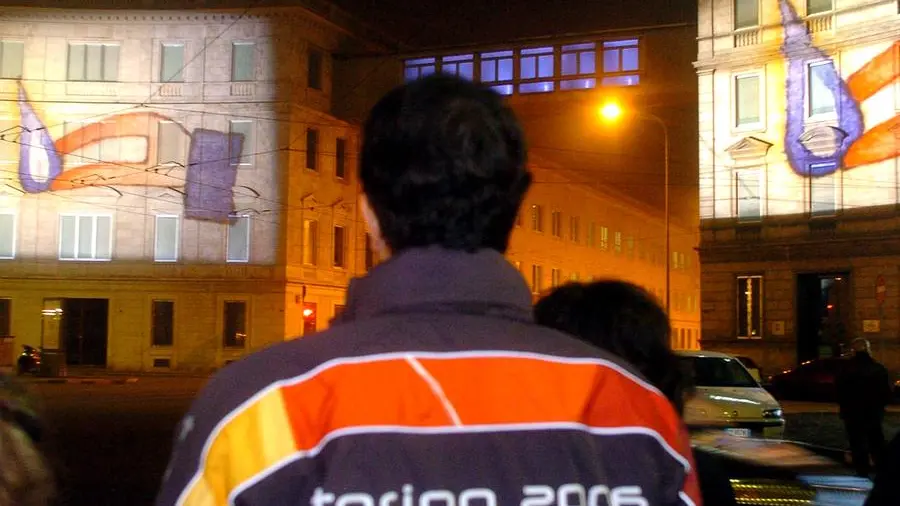
The XX Olympic Winter Games were held in Turin and the Olympic valleys from 10 to 26 February 2006: 2,508 athletes from 80 national Olympic committees competed for 84 titles in 15 disciplines[1]. For the city they were the first major global event after the decline of heavy industry, and they accompanied its shift from car-making capital to a tourist and cultural destination; in the mountains, however, they left behind costly facilities, some of them abandoned.
The bid and the win over Sion
The choice came on 16 June 1999 in Seoul, during the session of the International Olympic Committee: Turin won with 53 votes against 36 for the Swiss city of Sion, after a race that had also included Klagenfurt, Zakopane, Helsinki and Poprad-Tatry. The promoting committee was led by Evelina Christilin[1]. The works were entrusted to a dedicated public agency, the Agenzia Torino 2006, whose governing bodies were appointed by the government in January 2002[1].
The agency had been set up by law no. 285 of 2000, which also set the criteria for the Olympic works. According to a publication of the Regional Council of Piedmont released in the year of the Games, the total cost of the works was 1.7 billion euros, and about half a billion of that was to pass on as a legacy to the City of Turin[2]. Long-term urban construction projects ran alongside the events: line 1 of the metro, the first automatic VAL-guided system in Italy, opened on 4 February 2006 with the stretch from Collegno to Porta Susa, six days before the opening ceremony[3].
The venues: the city and the valleys
The ice stayed in the city. The Palazzo a Vela hosted figure skating and short track, the Oval at Lingotto, with its 400-metre track, hosted speed skating, while a new arena was built for ice hockey on the site of the former Stadio Comunale[2]. The Palasport Olimpico, today the Inalpi Arena, cost 85 million euros and was completed in September 2005[1]. The Oval was built where the Fiat Avio sheds once stood: to enter it one passed through the same gate that workers had gone through for decades at every shift change[4].
The snow events were spread between the upper Val di Susa and the Pinerolo valleys: alpine skiing at Sestriere, women's downhill and super-G at Cesana-San Sicario, bobsleigh, luge and skeleton on the Cesana Pariol track, ski jumping at Pragelato, snowboarding at Bardonecchia, freestyle skiing at Sauze d'Oulx and curling at Pinerolo[2]. Athletes stayed in three Olympic villages: Turin for about 2,500 athletes, Sestriere with 1,200 and Bardonecchia with 700[2].
The ceremonies
The opening ceremony was held on 10 February at the Stadio Olimpico, the former “Vittorio Pozzo” Comunale stadium, today the Stadio Olimpico Grande Torino. The athletes' oath was taken by the slalom skier Giorgio Rocca and the final torchbearer was Stefania Belmondo, a cross-country skier with ten Olympic medals[1]. To close the evening, Luciano Pavarotti sang “Nessun dorma”: it was his last public performance and, as the conductor Leone Magiera revealed two years later, because of the cold February air the track had been pre-recorded[5]. During the days of the Games the flame burned atop the stadium's Torre Maratona[4].
A few hours before the opening, the mayor Sergio Chiamparino had already set expectations about his fellow citizens' temperament[4]:
«It's not that because there are the Olympics we have to become Naples. We will remain Turin.»
The events and the Italian medals
Italy finished with eleven medals, five gold and six bronze, two fewer than at Salt Lake City 2002[1]. The star was the Venetian speed skater Enrico Fabris, who at the Oval won gold in the 1,500 metres and the team pursuit and bronze in the 5,000 metres, the first Italian medal in the history of speed skating[1][6]. In cross-country skiing Giorgio Di Centa won the 50 km and, with Fulvio Valbusa, Pietro Piller Cottrer and Cristian Zorzi, the 4x10 km relay; Armin Zöggeler won his second consecutive Olympic gold in luge[1][6].
Among the bronzes, the one in women's two-man bobsleigh won by Gerda Weissensteiner and Jennifer Isacco is particularly remembered: Weissensteiner, gold medallist in luge in 1994, became the only Italian woman awarded medals at the Games in two different disciplines[1]. Doping controls, with 1,229 tests, were the strictest ever organized up to that time, and one podium result was revoked: that of the Russian biathlete Olga Medvedtseva, who tested positive for carphedon[1]. From 10 to 19 March the Paralympics followed, with 486 athletes from 39 countries and 163,000 tickets sold[1].
The city in celebration
The Games changed how the people of Turin saw themselves. The writer Ernesto Aloia recalled that for months the event had been awaited “with the typical local pessimism”, while Alessandro Isaia, who at thirty curated the cultural programme, described it this way[7]:
«For the city it was one continuous celebration, the explosion of a collective joy that changed how citizens perceived themselves.»
Civic participation also left its mark: from the 2006 volunteers the association Volo2006 was born, through which about a thousand people have passed in twenty years[7]. In tourist numbers the leap is clear: the city, which in 2002 counted fewer than 600,000 arrivals a year, recorded 2.7 million in 2023[8].
The legacy of the venues
After the Games the facilities passed to the Fondazione 20 Marzo 2006, set up by the Piedmont Region, the City of Turin, the Metropolitan City and CONI. In 2009 a tender awarded thirty-year management, until 2039, to the company Parcolimpico, of which Live Nation held 70% of the shares, later risen to 90%[8]. The facilities granted under concession had cost over 600 million euros, all from public funds[9].
In the city, the venues have found a second life: the Oval has become part of the Lingotto exhibition centre, where the Turin Book Fair is held, and the arenas, from the Inalpi Arena to the Palavela, host concerts and major sporting events[8]. The Olympic village at the former wholesale fruit and vegetable market (ex MOI), 90,000 square metres of which about half occupied by 750 apartments, was divided into lots[8]; some buildings, left abandoned for years, were later occupied by refugees[10].
In the mountains the balance sheet is heavier. The Cesana Pariol bobsleigh track, closed since 2011, cost 110 million according to “Il Post”[8], over 61 million according to “Il Fatto Quotidiano”[10]; the Pragelato ski jumps, used for training until 2013, would cost around ten million euros just to be removed[8]. Parcolimpico's director Daniele Donati summed up the root of the problem[8]:
«The main issue is that all these facilities, and the hotels too, were designed to last two weeks: they envisaged being switched fully on and then fully off.»
Pages linking here
- Aeroporto di Torino-Caselle
- ATP Finals
- Bardonecchia
- Chiara Appendino
- Collegno
- Eiffel 65
- Eurovision Song Contest 2022
- Giorgetto Giugiaro
- Gruppo Torinese Trasporti
- Inalpi Arena
- Lingotto
- Metropolitana di Torino
- Museo Egizio
- Palazzo a Vela
- Palazzo Madama
- Piazza Castello
- Porta Palazzo
- Sauze d'Oulx
- Sergio Chiamparino
- Sestriere
- Stadio Olimpico Grande Torino
- Tangenziale di Torino
- Teatro Regio
- The internet addresses of the Province of Turin
- Torino
- Torino Football Club
- Val di Susa
- Via Lattea (ski area)
Related articles: Bardonecchia, Collegno, Inalpi Arena, Lingotto, Sauze d'Oulx, Sestriere
Sources
- Treccani, Enciclopedia dello Sport
- Consiglio regionale del Piemonte —
- MuseoTorino
- Domani — 6 February 2026
- Classic FM — 21 July 2021
- Neveitalia
- Vita — 16 January 2026
- Il Post — 28 March 2024
- Il Sole 24 Ore — 8 February 2010
- Il Fatto Quotidiano — 18 December 2014