Torino Football Club
Turin's maroon football club, founded in 1906: the team of the Grande Torino and of Superga, seven-time Italian champion.
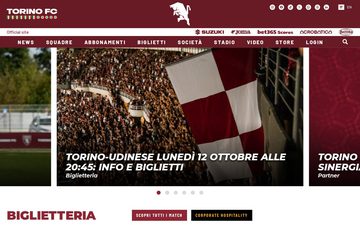
Torino Football Club is the maroon ("granata") football club of Turin, heir to the Football Club Torino founded on 3 December 1906. It is the team of the Grande Torino and of the Superga tragedy, of the last league title in 1976 and of the city rivalry with Juventus: its trophy case holds seven league titles, five Coppa Italia cups and the 1991 Mitropa Cup, the only international trophy in its history.[1][2]
The founding at the Voigt beer hall
The club was born on the evening of 3 December 1906 at the Voigt beer hall, in the city centre, on the initiative of a group of enthusiasts led by the Swiss businessman Alfred Dick; the Swiss Franz Schoenbrod was named first president, in his absence.[1] Its founding brought together the Torinese club and a group of members who had left Juventus.[2] The first match was played on 16 December 1906 against Pro Vercelli and ended 3-1 for the maroons.[1]
Two versions circulate about the origin of the colour: according to the first, Dick supported Servette of Geneva, who wore maroon; according to the other, the choice was a tribute to Luigi Amedeo di Savoia, duke of the Abruzzi, the club's honorary president, because maroon was the colour adopted by the Savoy Brigade in 1706, in memory of the blood shed during the siege of Turin.[1]
The revoked title and the first championship
The first championship won on the pitch, concluded on 10 July 1927, does not appear in the official roll of honour. On 4 November 1927 the Federation, chaired by Leandro Arpinati, podestà of Bologna and deputy secretary of the National Fascist Party, revoked the title over the derby of 5 June, won 2-1 by Torino: a Torino official, Dr Nani, had confessed to having paid 25,000 lire to an intermediary, the student Gaudioso, intended for Juventus players; the Juventus full-back Luigi Allemandi was banned for life.[3] In 2017 president Urbano Cairo asked the FIGC for a commission of inquiry to have that title restored.[3] The first official title came the following season, in 1927-28, and in 1936 came the first Coppa Italia.[2]
The Grande Torino and Superga
In the 1940s the team captained by Valentino Mazzola won five consecutive league titles, with the pause imposed by the war, and in 1943 also the Coppa Italia; in the 1947-48 season it scored 125 goals and remained unbeaten at home for 88 matches in a row from 1943, supplying a large part of the national team's players.[2][4] On 4 May 1949 the plane bringing the team back from Lisbon crashed into the hill of the Basilica di Superga: 31 people died, including 18 players, officials and staff, the pilot, three crew members and three journalists.[4] Indro Montanelli wrote:
«Heroes are always immortal in the eyes of those who believe in them. And so the boys will believe that Torino has not died: it is only away.»
Every 4 May the fans make a pilgrimage that takes in the Monumentale cemetery, the hill of the tragedy and the Stadio Filadelfia, with the customary photograph in front of the historic Curva Balilla; since 2015 the date has been celebrated as World Football Day in memory of the Invincibles.[4]
From Meroni to the 1976 title
The postwar years brought a relegation and the Serie B title of 1959-60.[2] From 1963 to 1982 the club was led by Orfeo Pianelli, an electromechanical industrialist from Mantua, who brought in Nereo Rocco as coach and invested in young players such as Gigi Meroni, Paolino Pulici, Claudio Sala and Ciccio Graziani.[5] Meroni, the “Maroon Butterfly”, died on 15 October 1967 at age 24, struck by a car while crossing corso Re Umberto on foot.[6] Two more Coppa Italia titles followed in 1968 and 1971.[2]
On 16 May 1976, at the Stadio Comunale, Gigi Radice's Torino drew 1-1 with Cesena, with a goal from Pulici, while Juventus lost 1-0 at Perugia: it was the league title, the first since Superga, in front of about 65,000 spectators with another 15,000 left outside; the team and fans then went up to the basilica to pay homage to the fallen.[7] Radice, at the end of the match, was still angry about the draw, which in his view should not have been conceded that way.[7] Pianelli's presidency ended on 21 May 1982, the day after the third Coppa Italia final lost in a row, with the sale of the club to Sergio Rossi.[5]
The night in Amsterdam
Torino won the Mitropa Cup in 1991 and its last Coppa Italia in 1992-93.[2] In between came the 1992 UEFA Cup final against Ajax: after the 2-2 first leg in Turin, the return leg in Amsterdam, on 13 May, ended 0-0, with the woodwork struck by Sordo and Mussi, and the trophy went to the Dutch side.[8] Coach Emiliano Mondonico raised a bench chair to the sky, an image seen around the world; of that gesture he always said: “It was an instinctive gesture. Unrepeatable.”[8]
The bankruptcy and the Cairo era
In 2005 the old Torino Calcio went bankrupt; the club restarted in Serie B thanks to the Petrucci ruling, and on 2 September 2005 the company passed to Urbano Cairo, who had been urged to step in by mayor Sergio Chiamparino. “He called me because he was worried about how the situation at Toro would develop, because the club was going bankrupt,” Cairo has recalled.[9] The team, rebuilt within days, returned to Serie A in June 2006 under Gianni De Biasi and has stayed there steadily since the 2012-13 season; in December 2024, with 7,031 days as president, Cairo overtook Pianelli as the longest-serving president in the club's history.[9]
The stadiums: Filadelfia and Olimpico
The Filadelfia, home of the Grande Torino, was closed in September 1994 and demolished starting in 1997; after a long campaign, the foundation set up in 2011 by the City, the Region and the club rebuilt it with contributions from sponsors and donors, whose 2,372 names are engraved in the memorial square. Inaugurated on 25 May 2017, with about 4,000 seats, since the 2017-18 season it has hosted the first team's training sessions and the Primavera youth team's matches.[10]
Official matches are played at the Stadio Olimpico Grande Torino, on via Filadelfia, in the Santa Rita district.[11] Inaugurated on 14 May 1933 as the municipal stadium “Benito Mussolini”, later Comunale and Olimpico, it was renovated for the 2006 Winter Olympics, which reduced its capacity to just over 26,000 seats; it took the name of the Grande Torino after Juventus moved to its own stadium.[12] Tickets and season passes are bought through the club's official website, which also sells matchday shirts and maroon-branded clothing through the official online store.[11][13]
Pages linking here
- Alessandro Baricco
- Basilica di Superga
- Daniel Osvaldo's Admission to Intensive Care
- Giampiero Boniperti
- Gigi Meroni
- Grande Torino
- Juventus Stadium
- Misure cautelari e Daspo dopo gli scontri al derby Torino-Juventus del 24 maggio 2026
- Moncalieri
- Pro Vercelli
- Santa Rita (Turin)
- Sergio Chiamparino
- Stadio delle Alpi
- Stadio Filadelfia
- Stadio Olimpico Grande Torino
- Superga air disaster
- Tightening of Special Surveillance for Two Ultras Granata Leaders (September 2026)
- Torino Granata
- Toro News
- Tuttosport
- Valentino Mazzola
Chronology
- — Former Juventus, Roma and Inter forward Daniel Osvaldo is admitted to intensive care in Buenos Aires for severe pleural effusion in the right lung, complicated by an infection. → TorinoOggi Quotidiano Piemontese
Related articles: Gigi Meroni, Grande Torino, Inalpi Arena, Santa Rita (Turin), Sergio Chiamparino, Stadio Olimpico Grande Torino
Sources
- Toro.it
- Torino Oggi — 9 October 2023
- Il Post — 30 May 2017
- Torino Oggi — 4 May 2026
- Guerin Sportivo — 24 April 2025
- ANSA — 15 October 2021
- Toro.it
- Toro.it
- Calcio e Finanza — 2 December 2024
- Calcio e Finanza — 25 May 2017
- Goal — 5 July 2023
- MuseoTorino
- Torino FC Store