Pro Vercelli
Football club of Vercelli, seven-time Italian champion between 1908 and 1922, historic rival of the Turin clubs and the cradle of Rosetta and Piola.
Pro Vercelli is the football club of Vercelli and one of the founding names of Italian football: between 1908 and 1922 it won the national championship seven times, as many as Genoa had at the time[1]. For fifteen years it was the team to beat for the clubs of Turin too, which would later absorb its best talents. Juventus itself, in recounting its own history, admits that until the Great War it could not keep pace with the "new footballing powers of the moment, Pro Vercelli and Casale"[2].
Seven titles in fifteen years
The first scudetto came in 1908, in a tournament marked by a federal decision: Milan, Genoa and Torino, who fielded foreign players, were excluded from the championship reserved for Italians. In the final group Pro Vercelli finished with six points, one ahead of U.S. Milanese and five ahead of Andrea Doria of Genoa[3]. The following year it repeated the feat against the same Milanese side, beaten 2-0 at home before a 1-1 draw away[3].
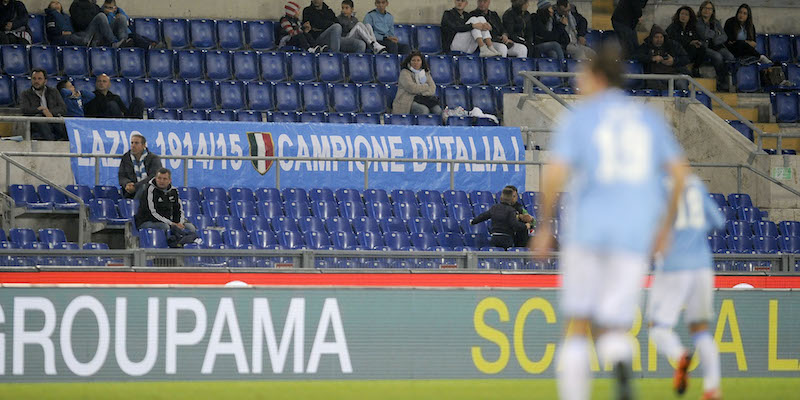
A run of three consecutive titles followed, in 1911, 1912 and 1913[1]. The finals of those years were often one-sided: in 1912 Venezia lost 6-0 at home and 7-0 in Vercelli, in 1913 Lazio was crushed 6-0[3]. That score stayed proverbial: as late as December 2015, when the dispute over the 1915 title reopened, Il Secolo XIX recalled that the Romans "lost 6-0 to Pro Vercelli in the final two years earlier"[4]. In 1914 the championship went to nearby Casale Monferrato, breaking the Vercelli run[1].
After the war came the last two titles. The 1921 final against Pisa was played in Turin on 24 July and ended 2-1 for the Vercelli side[3]. In 1922, the year of the split between the federation and the Confederazione Calcistica Italiana, there were two championships: Pro Vercelli won the Confederation's title by beating Fortitudo 3-0 and 5-2, while the federal tournament went to Novese[1][3].
The break of 1910
The 1909-10 championship was decided by a play-off against Internazionale, played on 24 April 1910. Pro Vercelli took the field with its youth team and lost 10-3; other accounts report 11-3 or 9-3[3]. The affair had a sequel: after a dispute with the federation the Vercelli players, then among the strongest in Italy, were suspended and missed the national team's first match, won anyway 6-2 against France in May 1910[5].
Rosetta and the first transfer market
Virginio Rosetta, born in Vercelli in 1902, played for Pro Vercelli from 1919 to 1923 without pay. To bring him to Turin, Juventus paid 50,000 lire and offered him a job as an accountant: a deal that the Treccani Enciclopedia dello Sport calls "the first case of a football transfer market in Italy"[6]. A technical defender fond of dribbling even in the penalty area, he lived the club's best years in black and white and was world champion in 1934; he died in Turin in 1975[6].
The team, even without its most celebrated full-back, remained competitive beyond its borders too: in June 1927 it won the Club Français's Whitsun tournament in Paris, beating Dresdner SC 2-1 in the semi-final and Sète 1-0 in the final[7].
Silvio Piola
The last great home-grown champion was Silvio Piola. Born on 29 September 1913 in Robbio, in Lomellina, he moved with his family to Vercelli the following year and made his mark in Pro's youth ranks; his uncle Giuseppe Cavanna, the club's goalkeeper, helped him into the first team. The Hungarian coach József Nagy gave him his Serie A debut on 16 May 1930 at Bologna[8]. On 28 October 1933 he scored six of the seven goals inflicted on Fiorentina, a record equalled only by Omar Sivori in 1961[9].
In the spring of 1934 Pro Vercelli sold him to Lazio for 250,000 lire, a decision that caused a stir and that Piola himself did not welcome[8]. According to Treccani, the club was swayed by the intervention of the fascist official Paolo Martinelli and of General Vaccaro, president of the federation, both Lazio supporters[9]. Piola closed his career with 274 Serie A goals, the all-time record for the championship; he died in Gattinara on 3 October 1996 (the 4th according to the Dizionario Biografico[8]), and since 1997 both the stadium of Vercelli and that of Novara have carried his name[10].
From the lower divisions to today
Having lost its primacy, the club spent much of the postwar period in the lower divisions. In 2012 it returned to Serie B after many years' absence and, since the city stadium needed upgrading work, rented the "Leonardo Garilli" in Piacenza for the first three months[11]. On 27 May 2017 it was one of four teams, with Torino, Novara and Alessandria, invited to the "Don Aldo Rabino" quadrangular tournament that inaugurated the rebuilt Stadio Filadelfia[12]. The 2017-18 season ended instead with relegation to Serie C[13].
The bond with Turin football today runs mostly through loans: in August 2026 Torino loaned midfielder Aaron Ciammaglichella to Pro Vercelli, with an option to buy for the Vercelli club and a counter-option for the granata[14]. It is the same geography as a century ago, reversed: then it was Turin looking for players in Vercelli, today it is the province of Piedmont that grows young talent for the city.
Related articles: Giampiero Boniperti, Giovanni Agnelli (1866–1945), Juventus Football Club, Umberto Agnelli, Vercelli
Pages linking here
Sources
- RSSSF
- Juventus FC
- RSSSF
- Il Post — 31 March 2016
- Il Post — 15 May 2020
- Treccani, Enciclopedia dello Sport
- RSSSF
- Treccani, Dizionario Biografico degli Italiani
- Treccani, Enciclopedia dello Sport
- Il Post — 19 December 2020
- Il Post — 22 June 2012
- Il Post — 25 May 2017
- Il Post — 18 May 2018
- Toro.it — 21 August 2026