Giovanni Agnelli (1866–1945)
Industrialist from Villar Perosa (1866–1945), one of the founders of FIAT in 1899, later its managing director and chairman, and a senator of the Kingdom from 1923.
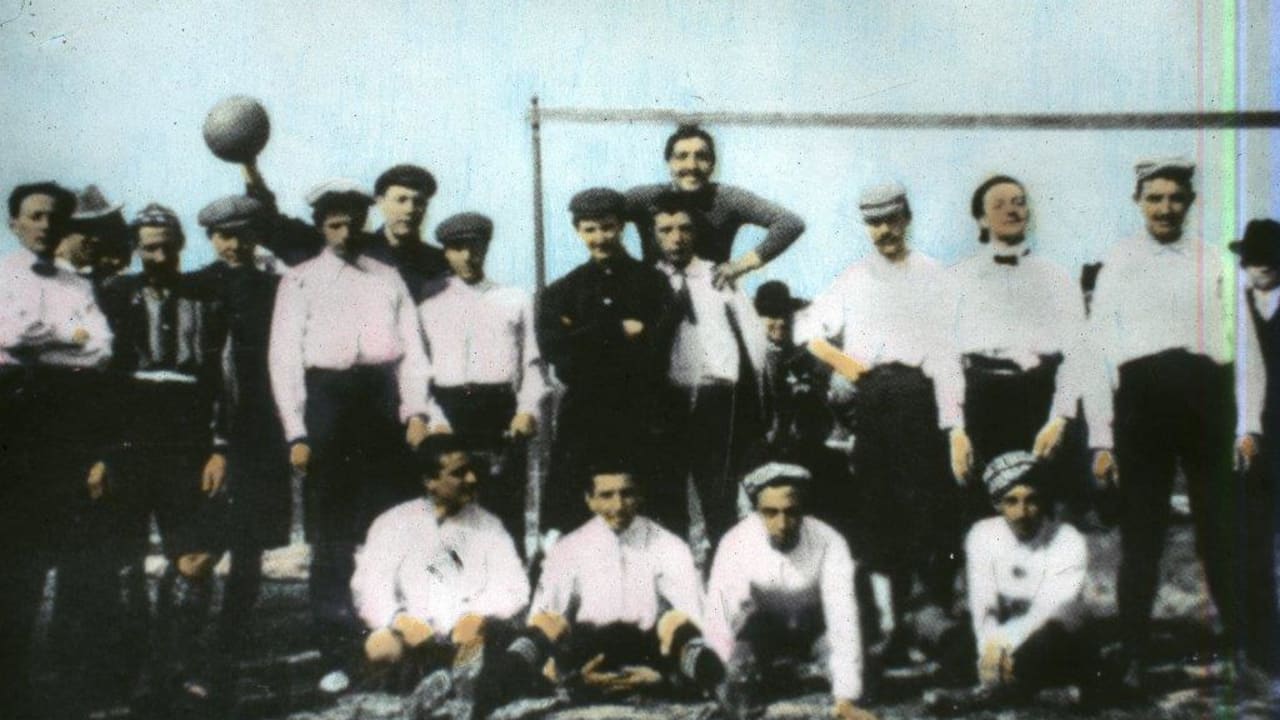
Giovanni Agnelli (Villar Perosa, 13 August 1866 – Turin, 16 December 1945) was a Piedmontese industrialist, one of the founders of FIAT in 1899, later its managing director and, from 1920, chairman, and a senator of the Kingdom from 1923[1][2]. For nearly half a century he led the growth of the factory that turned Turin into a car-making city, linking his name to the Lingotto and Mirafiori plants, the newspaper La Stampa, and a dynasty that would dominate Italian industry throughout the twentieth century.
From cavalry to the automobile
Born into a «very wealthy» family of the Chisone valley, son of Edoardo and Aniceta Frisetti, he entered the Military School of Modena in 1884 and graduated in 1886 as a cavalry second lieutenant[2]. In 1892 he left the army and settled in Turin, where the circle of the first motoring enthusiasts was taking shape[2]. The preparatory meetings for the future company were held at the Caffè Burello, known as «la Pantalera», on the corner of corso Vittorio Emanuele and via Rattazzi[3].
The deed of incorporation of the Società Anonima Fabbrica Italiana di Automobili Torino was signed on 11 July 1899 at Palazzo Bricherasio, before the notary Ernesto Torretta[3]. There were nine shareholders: chairman Lodovico Scarfiotti, vice-chairman Count Emanuele Cacherano di Bricherasio, and then Roberto Biscaretti di Ruffia, Cesare Goria Gatti, Michele Ceriana Mayneri, Luigi Damevino, Alfonso Ferrero di Ventimiglia, Torretta himself, and Agnelli, who was given the post of secretary of the board[3]. The company started with a capital of 800,000 lire and inherited the Ceirano company[2]. The first plant, on corso Dante, opened in 1900 with 35 workers and produced 24 cars of the 4 HP model[3].
At the helm of FIAT
Among the investors, Agnelli soon stood out for his determination; he also promoted a promotional road tour of Italy, which concluded at the Milan Exposition[3]. The dates of his rise vary according to the sources: ANSA places him as managing director as early as 1902[3], the Treccani Encyclopaedia as managing director from 1905[1], while the Dizionario Biografico degli Italiani records him in the role in 1906, the year capital was raised to 9 million[2]. In that same year, 1906, he founded with 850,000 lire a ball-bearing workshop, RIV, moved the following year to Villar Perosa, and promoted the Lega Industriale di Torino, the first association of its kind in Italy[2]. In 1907 he was made a Cavaliere del Lavoro (Knight of Labour)[2].
In 1909 Agnelli and other directors were committed for trial on charges of balance-sheet fraud and unlawful stock-market dealings; the trial ended in 1912 with the full acquittal of the defendants[2]. In 1911 the first military trucks, the FIAT 15 ter, were produced[2].
The war, the Lingotto, and the Biennio Rosso
The First World War multiplied the size of the company: capital rose to 50 million in 1917 and to 200 million in 1919, while FIAT absorbed the Ferriere Piemontesi, the Officine Fratelli Deotto, and the Industrie Metallurgiche Torino[2]. In 1917 construction began on the Lingotto plant, which went into operation in 1921[2]: designed by engineer Giacomo Matté Trucco on via Nizza, with a reinforced-concrete structure, helical ramps and a rooftop test track, it was officially inaugurated in 1923[4]. Also in 1917, together with Riccardo Gualino, Agnelli took charge of a shipping company that from 1920 switched to viscose rayon production, the future SNIA[2].
In 1918, together with the economist Attilio Cabiati, he signed the essay Federazione europea o Lega delle Nazioni? (European Federation or League of Nations?), with polemical overtones against nationalism[2]. In 1920 he handed over the post of managing director to engineer Guido Fornaca and took on the chairmanship; after the occupation of the factories at the end of that year, he opened negotiations to turn FIAT into a producers' cooperative, and in 1921 he was among the leading figures in a lockout[2]. That same year, 1921, Vittorio Valletta joined the company, destined to become its managing director[5].
Senator in the years of the regime
On 1 March 1923 Agnelli was appointed senator; on 19 December of that year he was among the signatories of the Palazzo Chigi pact with Mussolini, the Prime Minister[2]. FIAT benefited from strong customs protection: tariffs on cars, already at 60%, exceeded 100% in 1930[2]. In 1927 IFI, the Istituto Finanziario Industriale, the family holding company he chaired, was founded[2].
According to the Treccani Encyclopaedia, in 1926 Alfredo Frassati had to hand over La Stampa to a company controlled by the Agnelli family, which brought the newspaper into line with the regime's directives[6]. The Dizionario Biografico places the handover at the end of 1925, after the prefect of Turin had suspended the paper on 29 September: «after lengthy negotiations Agnelli took over, backed by Mussolini but not overly welcome to the uncompromising Turin fascists»[7]. As early as 24 July 1923 the family had also entered football: the Juventus general meeting had elected his son Edoardo as chairman[8].
In June 1932, in an interview with United Press, he argued that unemployment was due almost entirely to technical progress; Luigi Einaudi replied, observing that technological unemployment was not the whole of it[2]. In 1937 the Politecnico di Torino awarded him an honorary degree in engineering[1].
Between 1937 and 1939, on his initiative, the new Mirafiori plant was built. Mussolini, initially opposed to the project, inaugurated it in person on 15 May 1939, calling it the «perfect factory of the Fascist era»[9]. The day, prepared with tens of thousands of workers summoned in front of a celebratory stage, did not go as planned: the head of government arrived two hours late, was received coldly, and left ahead of schedule[9].
Succession and the final years
The death of his only son Edoardo in 1935 prompted the elderly industrialist to prepare the handover: in February 1939 Valletta became managing director[5]. His grandson Giovanni, later known as Gianni, was looked after by his grandfather after his father's death[10]. Years later, "the Lawyer" recalled his 1943 choice in these words:
«In 1943 he took me away from the Tunisian front and made me vice-chairman: "You are the only person in the family I trust, and you must take on this responsibility"»[11]
With the Liberation, Valletta was subjected to purge proceedings[5]. Giovanni Agnelli died in Turin on 16 December 1945[2]; after his death and Valletta's rehabilitation by the High Court of Justice that same December, the family decided to reconfirm him, and in July 1946 Valletta became chairman of FIAT[5].
Pages linking here
- Biella
- FIAT
- Giampiero Boniperti
- Gianni Agnelli
- Giovanni Giolitti
- John Elkann
- Juventus Football Club
- La Stampa
- Lingotto
- Martini & Rossi
- Mirafiori
- National Automobile Museum
- Pier Giorgio Frassati
- Politecnico di Torino
- Pro Vercelli
- Sci Club Sestriere
- Sestriere
- Stabilimento di Mirafiori
- Susanna Agnelli
- Torino
- Umberto Agnelli
- Vermouth di Torino
- Vittorio Valletta
Related articles: Biella, FIAT, Giampiero Boniperti, La Stampa, Stabilimento di Mirafiori, Torino
Sources
- Treccani, Enciclopedia on line
- Treccani, Dizionario Biografico degli Italiani —
- ANSA — 11 July 2020
- MuseoTorino
- Treccani, Dizionario Biografico degli Italiani
- Treccani, Enciclopedia on line
- Treccani, Dizionario Biografico degli Italiani
- Juventus FC
- MuseoTorino
- MuseoTorino
- La Voce e il Tempo — 25 January 2023