Umberto Agnelli
Turin industrialist (1934-2004), president of Juventus in its first-star era, a FIAT executive for forty years and head of the group in 2003-2004.
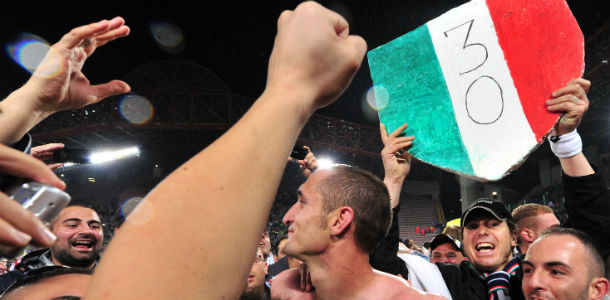
Umberto Agnelli (Lausanne, 1 November 1934 – Parco della Mandria, 27 May 2004) was an industrialist and sports executive, for half a century the second man of the Turin dynasty that controlled FIAT. A very young president of Juventus and of the Italian Football Federation, later FIAT's chief executive, chairman of FIAT Auto and the architect of the IFIL holding company, he reached the chairmanship of the group only in 2003, on the death of his brother Gianni, and held it for fifteen months, in the midst of the gravest crisis in the company's history[1][2].
Origins and education
He was the youngest of the seven children of Edoardo Agnelli and Virginia Bourbon del Monte, and thus a grandson of FIAT's founder, senator Giovanni Agnelli. He was not yet one year old when his father died in a plane crash; at eleven he also lost his mother, in a car accident[1]. He graduated in law from the University of Catania in 1959, the same year as his first marriage, to Antonella Bechi Piaggio, from which Giovanni Alberto was born in 1964. From his second marriage, in 1974, to Allegra Caracciolo di Castagneto, came Andrea (1975) and Anna (1978)[1].
Juventus in the era of the first star
His first public role was in football. According to the club's official account, in 1954 Gianni left the presidency of the black-and-white club, which passed the following year to Umberto;[3] the Dizionario Biografico degli Italiani places the appointment in 1956 and has it last until 1962[1]. With the arrival of Omar Sivori and John Charles the team won the 1958 league title, its tenth, becoming the first Italian club entitled to wear the star for sporting merit;[3] the titles of 1960 and 1961 followed[1].
"The tradition of the star on the shirt was introduced precisely by a Juventus man, Umberto Agnelli, when in 1958 Juventus won its tenth league title."
The custom spread without ever officially entering the League's regulations: by 2012 the star also appeared on the shirts of Inter and Milan[4]. Between 1959 and 1962 Agnelli was also president of the FIGC,[1] and the dual role weighed on the 1960-61 championship. On 16 April 1961 the Juventus-Inter match was suspended in the 31st minute after a pitch invasion and awarded to the Milan side by default; on 3 June the federal appeals board upheld Juventus's appeal and ordered the match replayed. Inter's president Angelo Moratti accused the board of having bowed to pressure from Agnelli and, in protest, fielded the youth team on 10 June: Juventus won 9-1, with six goals from Sivori[5]. According to Il Post this was the episode that most fuelled the rivalry between the two clubs, which in 1967 Gianni Brera would christen the "derby d'Italia"[5].
The 1960s and 1970s at FIAT
At the same time he led SAI as chairman and chief executive (1960-1976), was chairman of SIMCA in 1965 and of Piaggio from 1965 to 1988, and from 1964 sat on FIAT's board of directors[1]. From 1968 he became his brother Gianni's closest collaborator in the project to modernise the company; in January 1970 he was appointed chief executive alongside Gaudenzio Bono. The reorganisation of top management into large groupings met resistance from a substantial part of the executives trained under Vittorio Valletta, led by engineer Niccolò Gioia; in the years of intense labour conflict in the factories, at Mirafiori and at the other plants, Umberto sought dialogue with workers' representatives[1].
In 1976 he gave up the post of chief executive to run for the Senate as an independent on the Christian Democracy party's lists. Turin's Christian Democracy under Carlo Donat Cattin did not grant him the constituency of Pinerolo, and Agnelli was elected in Rome's eighth constituency with almost fifty thousand votes; in the 1976-1979 legislature he sat on the Budget and Planning committee[1][2]. Back at the company, he was again chief executive in 1979-1980 and deputy chairman from 1976 to 1993[2].
FIAT Auto, IFIL and the long wait
The 1980 crisis and the clash with the unions, which culminated in the March of the Forty Thousand, convinced the family to withdraw from operational management and entrust the restructuring to managers led by Cesare Romiti[1][6]. Umberto kept, until 1990, the chairmanship of FIAT Auto, the car-making division set up in 1979[1]. In the 1980s, according to La Voce e il Tempo, the Agnelli brothers also set in motion the plan to redraw Mirafiori's urban future, whose areas in the master plan's maps shifted from the colour of industry to that of housing and services[7].
His energies focused on IFIL, the finance company controlled by IFI since 1957,[8] which he turned into a holding company of interests far from the car-making cycle: Toro Assicurazioni, la Rinascente, financial services, the alliance with the French groups Worms and Saint Louis, tourism with Alpitour. In 1987 IFIL became the second-largest shareholder of BSN-Danone, bringing brands such as Galbani, Star and Agnesi together in a single food group[1]. In 1993, during another severe FIAT crisis, Enrico Cuccia of Mediobanca opposed his appointment as chairman of the group and renewed his backing for Romiti: Umberto had to give up all responsibilities at FIAT[1].
His eldest son Giovanni Alberto, known as Giovannino, was considered the natural heir to lead the company: in 1993 he became chairman of Piaggio, but died of cancer on 13 December 1997[9][10].
Chairman of FIAT (2003-2004)
Gianni Agnelli died in January 2003; on 28 February Umberto succeeded Paolo Fresco as chairman of FIAT and chose as chief executive Giuseppe Morchio, a manager from Pirelli, tasked with a recovery plan. To reduce a very heavy debt load the group sold FIAT Avio, Toro Assicurazioni and the finance company Fidis[1]. He was, Il Post wrote, "the last exponent of the generation that had led FIAT throughout the postwar decades"[11].
He died on 27 May 2004, aged sixty-nine, at his home in the Parco della Mandria, on the outskirts of Turin[1]. The family called Luca Cordero di Montezemolo to the chairmanship and replaced Morchio with Sergio Marchionne, appointed chief executive on 1 June[1][11]. For La Voce e il Tempo, with his death "the reign of Sergio Marchionne begins"[12].
Legacy
In 2009 the IFIL that Umberto had built merged with IFI to create Exor, the family's holding company[8]. La Voce e il Tempo recalls Umberto's death, which came "just as he was steering a complex economic situation", as one of the bereavements that tested the Piedmontese family business, overcome thanks to collaborators such as Marchionne[10].
Related articles: Giampiero Boniperti, Gianni Agnelli, Giovanni Agnelli (1866–1945), Juventus Football Club, March of the Forty Thousand, Stabilimento di Mirafiori
Pages linking here
- Bicerin
- Giampiero Boniperti
- Gianni Agnelli
- John Elkann
- March of the Forty Thousand
- Pro Vercelli
- Sergio Marchionne
- Stabilimento di Mirafiori
- Susanna Agnelli
Sources
- Treccani – Dizionario Biografico degli Italiani — 1 January 2013
- Treccani
- Juventus.com
- Il Post — 7 May 2012
- Il Post — 3 November 2012
- Il Post — 14 October 2020
- La Voce e il Tempo — 8 March 2024
- Exor
- Il Post — 13 December 2017
- La Voce e il Tempo — 16 August 2025
- Il Post — 25 July 2018
- La Voce e il Tempo — 25 January 2023