Casale Monferrato
City on the Po in the province of Alessandria, capital of Monferrato under the Palaiologoi and Gonzaga, linked to infernot wine cellars and to the Eternit asbestos tragedy.
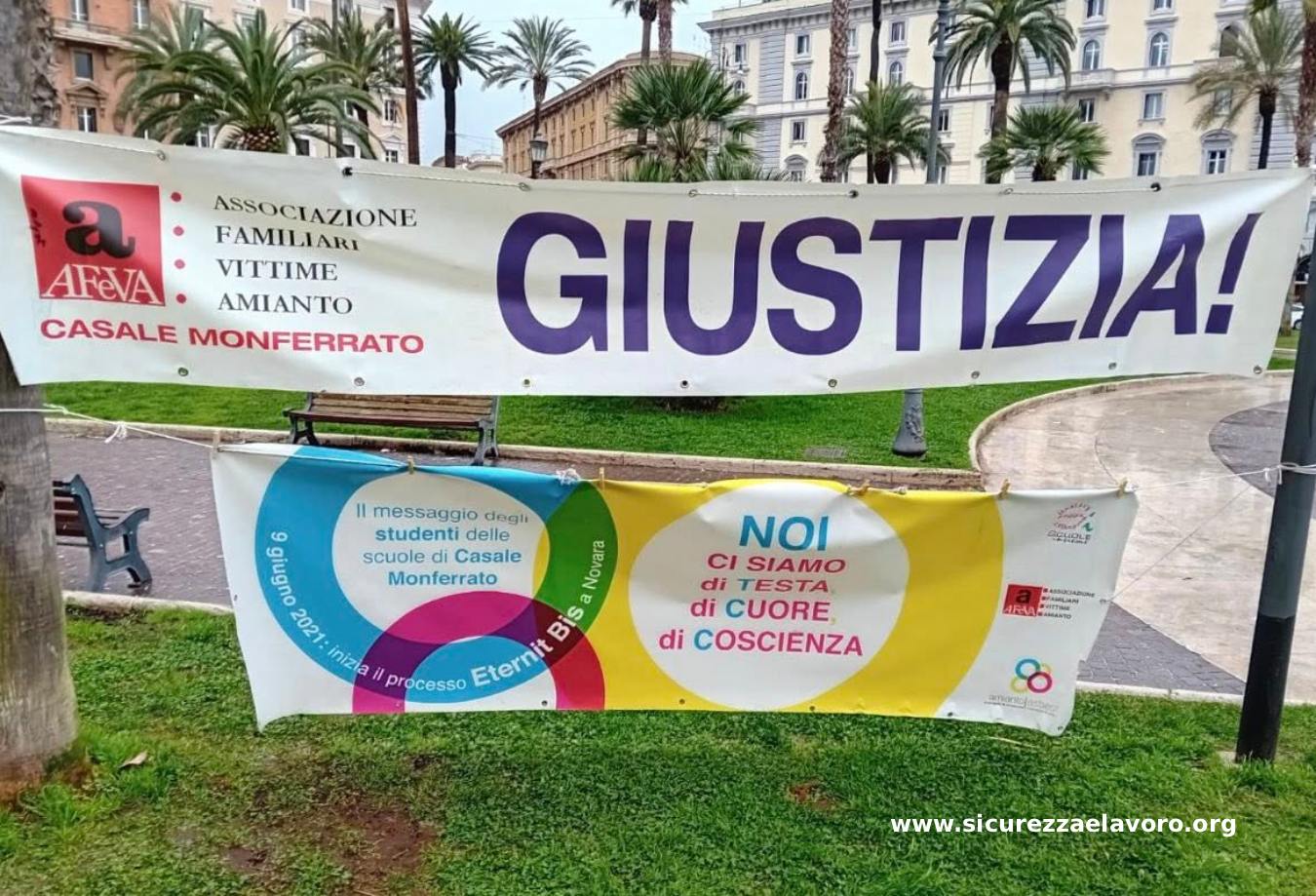
Casale Monferrato is a city in the province of Alessandria, lying on the right bank of the Po where the river begins to be navigable, at the northern edge of the hills of Monferrato; in 2008 it had about 36,000 inhabitants over 86 square kilometres.[1] For centuries it was the capital of an autonomous state, the marquisate and later duchy of Monferrato, a rival of and eventually prey to the House of Savoy; in the 20th century it became the Italian name for the asbestos tragedy. For Piedmont it is at once a small capital that never quite was and a wound that is still open.
From the bishops to the Palaiologoi
At the end of the 9th century the settlement was under the control of the bishops of Vercelli. Having rebelled against feudal power, it was destroyed in 1215 and rebuilt by order of Frederick II, who granted it communal liberties. In 1303 it passed to the Aleramici, in 1319 to the Palaiologoi marquises of Monferrato, in 1369 to the Visconti and in 1404 again to the Palaiologoi.[1] It inherited the role of capital from Chivasso, which had been the seat of government until 1435;[2] in 1474, according to the municipality, it obtained the title of city and formally became the capital of the marquisate.[3]
The castle is the most visible trace of that era. It was begun by marquis Giovanni II Palaiologos and the works were finished by 1357; after 1474 Guglielmo VIII and Bonifacio V rebuilt it so that it would reflect the city's new rank.[3] Older still is the cathedral of Sant'Evasio, dedicated to the patron saint and consecrated in 1108: it preserves its 12th-century five-nave plan, a large Romanesque wooden crucifix clad in silver sheet and, above all, a narthex covered by a nine-bay vault, an extremely rare solution in Italy recalling Armenian and Islamic architecture. In the 19th century its demolition was planned; the archaeologist Luigi Canina turned the plan into a restoration.[4]
The Gonzaga fortress
After the Palaiologoi line died out, Charles V entrusted Casale to the Gonzaga of Mantua: in 1533 according to the Treccani entry on the city,[1] in 1536 according to the entry on Monferrato, which specifies that the Gonzaga took effective possession only after the Peace of Cateau-Cambrésis (1559); in 1575 Emperor Maximilian II turned the marquisate into a duchy.[2] The new lords strengthened the fortress: the walls took on the hexagonal shape still visible today and four new ravelins were built. In the 17th century the building once again became a court seat, especially under Duke Carlo II Gonzaga-Nevers (1637-1665), who stayed there often.[3]
A border city between France, Spain and the Savoy duchy, Casale endured the Spanish sieges of 1628-1630 and 1640, during the wars of succession.[1] Duke Ferdinando Carlo ceded it to the French twice, in 1681 and 1701, provoking the imperial reaction: in 1708 the emperor assigned Monferrato to the House of Savoy, a transfer confirmed by the treaties of Utrecht (1713) and Rastatt (1714).[2] For the castle there began the very long period of use as a barracks; in the 19th century the eastern ravelin was torn down to create Piazza Castello, intended for the market.[3] In 1814 Monferrato was definitively joined to the Kingdom of Sardinia governed from Turin.[2] In 1849, during the first war of independence, the population defended the city against the Austrians of Marshal von Wimpffen.[1]
The synagogue
Casale holds one of the most singular sites of Jewish Piedmont. The synagogue, built in 1595, has an anonymous outer façade, born of the need to protect itself from religious intolerance, which hides a Baroque interior laden with scrollwork and gilding, with the Aron Hakodesh of 1787 and a choir loft of carved, gilded wood. Restored in 1969, it now houses a museum of Jewish art and history with objects deposited by the communities of Vercelli, Asti and Turin and by many Piedmontese Jewish families: 18th-century Tablets of the Law, silverware, ceremonial fabrics and documents.[5]
Bistolfi and the city of wine
The sculptor Leonardo Bistolfi was born in Casale on 15 March 1859, the son of a woodcarver. With a scholarship from the municipality he attended Brera, then the Accademia Albertina in Turin, where he opened his first studio on via Bava; he was called "the poet of Death" for the many funerary monuments he made in the cemeteries of northern Italy. In 1928 he unveiled the war memorial in his home town; he died in 1933 in La Loggia, near Turin.[6]
Casale's economy has always stood on two legs: wine and industry, in particular cement, alongside mechanics, chemicals, food, paper and wood.[1] On the first front the city has one of Piedmont's first regional wine libraries and is the gateway to the Monferrato of the infernot, the small cellars hand-dug into the sandstone under the houses of nine hill towns, part of the UNESCO site of the vineyard landscapes of Langhe-Roero and Monferrato.[7]
Asbestos and the Eternit trials
Cement also brought Casale its harshest chapter. In 1906 the first Italian Eternit plant opened there, producing asbestos-cement; from 1933 the company was controlled by the Swiss Schmidheiny family. From the 1950s workers fell ill and died, from the 1960s so did people who had never worked at the plant; the disease has an incubation period of roughly thirty years. The plant closed in 1986 after the Italian company went bankrupt, and in the first trial the families who had lost a relative filed 2,889 compensation claims.[8] Asbestos has been banned in Italy since 1992.[9]
On 13 February 2012 the Turin court convicted, at first instance, Stephan Schmidheiny and Jean Louis de Cartier to 16 years for deliberate disaster and wilful failure to take safety precautions, at the end of 65 hearings conducted by public prosecutors Raffaele Guariniello, Sara Panelli and Gianfranco Colace.[10] On appeal, in June 2013, Schmidheiny's sentence rose to 18 years; on 19 November 2014 the Court of Cassation overturned the conviction because the offence had fallen under the statute of limitations, also cancelling the compensation awards.[11] The Court affirmed that the offence had existed, but had to acknowledge the statute of limitations, "since the event was completed with the closure of the Eternit plants, which took place in 1986."[8] Mayor Concetta Palazzetti commented: "I am sorry and embittered, but I prefer to wait before adding anything else."[11]
What followed was the so-called Eternit bis trial, focused on individual deaths, with Schmidheiny as the sole defendant. On 7 June 2023 the Court of Assizes of Novara convicted him at first instance to 12 years in prison for aggravated manslaughter, with compensation of 50 million euros to the municipality and 30 million to the State; the prosecution had asked for a life sentence, the defence for acquittal.[9] Of the 392 deaths under examination, the Novara judges attributed 147 to the defendant, with 46 acquittals and 199 cases declared time-barred.[12] On 17 April 2025 the Turin Court of Appeal reduced the sentence to nine years and six months for the manslaughter of 92 people, acquitting Schmidheiny for another 28 cases and declaring 27 time-barred; the compensation was cut to 5 million euros for the municipality and 500,000 euros for the Prime Minister's Office.[13] On 11 February 2026 the Fourth Criminal Section of the Court of Cassation, without ruling on the merits of liability, annulled the appeal ruling without referral because it had not been translated into German, the defendant's language, and sent the case back to the Turin Court of Assizes of Appeal for translation: only after that will the time limits for a possible new appeal to the Court of Cassation start running again.[14] For Eternit bis, therefore, there is still no final ruling.
Pages linking here
- Chieri
- Giulio Einaudi editore
- Gorgonzola (cheese)
- Il Monferrato
- Il Torinese
- Monferrato
- Piedmont Leg of the Obiettivo Tricolore Paralympic Relay in Casale Monferrato (September 2026)
- Pro Vercelli
- Vercelli
Timeline
- — The Piedmont leg of the 2026 Obiettivo Tricolore Paralympic Relay, the awareness initiative on Paralympic sport devised by Alex Zanardi in 2020, passes through Casale Monferrato, before moving on to Vigevano. → ANSA Piemonte Quotidiano Piemontese
Related articles: Monferrato
Sources
- Treccani
- Treccani
- Comune di Casale Monferrato
- Comune di Casale Monferrato
- Comune di Casale Monferrato
- Treccani – Dizionario Biografico degli Italiani
- Associazione per il Patrimonio dei Paesaggi Vitivinicoli di Langhe-Roero e Monferrato
- Il Post — 21 November 2014
- Il Post — 8 June 2023
- Il Post — 13 February 2012
- Il Post — 19 November 2014
- La Nuova Ecologia — 18 April 2025
- lavialibera — 18 April 2025
- Quotidiano Piemontese — 12 February 2026