Gigi Meroni
Right winger of Torino in the 1960s, the «Granata Butterfly» and symbol of an era: he died hit by a car in corso Re Umberto on 15 October 1967, aged 24.
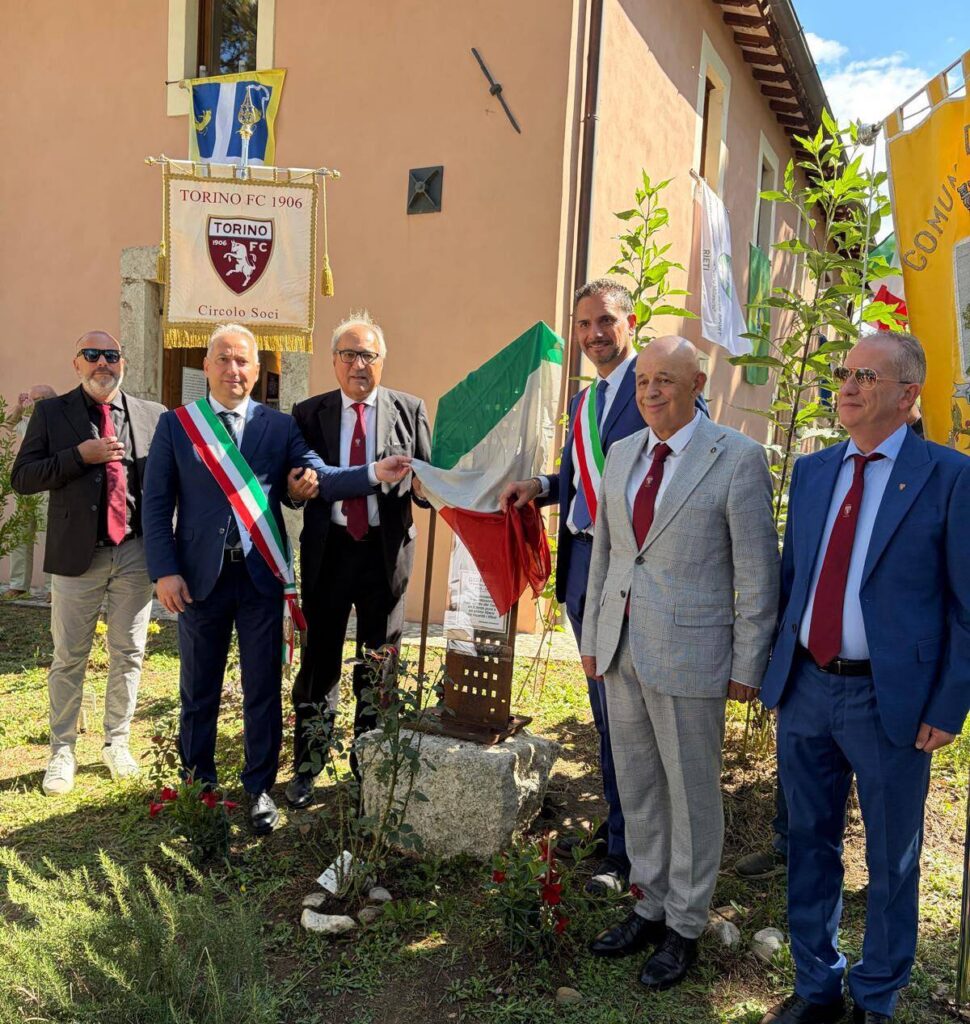
Luigi «Gigi» Meroni (Como, 24 February 1943 – Turin, 15 October 1967) was an Italian footballer, right winger of Torino until his death, and one of the most beloved figures in granata history.[1][2] His dribbling, long hair, and the paintings and ties he designed himself made him a face of the 1960s; his death, hit by a car in corso Re Umberto at 24, turned him into the «Granata Butterfly» of Torino's legend.[3]
From Como to Genoa
He was born in Como into a modest family: fatherless, he grew up with his mother and two brothers in a courtyard in the city centre, where he learned to play.[3] His mother was called Rosa, his brother Celestino.[4] At seventeen, while playing for Libertas San Bartolomeo, he was noticed by Inter, but his family would not send him to Milan; he made his Serie B debut with Como instead, in 1960.[3] Before turning professional he had worked as a textile designer.[3]
Two years later he was bought by Genoa, newly promoted to Serie A. In his Genoa years, those of Fabrizio De André and of Luigi Tenco, he matured both as a footballer and as a public figure.[3]
The Granata Butterfly
From Genoa he moved to Torino: the club's president, the industrialist Orfeo Pianelli, went as far as offering 300 million lire to sign him; in his first season in granata the team finished third and Meroni scored 8 goals.[3] He wore the number 7 shirt and was a winger made of flair, imagination, dribbling and unpredictability: the nickname «Granata Butterfly» came from the way he moved on the pitch.[1][4]
Off the pitch he was unlike any of his teammates. He wore his hair long when that was frowned upon, had his clothes designed with a trusted tailor, and filled houses with paintings he drew himself; in Como he had drawn attention by walking through the centre with a hen on a leash.[3] Asked about his hairstyle, he would answer: «Because everyone tells me to cut it and I keep it».[3] His private life, too, caused a scandal in the Italy of the time: his partner, Kristiane Uderstadt, a Polish-born fairground worker he had met in Genoa, had left her husband, an assistant to Vittorio De Sica, to be with him.[3] Three months before his death he said in an interview:[4]
«I am what I am because I never gave up my moral principles; I am content with myself, I am a simple man, I have never done anything I would not do again, and I would not change places with anyone else».
The national team and the 1966 World Cup
His hair cost him even in the Azzurri shirt. Called up to the reserve national team, he had to cut it in order to play; when head coach Edmondo Fabbri asked him to cut it again, he refused and was initially left out.[3] Tenco took his side and wrote a song about it, Ognuno è libero ("Everyone is free").[3] At the 1966 World Cup in England he played only in the 1-0 defeat to the Soviet Union and returned to the bench against North Korea; after the elimination he was among the most criticised.[3]
The summer of 1967
In 1967 Juventus, owned by Gianni Agnelli, offered more than 700 million lire for him, the highest sum ever proposed until then for a footballer in Italy.[3] The transfer fell through because of the mobilisation of Torino's supporters, joined by the threat of a boycott by FIAT workers.[1][3]
Corso Re Umberto, 15 October 1967
On Sunday 15 October 1967 Torino beat Sampdoria 4-2.[2] In the evening Meroni, together with defender Fabrizio Poletti, crossed corso Re Umberto on foot, near his home, to go and call his girlfriend: both were hit by a car.[3][5] Meroni was struck by one car and then by a second; Poletti survived.[3] Taken to the Ospedale Mauriziano, Meroni died shortly after.[1] At the wheel of the first car was the young Attilio «Tilly» Romero, who thirty-three years later would become chairman of Torino; the drivers were found not to be at fault.[1][3]
According to Il Post, a crowd comparable to the one that followed the Superga tragedy attended his funeral.[3] A week later, on 22 October, Torino won the derby 4-0 away at reigning champions Juventus.[3] During the match a helicopter flew over the stadium scattering flowers on the pitch; Nestor Combin, a close friend of Meroni, scored three goals (in the 3rd, 7th and 60th minutes), and the fourth was scored by young Alberto Carelli, who was wearing precisely the number 7 shirt.[6]
Remembrance
Every 15 October, Torino and its supporters gather in front of the monument in corso Re Umberto, at number 46, where he was hit.[7] In 2021, for the 54th anniversary of his death, the club remembered him with a video on its official channels.[8] Como has not forgotten him either: in October 2024, before Torino-Como, the Lombard club laid flowers at the monument and its fans displayed a banner reading «La farfalla granata continua a volare nel cielo biancoblu» ("The granata butterfly keeps flying in the white-and-blue sky").[9] The Museum of Grande Torino and of the Granata Legend in Grugliasco preserves items that belonged to him, including his Fiat Balilla.[2]
The journalist Gian Paolo Ormezzano, a friend of his, gave an unsentimental portrait of him: «He was not a great player, he was a very great character, awkward back then and comfortable now because he lets us have memories full of sighs, without putting anything of ourselves at stake, since in the end we understood him little».[10] For the eightieth anniversary of his birth, on 16 October 2023, the song-theatre piece La Farfalla Gigi Meroni, devised by Alfredo Salvi, written by Giordano Fenocchio and directed by Francesco Pellicini, was staged at the Teatro Gobetti in Turin.[11]
Pages linking here
Related articles: Torino Football Club