Nebbiolo
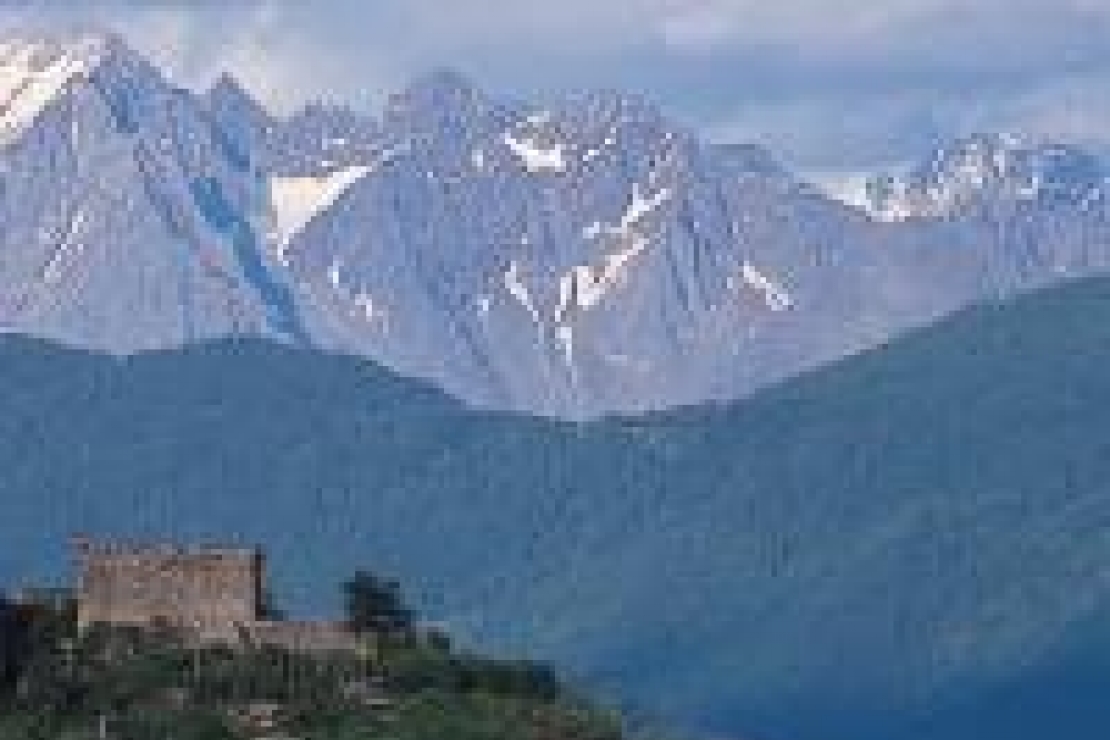
Nebbiolo is one of the oldest and most prized black-skinned grape varieties of Piedmont: its grapes produce Barolo and Barbaresco in the Langhe, Gattinara in the Vercelli area, and Carema in Canavese, in the province of Turin. As early as 1934 the Enciclopedia Italiana described it as «one of the most prized Italian wine grape varieties» and took its Piedmontese origin as certain[1]. The earliest written traces of the name concern precisely the vineyards around Rivoli, at the gates of Turin[2].
The name and the plant
The most widely accepted etymology links the name to fog (nebbia): the berries, covered in abundant bloom, look as if misted over; another explanation points to the late harvest, which in the Langhe falls in the second half of October, when the first autumn fogs arrive[3]. The ampelographer Giovanni Dalmasso described it thus in the entry of the Enciclopedia Italiana:
«a bluish-grey colour, very heavily bloomed, almost fogged over (whence the name)»
It is a difficult variety. It buds early and ripens very late, so it is vulnerable to spring frosts and autumn rains[4]; it requires calcareous and tufaceous soils, hillsides facing south or south-west at between 200 and 450 metres of elevation, and wide day-night temperature swings during ripening, and it reacts markedly to every variation in soil and microclimate, so much so that neighbouring vineyards can yield very different wines[3]. The wine has a not very deep ruby colour that soon turns garnet, and abundant tannins that call for long ageing[4]. Entered in the National Register of Grapevine Varieties in 1970, Nebbiolo covers around 5,540 hectares in Italy, mainly in Piedmont and Lombardy; there are three historic biotypes, Lampia, Michet (low-yielding, with intense aromas) and Rosé, lighter in colour and now close to disappearing[4].
Seven centuries of documents
The name appears, in the forms «nebiolius» or «nibiol», in a document of 1268 mentioning some vineyards around Rivoli. It is followed by an Alba contract of 1292 requiring rows of «vitibus neblorii» to be planted, the will of Tommaso Asinari of 1295, a lease of 1303 in Canale paid to the Roero counts in «vino nebiolio», a reference to «uva nubiola» in the Asti area in 1324, and another in Pinerolo in 1428[2]. According to Dalmasso, around 1300 Pier de' Crescenzi already mentioned it as a cultivated and valued grape variety in the territory of Asti[1].
In 1606 Giovanni Battista Croce wrote the treatise Della eccellenza e diversità de i vini che nella Montagna di Torino si fanno: Croce, a goldsmith and agronomist active in the Turin of Emanuele Filiberto and Carlo Emanuele I, described in it the grape varieties and winemaking techniques he tested in his vineyard on the Turin hill[5]; Nebbiolo is discussed there with expertise and described as a «generous, vigorous» wine[2]. At the time the hill was dotted with «vigne», country houses with land planted to vine: in 1790 the architect Amedeo Grossi, in his Corografia del territorio di Torino, recorded 483 such estates there[6].
A team from the CNR and the University of Turin (Anna Schneider, Paolo Boccacci, Roberto Botta) worked on the grape's genetic origin, publishing their findings in 2006: Freisa turns out to be a possible parent of Nebbiolo, and six of the ten varieties most closely related to it come from Valtellina, a clue pointing to a possible Lombard origin that the researchers themselves regard as plausible but unproven[2].
From sweet wine to Barolo
Until the 19th century the Nebbiolo of the Langhe was mostly a sweet, slightly sparkling wine that did not keep well. The turning point is linked to Juliette Colbert, who arrived from Paris in 1814 as the wife of the marquis Carlo Tancredi Falletti di Barolo: together with the oenologist Paolo Francesco Staglieno she introduced French techniques to produce a dry, age-worthy wine. When King Carlo Alberto asked to taste it, the marchioness sent him 325 barrels, one for every day of the year except the forty days of Lent; Cavour too converted his own cellars to the new method, and in 1843 the wine took the name Barolo[7].
In 1934 the Consortium for the protection of the fine typical wines Barolo and Barbaresco was founded; the two denominations obtained DOC status in 1966 and DOCG status in 1980. The present-day Consorzio di tutela Barolo Barbaresco Alba Langhe e Dogliani counts over 500 members, around 10,000 hectares under vine across 96 municipalities, and 66 million bottles a year[8]. On 22 June 2014 the Barolo hills, the Barbaresco hills and the castle of Grinzane Cavour, together with three other components in the Asti and Monferrato areas, were inscribed on the UNESCO World Heritage List as «Vineyard Landscapes of Piedmont»[9].
Spanna, Chiavennasca, Picotener
Outside the province of Cuneo the grape goes by other names: it is called Spanna on the hills of Gattinara and in other parts of the province of Vercelli, Chiavennasca in Valtellina, in the province of Sondrio[1], Melasca in the Biella area, Brunenta in the Ossola valley, and Picotener in upper Canavese and in Valle d'Aosta[2].
In Carema, at the northernmost tip of Piedmont, on the border with Valle d'Aosta, Nebbiolo grows between 300 and 600 metres on stone terraces, trained on low chestnut-wood pergolas supported by pilùn, stone columns[10][11]. The producers' cooperative winery was founded in 1960 on the initiative of ten growers; today it has 101 members, all part-time farmers, and does not exceed 50,000 bottles a year from a denomination area of about 15 hectares, worked entirely by hand. In 2024 the terraced landscapes of Mombarone were entered in the National Register of Historic Rural Landscapes[11].
Nebbiolo and the climate
Climate warming has opened a debate over the growing areas. In January 2024 the Consortium proposed, among five amendments to the production rules, removing the ban on planting Nebbiolo for Barolo and Barbaresco on north-facing slopes, specifying that the total vineyard area would not increase[12]. Carlo Petrini, founder of Slow Food, objected: in his view the proposal would entail «the risk of a total abandonment of other grape varieties and a further compromising of biodiversity»[13]. In June 2024 the producers rejected the amendment; the Consortium's new president, Sergio Germano, closed the debate with the words «Matter closed: the areas will not be touched»[14].
Pages linking here
- Alba
- Barbera
- Barolo (wine)
- Building Permit for the Mosque in the Former Nebiolo Foundry in Turin (October 2026)
- Langhe
Sources
- Treccani – Enciclopedia Italiana —
- AIS Lombardia – Viniplus — 23 January 2008
- Consorzio di Tutela Barolo Barbaresco Alba Langhe e Dogliani
- Quattrocalici
- Edizioni SEB27
- MuseoTorino
- Piemonte Italia (Regione Piemonte)
- Consorzio di Tutela Barolo Barbaresco Alba Langhe e Dogliani
- Regione Piemonte
- Cantina Produttori Nebbiolo di Carema
- Italia a Tavola — 21 May 2026
- ANSA — 26 January 2024
- Slow Food — 11 March 2024
- Gambero Rosso — 20 June 2024