Slow Food
International association born in Bra from Arcigola and Carlo Petrini, promoter of Terra Madre and the Salone del Gusto in Turin.
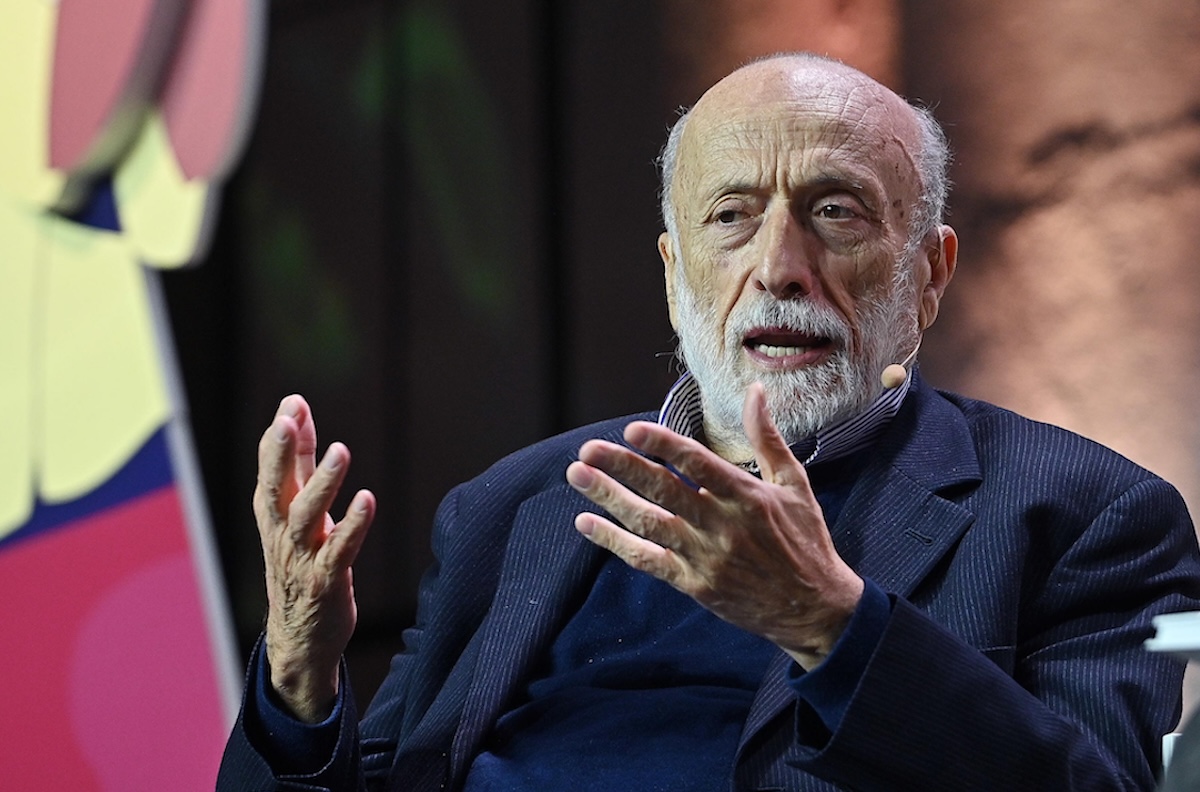
Slow Food is the international association born in Bra, in the province of Cuneo, around Carlo Petrini, with the aim of defending local cuisines, food quality and agricultural biodiversity.[1][2] From Piedmont the movement spread to dozens of countries, but its biggest event remains in Turin: the Salone del Gusto, later Terra Madre Salone del Gusto, which the city has hosted since 1996.[1]
From Arcigola to an international movement
Its root is Arcigola, the food-and-wine league of ARCI founded in Piedmont in 1986 by Petrini, who had previously created the Friends of Barolo association.[1][2] The English name was chosen to mark the distance from the fast-food chains that were starting to spread across Europe at the time.[3] Sources differ on the founding date: the newspaper Il Post dates Slow Food to 1986, identifying it with Arcigola, while the Treccani encyclopedia dates it to 1989, the year of its international turn.[3][2] That year, in Paris, the manifesto was signed defining the association as
"A movement for the protection of and the right to pleasure"
The association was formally established in Venice in 1990, the same year the newly founded Slow Food Editore published the first Osterie d'Italia guide.[1][3] The Berlin (1992) and Zurich (1993) offices followed, and in 1994 the Taste Workshops (Laboratori del Gusto).[1]
The Salone del Gusto and Terra Madre in Turin
In November 1996 the first edition of the Salone Internazionale del Gusto was held in Turin; the same year saw the launch of the Ark of Taste, a catalogue of products at risk of disappearing, and the first edition of Cheese, the dairy event held in Bra.[1] In 2004 Turin hosted the first Terra Madre meeting, the worldwide network of food communities: 5,000 delegates from 130 countries.[1]
Since 2012 the two events have merged into a single one, Terra Madre Salone del Gusto; in 2016 the event left the exhibition halls for the streets and squares of the historic centre, drawing a million visitors according to the association.[1] The sixteenth edition, from 24 to 27 September 2026, is organised by Slow Food together with the City of Turin and the Piedmont Region in the squares of the centre, with over 600 producers and more than 800 events between talks and workshops.[4]
Presidia, university, publishing
Through the Slow Food Presidia the association supports small artisanal and traditional productions threatened with extinction; according to the association's own website the project began in 2000, according to Il Post in 1999.[1][3] The Presidio mark is not an official certification, but it gives visibility to producers, mainly through Terra Madre.[3] In 2003 the Slow Food Foundation for Biodiversity was created, and in 2004 the FAO officially recognised Slow Food as a non-profit organisation.[1]
Also in 2004 the University of Gastronomic Sciences opened in Pollenzo, a hamlet of Bra, presented as the first university entirely devoted to the gastronomic sciences and promoted by Slow Food together with the Piedmont and Emilia-Romagna regions.[5][3] In 2008 the Earth Markets (Mercati della Terra) were created, and the following year the first Terra Madre Day, on 10 December, with a thousand events in 150 countries.[1] In 2017 Petrini was among the founders of the Laudato si' Communities, inspired by Pope Francis's encyclical.[6]
Oscar Farinetti, founder of Eataly, also owes something to his friendship with Petrini, crediting him with making him understand that food is the only consumer good that goes inside the body rather than outside it.[7]
Ideas and criticism
The formula Slow Food uses to sum up its programme is the right to food that is "good, clean and fair" for everyone.[6][8] In recent years Petrini shifted the emphasis to biodiversity as a political issue: "Cultural biodiversity must be preserved," he wrote in Terrafutura, proposing it as a political paradigm for the future, a dialogue with Pope Francis published in 2020.[9] The association has also opposed genetically modified organisms from the start.[3]
Criticism has not been lacking. In 2010 essayist Luca Simonetti, in the book Mangi chi può, and writer Antonio Pascale, in Limes, challenged the idea of a natural agriculture and unchanging food traditions; Pascale wrote that Slow Food's ideology amounted to "challenging modernity and the products derived from it while at the same time exploiting its advantages."[10]
After Petrini
In July 2022, at the international congress in Pollenzo, Petrini handed the presidency to Ugandan agronomist Edward Mukiibi, vice-president since 2014.[11] Slow Food Italia, led since 2021 by Barbara Nappini, became a network under the Third Sector Code in 2023.[1][8] Petrini died at his home in Bra on the evening of Thursday, 21 May 2026;[6] on 30 June Bra dedicated an open council session to him.[8] Terra Madre Salone del Gusto 2026, the first without its founder, is centred on biodiversity as a cultural wealth.[4]
Timeline
- — The 2026 edition of Terra Madre opens in Bra, Slow Food's event devoted to biodiversity and linked to the figure of Carlo Petrini, with a programme that also included a focus on olive oil and geographical indications. → ANSA Piemonte La Stampa
Related articles: Carlo Petrini, Eataly
Pages linking here
- Agnolotti piemontesi
- Alberto Cirio
- Arte, Artigianato, Musica e… Siole Pien-e
- Avigliana
- Bagna càuda
- Bicerin
- Carlo Petrini
- Eataly
- Grissino torinese
- Nebbiolo
- Terra Madre Salone del Gusto
- Vermouth di Torino
- Vitello tonnato
Sources
- Slow Food Italia
- Treccani
- Il Post — 22 May 2026
- Terra Madre Salone del Gusto
- Università di Scienze Gastronomiche di Pollenzo
- Gazzetta d'Alba — 22 May 2026
- Il Post — 24 February 2012
- Gazzetta d'Alba —
- Terra Madre Salone del Gusto
- Il Post — 28 April 2010
- Il Post — 17 July 2022