Adriano Olivetti
Industrialist and intellectual from Ivrea (1901-1960), a graduate of the Politecnico di Torino, who turned Olivetti into a world group and a model of community-based enterprise.
Adriano Olivetti (Ivrea, 11 April 1901 – 27 February 1960) was a Piedmontese industrialist, publisher, urban planner and politician. The son of Camillo Olivetti, he turned his father's small typewriter factory into an international group that, at his death, employed more than 45,000 people, 27,000 of them abroad, and made it the testing ground for an idea of the firm as bound to its community and territory.[1] His relationship with Turin runs through his student years at the Politecnico and one of his least remembered creations, Europe's first school of management, founded in the city in 1952.[1]
Education between Ivrea and Turin
The eldest of six children, he attended a technical school specialising in physics and mathematics and then the Politecnico di Torino, where he graduated in industrial chemistry in 1924.[1] The same Politecnico had trained his father, a pupil of Galileo Ferraris, who graduated in electrical engineering in 1891 and accompanied his teacher to the 1893 international electricity congress in Chicago.[2] During his years in Turin, Adriano came into contact with the liberal and reformist circles close to Piero Gobetti.[1] In 1924 he married Paola Levi, daughter of the pathologist Giuseppe Levi and sister of Natalia Ginzburg.[1]
In 1926, when Camillo hid in his house Filippo Turati, who was being sought by the police, Adriano joined Ferruccio Parri and Sandro Pertini in helping the socialist leader flee abroad, personally driving the car.[1]
From the factory floor to America
The firm «Ing. C. Olivetti e C.» had been founded in Ivrea on 29 October 1908, and its first model, the M1, had been presented at the 1911 Turin International Exhibition.[2] In 1924 Adriano entered the factory as an apprentice worker, an experience he later recalled harshly as «a torture for the spirit, I was imprisoned for hours that never ended, in the blackness and darkness of an old workshop».[1] From those years he kept a conviction he repeated to his managers:
«you have to understand the blackness of a Monday in a worker's life, otherwise you cannot do the job of a manager»
Between July 1925 and January 1926 he visited around a hundred factories in the United States, including the Ford plant at Highland Park, and came back with his own idea of work organisation, far from a mechanically applied Taylorism.[1] In 1931 he created the Advertising Service, in 1932 the portable MP1 was launched and, on 4 December of that year, he was appointed general manager; in 1938 he succeeded his father as chairman.[3][1] In 1937 he founded the magazine Tecnica e organizzazione and launched, with the rationalist architects Luigi Figini and Gino Pollini, the regional plan for the Aosta Valley, published in 1943.[1]
War, arrest and exile
In July 1943 he was arrested for conspiracy, after a letter he had sent to Allen Dulles was intercepted. After 8 September he lived in hiding between Rome and Milan and in February 1944 took refuge in Switzerland, where he stayed until 1945.[1] In exile, after meeting Altiero Spinelli, he grew close to European federalism and prepared L'ordine politico delle Comunità, published in Rome in 1946.[1] His father Camillo had died in Biella on 4 December 1943.[2]
Community, factory and city
In 1946 Nuove Edizioni Ivrea became Edizioni di Comunità and the magazine Comunità was launched; in 1947 he founded the Movimento Comunità.[3] His model was «a Community neither too large nor too small, concrete, territorially defined, endowed with wide-ranging powers».[1] In 1948 a Management Council was set up at the Ivrea plants, for many years the only joint body of its kind in Italy; the same year he joined the governing board of the Istituto nazionale di urbanistica, and in 1952 he received the title of Cavaliere del lavoro.[1][4] In 1957 the company moved the working week from six days to five, a condition that entered the national contract for metalworkers only in 1970.[5]
In 1952 he founded in Turin the IPSOA, the Institute for Advanced Studies in Business Organisation Sciences, Europe's first school of management, entrusting its direction to Giovanni Enriques.[1] New plants rose outside Ivrea: at Agliè in the Canavese (1955), at San Bernardo di Ivrea (1956), at Caluso (1957) and at Pozzuoli, designed by Luigi Cosenza.[1] Opening the Campania plant on 23 April 1955 he said: «And so, facing the most singular gulf in the world, this factory has risen in respect for the beauty of the place».[6] In 1956 he was elected mayor of Ivrea and in 1958 a member of parliament, the only one elected from his movement; he soon handed the seat to Franco Ferrarotti.[1][3]
Typewriters and electronics
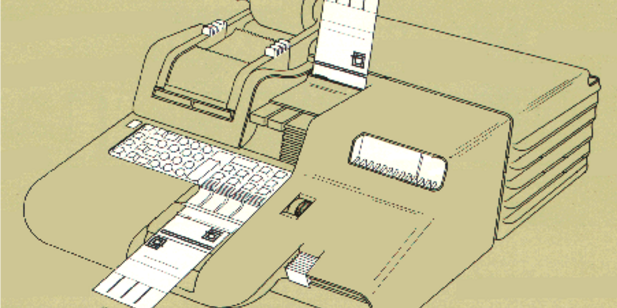
In the post-war years came the Lexikon 80 (1948) and the portable Lettera 22 (1950), designed by Marcello Nizzoli, which won the Compasso d'Oro in 1954.[3][5] In 1952 Olivetti opened a computer research laboratory in New Canaan, in the United States, and in 1955 the Laboratorio di ricerche elettroniche near Pisa; in 1957, together with Telettra, he founded the Società generale semiconduttori.[1] To lead the Pisa group he brought in Mario Tchou, an engineer recruited in New York in August 1954; on 8 November 1959 Adriano presented to the President of the Republic Giovanni Gronchi the Elea 9003, an electronic computer built entirely with transistors, with no valves, designed by Ettore Sottsass.[7] Umberto Eco recalled that, at a time when the first large computers were already being built, Olivetti «certainly hired good engineers, but had no hesitation in hiring a graduate who had written an excellent thesis on Homeric dialects».[8]
Death and legacy
He died on 27 February 1960 of a cerebral thrombosis, on the train from Milan to Lausanne; the Treccani Encyclopaedia gives Aigle, in Switzerland, as the place of death.[1][4] Mario Tchou died in a car accident near Santhià on 9 November 1961.[7] In 1964 FIAT, Imi, Mediobanca, Pirelli and La Centrale entered Olivetti's share capital; FIAT's managing director Vittorio Valletta named as a threat to the company precisely «having moved into the electronics sector, which requires investments that no Italian company can afford».[8] That same year the electronics division was sold to General Electric.[7]
The Fondazione Adriano Olivetti was set up in 1962 to carry on his work of study.[9] On 1 July 2018, at the 42nd session of the World Heritage Committee held in Manama, «Ivrea, industrial city of the 20th century» was inscribed on the UNESCO list as Italy's 54th site, comprising 27 buildings and complexes.[10][11] The inscription cites the factories, offices, social services and residences built between the 1930s and the 1960s according to the ideals of the Movimento Comunità.[11] The company's history after him is told in the article Olivetti.
Pages linking here
- Camillo Olivetti
- Canavese
- Carnevale di Ivrea
- Galileo Ferraris
- Ivrea
- Mole Meccanica Lavorazioni Meccaniche di Precisione - STM Frizioni C
- Olivetti
- Politecnico di Torino
Related articles: Camillo Olivetti, Canavese, Carnevale di Ivrea, Galileo Ferraris, Ivrea, Olivetti
Sources
- Treccani – Dizionario Biografico degli Italiani, vol. 79 —
- Archivio Storico Olivetti
- Archivio Storico Olivetti
- Treccani – Enciclopedia
- Treccani – Il Contributo italiano alla storia del Pensiero: Tecnica
- AIDP – HR Online — 7 April 2015
- Archivio Storico Olivetti
- Il Sole 24 Ore – Econopoly — 23 February 2016
- Fondazione Adriano Olivetti
- il Giornale
- UNESCO World Heritage Centre