Natalia Ginzburg
Writer, translator and Einaudi editor (1916–1991): raised in Turin, she told the story of her Jewish, anti-fascist family in Family Lexicon, winner of the 1963 Strega Prize.
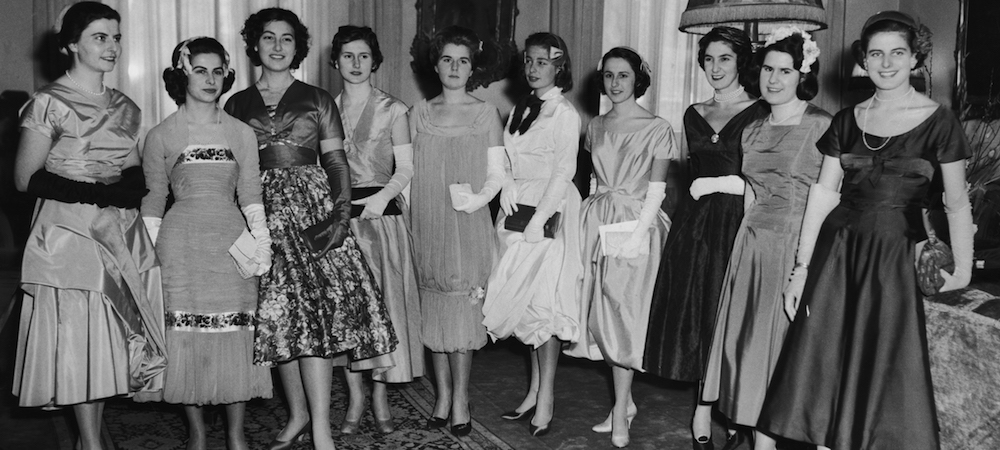
Natalia Ginzburg, born Natalia Levi (Palermo, 1916 – Rome, 1991), was a writer, translator, playwright and editor. Although born in Sicily, she came of age in Turin, where she grew up, studied, published her first stories and worked at the Einaudi publishing house; the Jewish, anti-fascist Turin of her family is at the heart of her best-known book, Lessico famigliare (Family Lexicon), winner of the 1963 Strega Prize.[1]
A family of scientists in a Turin household
She was the youngest of five children of Giuseppe Levi, an anatomist from Trieste of Jewish origin, and Lidia Tanzi of Milan, who had grown up in a socialist family.[1] In 1919 her father was appointed full professor of human anatomy at the University of Turin, where he directed the anatomy institute for about twenty years; his students included three future Nobel laureates: Rita Levi-Montalcini, Salvador Luria and Renato Dulbecco.[2] In 1938 the racial laws forced him out of teaching, and Levi moved to the University of Liège, returning to Turin in 1941 after the German invasion of Belgium.[2]
Natalia received a classical education in Turin but never graduated from university. She made her debut very early: in 1933 the magazine Solaria published one of her stories.[1]
Leone Ginzburg and the publishing house
On 12 February 1938 she married Leone Ginzburg.[3] Born in Odessa in 1909 to a Jewish family of Russian origin, Leone had studied in Turin at the Liceo D’Azeglio and had joined the circle around Norberto Bobbio and Augusto Monti; together with Giulio Einaudi he had founded the publishing house that bears the Einaudi name.[4] Einaudi had been registered in November 1933, but Leone was able to work there only briefly in its early years: in January 1934 he refused to swear an oath of loyalty to the regime, was arrested for his activity in Giustizia e Libertà, and remained imprisoned until March 1936.[3][4] In those Turin years Natalia became close friends with Cesare Pavese.[1]
Internal exile in Abruzzo and Leone’s death
When Italy entered the war, in June 1940 Leone was interned as a “civilian war internee” in Pizzoli, a village in the province of L’Aquila, where he remained until July 1943; Natalia followed him there with their children.[3][1] It was there that she wrote her first novel, La strada che va in città, published in 1942 under the pseudonym Alessandra Tornimparte, because the racial laws barred her from signing it herself.[1]
After the armistice the family moved to Rome. On 20 November 1943 Leone was arrested while working on Italia Libera, the underground Partito d’Azione newspaper he directed; on 5 February 1944 he died in the German-controlled wing of the Regina Coeli prison, from the torture he had suffered.[3][4][1] From the liberation of Rome onward, Natalia signed her work under her husband’s surname.[1]
An editor at Einaudi
After the war she worked for the Einaudi publishing house, in Rome and Turin, alongside Pavese, Italo Calvino, Elio Vittorini and Felice Balbo.[1] One of the most often cited episodes in the history of Italian publishing dates from this period: it was Ginzburg who rejected Primo Levi’s Se questo è un uomo (If This Is a Man).[5] In 1947 she published È stato così, and in 1952 Tutti i nostri ieri; in 1957 the novella Valentino won the Viareggio Prize.[1] In 1950 she had married the English scholar Gabriele Baldini; after a period in London, between 1959 and 1961, she settled in Rome.[1]
In the same years she also wrote short essays and pieces on the condition of women. In her 1948 Discorso sulle donne she described melancholy as a trait common to women’s experience, summing it up in a phrase that has remained famous: “we all fall into the well now and then”.[5]
Family Lexicon
After Le voci della sera (1961) and the essay collection Le piccole virtù (1962), 1963 brought Lessico famigliare (Family Lexicon), which won the Strega Prize that same year.[6][5] The book reconstructs the story of the Levi family, Jewish and anti-fascist, in Turin from the 1930s to the 1950s; the memoir proceeds through sentences, sayings and household expressions, words repeated for years around the table, through which the siblings rediscover the bonds of their youth.[7] In the book’s foreword the author wrote:
“Throughout my childhood and adolescence I always intended to write a book about the people who lived around me at that time. This is, in part, that book: but only in part, because memory is unreliable, and because books drawn from reality are often no more than faint glimmers and fragments of what we have seen and heard.”
Its pages feature her anatomist father, with his austere character, and the life of a Jewish, anti-fascist household.[2][7] Critics have recognized in her fiction a “careful and penetrating analysis of family microcosms and of bourgeois settings and characters, in a deliberately simple and highly communicative style”.[6]
Theatre, journalism and Parliament
In 1964 she played Mary of Bethany in Pier Paolo Pasolini’s The Gospel According to St. Matthew.[1] Her friendship with the actress Adriana Asti led her to the theatre: she wrote several plays, beginning with Ti ho sposato per allegria.[1][6] She collaborated for a long time with La Stampa and with the Corriere della Sera, where for some years she was a television critic; her articles gave rise to collections such as Mai devi domandarmi (1970) and Vita immaginaria (1974).[6][1] These were followed by the novels Caro Michele (1973, published by Mondadori after a falling-out with Einaudi, to which she returned in 1977), Famiglia (1977), La città e la casa (1984) and the historical reconstruction La famiglia Manzoni (1983).[6][1]
In 1983 and 1987 she was elected to the Chamber of Deputies as an independent of the left on the Communist Party’s lists.[6] Among her last books is the essay Serena Cruz o la vera giustizia (1990).[6] She died in Rome in October 1991; a few days earlier she had finished translating Guy de Maupassant’s Une vie.[5]
Pages linking here
Related articles: Giulio Einaudi, Giulio Einaudi editore