Carlo Levi
Carlo Levi (Turin, 29 November 1902 – Rome, 4 January 1975) was a doctor by training, as well as a painter, writer and politician. Raised in the Turin of Piero Gobetti and Felice Casorati, he was among the driving forces of Giustizia e Libertà, experienced internal exile in Lucania, and drew from that experience Cristo si è fermato a Eboli (Christ Stopped at Eboli), the book that placed the agrarian South at the centre of postwar Italian culture.[1][2]
A Turin family and the meeting with Gobetti
He was born to Ercole Levi and Annetta Treves, into a middle-class Jewish family in Turin: his father represented an English textile firm, while his mother was the sister of the socialist leader Claudio Treves. In 1904 the family settled in a villa at number 11 of Via Bezzecca. He attended the Liceo Alfieri and enrolled in medicine at the University of Turin, graduating in 1924 and later working with the university's medical clinic.[1] After a few years as an assistant, however, painting and writing came to prevail over medicine.[3]
Decisive was his meeting, in November 1918, with Piero Gobetti. In Gobetti's journal La Rivoluzione liberale Levi published, on 27 August 1922, an article on Antonio Salandra.[1] Years later, in the 1933 Quaderni di Giustizia e Libertà, he would write:[1]
"To write about Piero Gobetti means, for those of us of our generation, to write autobiography"
The painter of the Sei di Torino
In 1923, through Gobetti, he met Felice Casorati, who urged him to commit himself more fully to painting; among the other influences of those years were Lionello Venturi and Edoardo Persico. He made his debut at the 14th Venice Biennale in 1924 with the painting Arcadia, and from 1926 his stays in Paris became more frequent.[1] From 1923 he exhibited regularly in Italian and foreign shows: his painting reacted against the academic formalism of the time by rediscovering the tradition of French Impressionism and Post-Impressionism, in a style the Enciclopedia Italiana describes as intense and sensual yet governed by reason.[2]
Between 1929 and 1932 he was part of the group known as the Sei pittori di Torino, which held its first exhibition at the Galleria Guglielmi in January 1929; Nicola Galante and Jessie Boswell soon left the group, while Levi continued exhibiting with the others for two more years.[1]
Anti-fascism, arrests, and internal exile
After the exceptional laws of 1926, he took part with Mario Andreis, Riccardo Bauer and Nello Rosselli in the project for the anti-fascist journal La Lotta politica, which appeared in a single issue in April 1929.[3][1] He joined Giustizia e Libertà and in 1932 helped define its programme, co-signing with Leone Ginzburg, in the Quaderni of September 1932, a piece on the concept of autonomy within the movement's programme. Between 1931 and 1933, during his stays in Paris, he maintained contacts between the anti-fascists of Turin and the exiles in France.[1][3]
He was arrested in Alassio on 13 March 1934 and, released on 9 May, placed under police caution. On 15 May 1935 he was arrested again and sentenced to three years of internal exile: on 3 August he arrived in Grassano, in the province of Matera, and on 18 September he was transferred to Aliano. He regained his freedom on 20 May 1936, thanks to the clemency measures with which the regime celebrated the conquest of the Empire, after a little more than nine months spent in Lucania.[1]
France, Florence, and the «Cristo»
The racial laws of 1938 drove him to France, from where he could not return even when his father died, in Alassio, on 24 September 1939. Between September and December of that year, in La Baule, he wrote the essay Paura della libertà (Fear of Freedom), published only in 1946.[1] From 1941 he lived in Florence; between 26 June and 26 July 1943 he was held at the Nuove prison in Turin and at the Murate prison in Florence; after 8 September he took part in the Florentine Resistance, living hidden in the homes of friends.[1][3] In August 1944 he was co-director of La Nazione del popolo for the Partito d'Azione, and from September 1945 he directed the Roman edition of L'Italia libera.[1]
Cristo si è fermato a Eboli, written in Florence between December 1943 and July 1944, was published by Einaudi in September 1945 and was immediately a great success with both readers and critics. Italo Calvino called it "a kind of book rare in our literature, intended to set out the broad lines of a worldview."[1] A first part had already appeared in the first issue of Il Ponte, the journal founded by Piero Calamandrei; the account of a South that had remained frozen in another time brought the Southern Question to the heart of Italian political debate.[4]
The postwar years and the Senate
Having left the Partito d'Azione in February 1946, he ran for the Constituent Assembly in the Potenza-Matera constituency, without being elected; during that campaign he met the poet Rocco Scotellaro. There followed the travel books and chronicles that Einaudi published in Turin: L'orologio (1950), Le parole sono pietre (1955), on Sicily, Il futuro ha un cuore antico (1956), on the Soviet Union, La doppia notte dei tigli (1959), Un volto che ci somiglia (1960), and Tutto il miele è finito (1964).[1][5]
In 1963 he entered the Senate as an independent on the PCI lists, elected in the Civitavecchia constituency; in 1968 he was confirmed in Velletri and joined the Sinistra indipendente group, while in 1972 he was not re-elected. In the chamber he spoke on the problems of the South and on emigration, on the Vietnam War, on the Prague Spring, and on the protection of artistic heritage and the landscape.[1]
The final years and his legacy
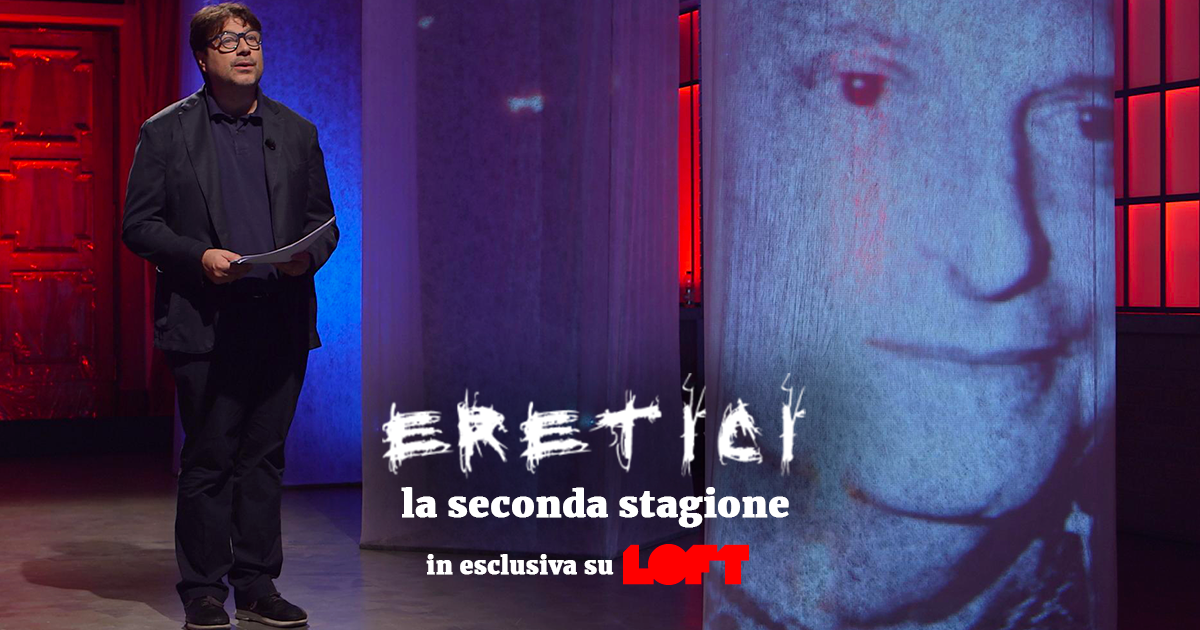
At the end of 1972 a detached retina left him temporarily blind: from that experience came Quaderno a cancelli, published posthumously in 1979. He died in Rome on 4 January 1975 and was buried in Aliano, the town of his exile.[1] Introducing the episode of Eretici that art historian Tomaso Montanari devoted to him, Il Fatto Quotidiano called him "one of the greatest writers of twentieth-century Italy, but also a wonderful painter."[4] His works remain in the Einaudi catalogue, the Turin publishing house that in 1945 had released his best-known book.[5]