Giulio Einaudi editore
Publishing house founded in Turin on 15 November 1933 by Giulio Einaudi with former students of the Liceo D'Azeglio; its ostrich emblem has marked twentieth-century Italian culture.
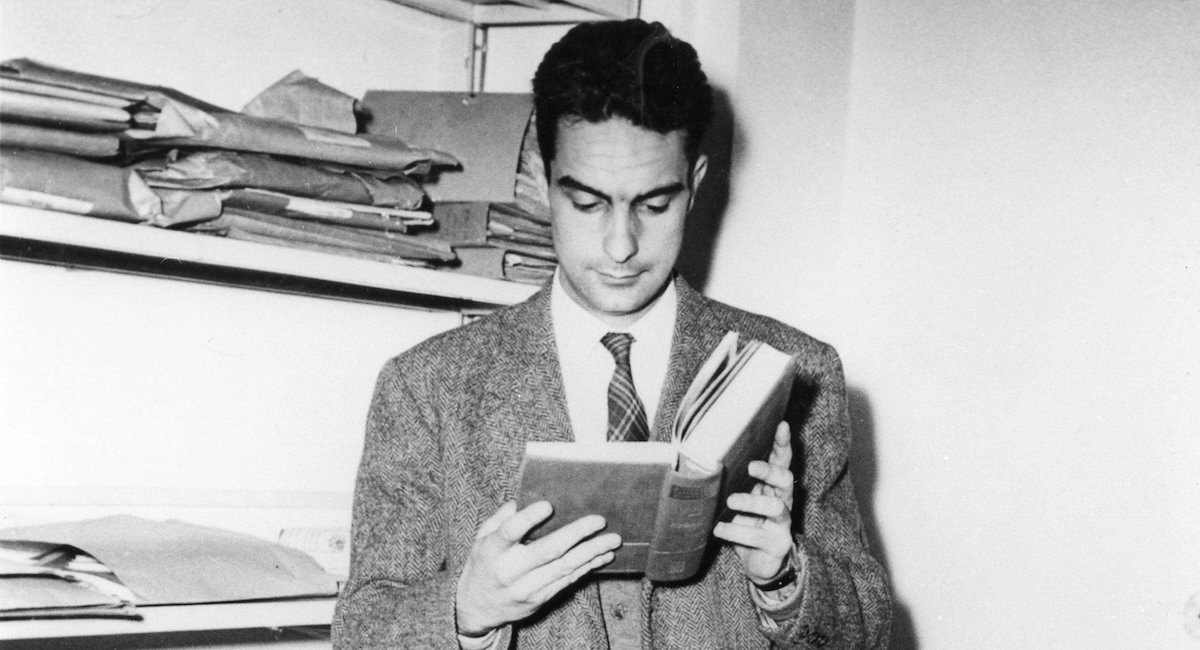
Giulio Einaudi editore is a publishing house founded in Turin on 15 November 1933, when Giulio Einaudi, son of the economist Luigi Einaudi, set it up on the third floor of via Arcivescovado 7 — the same building that had housed the editorial office of Antonio Gramsci's Ordine nuovo.[1] Around the ostrich emblem there formed, for decades, the workshop where Cesare Pavese, Leone Ginzburg, Elio Vittorini, Italo Calvino and Norberto Bobbio worked, and from which came series, magazines and major works that shaped reading in Italy.[1]
A class from the Liceo D'Azeglio
The group of founders came almost entirely from the Liceo classico D'Azeglio, where the teacher Augusto Monti had educated his students in culture and civic freedom. Alongside Giulio Einaudi, born in 1912 and the entrepreneurial soul of the firm, were Leone Ginzburg, the first editorial director, Cesare Pavese, Norberto Bobbio and Massimo Mila; later came Natalia Ginzburg and Giaime Pintor.[2] Ginzburg brought to the house the liberal, Gobetti-influenced outlook he had inherited from Piero Gobetti; among the founding series were the "Biblioteca di cultura storica" and the "Saggi", the latter launched in 1937.[2][1]
The first notable venture was the new series of the magazine La Cultura (1934-35), which the banker Raffaele Mattioli had revived in 1929 and years later handed over to Einaudi along with its name.[1] The ostrich emblem also comes from La Cultura: the device, drawn from Paolo Giovio's Dialogo delle imprese militari et amorose (1559), had been devised for the Roman Girolamo Mattei, captain of the horse guard of Pope Clement, and carries the motto spiritus durissima coquit, which the publishing house reads as the ability to wait for the right moment to act.[2] Pavese explained it in the 1948 Antologia Einaudi:
"Spiritus durissima coquit is the scroll that the old ostrich, the emblem of the Einaudi editions, carries around its head."
Under fascism and in the war
The regime struck early. In 1934 Leone Ginzburg refused the oath of allegiance and lost his university post; a few weeks later he was arrested together with Carlo Levi, Augusto Monti and others, sentenced to four years and freed under amnesty on 13 March 1936.[3] In 1935 La Cultura and the Riforma sociale were shut down, and arrests reached contributors and the publisher himself.[1] Under special police surveillance and unable to write for newspapers, Ginzburg worked intensively at Einaudi alongside Pavese,[3] who had joined the firm in 1938.[4]
In 1941 a Rome office opened and a "directorate" was formed of Ginzburg, Pintor, Carlo Muscetta and Pavese,[1] which from January 1943 ran the Rome office.[4] After 8 September 1943 the firm came under the commissarial control of the Republic of Salò; Giulio Einaudi took refuge in Switzerland and then returned to fight with the Garibaldi brigades in the Aosta Valley.[1] Pavese spent the occupation teaching under a false name at a boarding school in Casale Monferrato.[4] Ginzburg, captured in Rome on 20 November 1943 while editing the clandestine sheet Italia Libera, was found dead on 5 February 1944 in the infirmary of Regina Coeli prison.[3]
After the war: Wednesdays and the series
When the war ended the editorial staff were spread across three cities: Pavese in Rome, Vittorini in Milan with the magazine Il Politecnico, Massimo Mila in Turin.[2] Pavese, by then regarded as an editorial director of great authority, created with the ethnologist Ernesto De Martino the "collana viola" devoted to ethnology, psychology and the history of religions, publishing Jung, Lévy-Bruhl, Kerényi and Propp.[4] Meanwhile the "Coralli" and "Millenni" series (1947) and the "Supercoralli" (1948) were launched,[1] and the house published the works of Gramsci.[2] From the late 1940s decisions were taken at the Wednesday editorial board, whose members included Felice Balbo, Franco Venturi, Natalia Ginzburg and Antonio Giolitti.[1]
Italo Calvino, who arrived in Turin right after the war, started out there selling books in instalments and from 1950 was an editor and head of the press office; his thousands of letters are kept in the firm's archive.[5] Of the work he said:
"Working at a publishing house, I devoted more time to other people's books than to my own. I don't regret it: everything that serves the whole of a shared civic life is energy well spent"
After Pavese's death in 1950 coordination passed to Luciano Foà, while Vittorini directed "I gettoni" (1951-58), the series that launched Beppe Fenoglio, Mario Rigoni Stern and Leonardo Sciascia.[2][1] Between 1954 and 1957 a financial crisis made a rescue necessary with Mattioli's help, and the firm became a joint-stock company with 4,300 subscribers.[1]
The years of greatest expansion
The 1960s brought the "Pbe" (1960), the "Nue" (1962), the "Collezione di poesia" (1964) and Giulio Bollati's "Nuovo Politecnico" (1965), while Vittorini and Calvino ran the magazine Il menabò (1959-1967).[2] The 1970s brought "Gli struzzi" and Calvino's "Centopagine"; the Storia d'Italia edited by Ruggiero Romano and Corrado Vivanti sold over 100,000 copies, Elsa Morante's La storia sold around a million, and the fifteen-volume Enciclopedia (1977-1982) sold over 35,000.[2]
Crisis, receivership and new ownership
In 1983 a serious financial imbalance led the following year to government receivership, entrusted to the lawyer Giuseppe Rossotto; from 1989 the firm was taken over by Electa and from 1991 joined the Elemond group, formed from Electa and Mondadori.[1] According to Il Post, the decisive turn came with the 1994 acquisition by Silvio Berlusconi's Mondadori group, at a moment of economic difficulty.[6] Even in the crisis years new series were born, "Microstorie", edited by Carlo Ginzburg and Giovanni Levi, and "Scrittori tradotti da scrittori".[2] Giulio Einaudi died on 5 April 1999 at Poggio Sommavilla; in 2003 the Fondazione Giulio Einaudi was set up in Turin.[1]
Today
The leadership of recent decades has been tied to Ernesto Franco, who joined in 1991 as a non-fiction editor, was editorial director from 1998 for the longest period in the firm's history, and from 2011 was general manager by choice of the Mondadori Group; in 2023 he handed the editorial directorship to Paola Gallo and died in September 2024.[6] In 1996 "Stile Libero" was launched, aimed at a young readership; the catalogue came to include Nobel laureates such as Coetzee, Pamuk, Vargas Llosa, Mo Yan, Munro, Modiano and Ishiguro.[2] The catalogue also changes by subtraction: in 2024 the rights to Philip Roth, published by Einaudi for over twenty years, passed to Adelphi, and the old editions were withdrawn from the market.[7] The house still invokes its founder's formula:[2]
"It is to this principle of the 'religion of freedom' that the publishing house still appeals today, well aware that the various books it publishes serve a unified and manifold body of knowledge"
Norberto Bobbio gave the shortest summary of it: "Einaudi's is an ostrich that has never buried its head in the sand."[2]
Related articles: Cesare Pavese, Giulio Einaudi, Italo Calvino, Langhe, Natalia Ginzburg
Pages linking here
- Alba
- Antonio Gramsci
- Beppe Fenoglio
- Carlo Levi
- Cesare Pavese
- Compagnia di San Paolo
- Gianni Rodari
- Giulio Einaudi
- Italo Calvino
- Natalia Ginzburg
- Piero Gobetti
- Primo Levi
- Umberto Eco
Sources
- Treccani – Dizionario Biografico degli Italiani
- Giulio Einaudi editore
- ANPI
- Treccani – Dizionario Biografico degli Italiani
- Il Post — 19 September 2025
- Il Post — 10 September 2024
- Il Post — 10 February 2026