Norberto Bobbio
Norberto Bobbio (Turin, 18 October 1909 – Turin, 9 January 2004) was a philosopher of law and politics, a jurist and a scholar of institutions. Born and dying in the same city, he studied there, was arrested there as an anti-fascist and taught there for more than thirty years; in 1984 President Sandro Pertini appointed him senator for life[1]. The entry that Torino Scienza dedicates to him describes him as «Philosopher, jurist, historian and political scientist, regarded as the leading legal theorist and philosopher of politics of the second half of the twentieth century»[2].
Education in Turin
Son of Luigi Bobbio and Rosa Caviglia, he attended the Massimo d'Azeglio middle school and lyceum[1]. At the University of Turin he graduated twice: in Law in 1931, with a thesis in philosophy of law supervised by Gioele Solari, and in Philosophy in 1933, with Annibale Pastore[1], discussing Husserl's phenomenology[2]. Those were the years the university itself recalls as an «extraordinary cultural and anti-fascist season»: the same milieu shaped Alessandro Galante Garrone, Leone Ginzburg, Massimo Mila, Vittorio Foa, Giorgio Agosti, Dante Livio Bianco and Cesare Pavese[3].
On 15 May 1935 he was arrested in Turin together with friends from the Giustizia e Libertà group[1], charged with anti-fascist propaganda[4]. During this period he joined the editorial staff of the Rivista di filosofia, linked to Piero Martinetti[1].
Provincial chairs and the Resistance
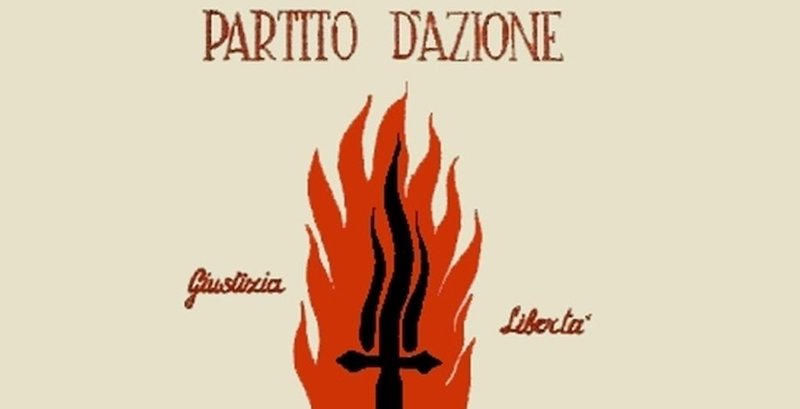
His academic career began far from home: Camerino in 1935, then Siena and, from 1940, Padua[5]. In 1938 he won the competition for the chair of philosophy of law and in 1942 became full professor[1]. In Camerino he grew close to the liberal-socialist movement, and in the Veneto he was among the founders of the Partito d'Azione[4], which he joined in October 1942[1]. The party had been founded in Rome on 4 June of that year, and Bobbio was counted among its liberal-socialists alongside Guido Calogero and Tristano Codignola[6].
At the end of 1943 he was arrested again: according to the Centro studi Piero Gobetti, on 6 December in Padua[1]; according to ANPI, on 7 December in Verona, for his contacts with the CLN; in both accounts he was released at the end of February 1944[4]. Back in Turin, he represented the Partito d'Azione in the Fronte degli intellettuali and in the Comitato della scuola[4]. After the Liberation he wrote for the newspaper Giustizia e Libertà, edited by Franco Venturi[1], and in 1946 he stood as a candidate for the Constituent Assembly for the Partito d'Azione in the Padua-Rovigo-Vicenza-Verona constituency[2], without being elected[1].
Professor in Turin
On 3 March 1948 he was called to the chair of philosophy of law at the University of Turin, which he held until 1972; from 1962 to 1971 he also taught political science. In 1972 he moved to the Faculty of Political Science as professor of philosophy of politics, teaching there until 16 May 1979; he finally left the university on 1 November 1984[1]. From 1945 he long directed the Rivista di filosofia[7], partly together with Nicola Abbagnano[1].
His legal work runs from Scienza e tecnica del diritto (1934) and L'analogia nella logica del diritto (1938) to Teoria della norma giuridica (1958), Teoria dell'ordinamento giuridico (1960) and Dalla struttura alla funzione (1977), in which a functional reading of law moved beyond Kelsen's structural framework[7]. Gaetano Carcaterra, in the Enciclopedia Italiana, identified in the «methodological demands for rigor, clarity and concreteness» the reason for his turn toward analytic philosophy from the mid-1950s onward[8].
Politics and Culture
In 1955 Politica e cultura was published[2], and on the political side his work aimed, in the words of the same encyclopedia entry, at the «properly political commitment» of developing a model of socialism within liberal-democratic institutions[8]. These were followed by Da Hobbes a Marx (1965), Il problema della guerra e le vie della pace (1979), Thomas Hobbes (1989) and an Autobiografia (1997)[7]. The Centro Gobetti opens the page dedicated to him with one of his definitions[1]:
«Culture is intellectual balance, critical reflection, a sense of discernment»
He also wrote for the press: among the bylines carried by the Rome daily Paese Sera was his own, alongside those of Gianni Rodari and Umberto Eco[9]. His distinction between right and left, based on the different ways of regarding inequalities among people—natural for the right, a product of society for the left—has also been taken up in recent journalistic debate, for instance to discuss the positioning of the Movimento 5 Stelle[10].
Honors and Final Years
A national member of the Accademia delle Scienze di Torino from 1960[2] and of the Lincei from 1966[5], he was also a member of the British Academy[4]. On 18 July 1984 Pertini appointed him senator for life; he received the Balzan Prize in 1994 and the Hegel Prize in 2000[1]. He remained present in the life of the city: in May 1993 he spoke at the presentation of Valentino Castellani's candidacy for mayor (see Sindaci di Torino), and on 18 October 1999 the University of Turin marked his ninetieth birthday with an official ceremony[11].
Legacy in Turin
Bobbio was the founder and first president of the Piero Gobetti research center, to which he entrusted his study library and his papers[12]. His name also belongs to the library complex of the Luigi Einaudi Campus, the university site for law and political science overlooking the river[13].
Pages linking here
- Amedeo Avogadro
- Giulio Einaudi
- Giulio Einaudi editore
- Luigi Einaudi
- Massimo d'Azeglio
- Natalia Ginzburg
- Piero Gobetti
- Umberto Eco
- Università degli Studi di Torino
Related articles: Amedeo Avogadro, Emmanuel Philibert, Luigi Einaudi, Politecnico di Torino, Università degli Studi di Torino, Vittorio Amedeo II
Sources
- Centro studi Piero Gobetti
- Torino Scienza
- Università degli Studi di Torino
- ANPI
- Treccani
- Il Post — 4 June 2022
- Treccani – Dizionario di filosofia
- Treccani – Enciclopedia Italiana, V Appendice (G. Carcaterra) —
- Il Post — 6 December 2019
- Il Post — 21 December 2018
- Radio Radicale
- Centro studi Piero Gobetti
- MuseoTorino