Gianni Vattimo
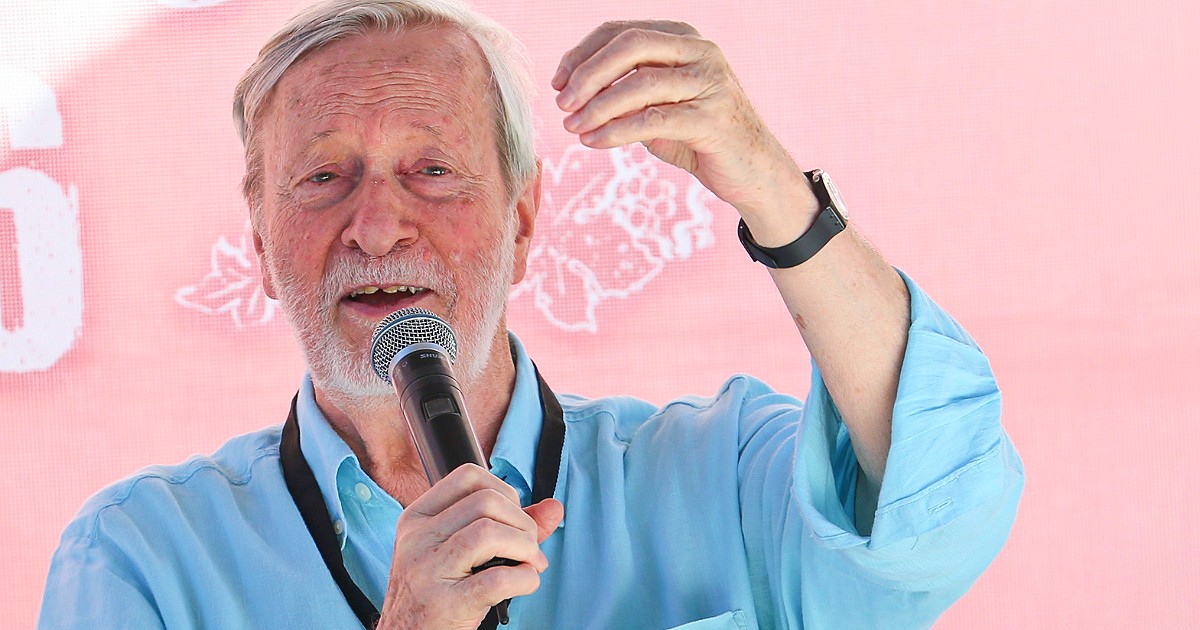
Gianni Vattimo (Turin, 4 January 1936 – Rivoli, 19 September 2023) was a Turin-born philosopher, theorist of «weak thought» and one of the best-known names of Italian philosophy abroad. Registered at birth as Gianteresio, known as Gianni, he trained and taught for over forty years at the University of Turin, where he was a pupil of Luigi Pareyson alongside Umberto Eco[1]. Alongside his academic career he pursued a long political engagement on the left, two terms in the European Parliament, and a public presence as an intellectual who described himself as both a communist and a Catholic[2].
Origins and education
He was born in Turin to a Turinese seamstress and a Calabrian policeman, who died when his son was not yet two years old[2]. In 1954, together with Eco, he passed a Rai competitive examination for the hiring of new staff; both left the broadcaster at the end of the 1950s[1]. In 1959 he graduated in philosophy from the Turin university, in Pareyson's school, from which he inherited his interest in aesthetics and hermeneutics[1][3].
He continued his studies in Germany, at the University of Heidelberg, where he studied under Hans-Georg Gadamer and Karl Löwith[1]. That experience produced his first book, Essere, storia e linguaggio in Heidegger (1963), followed by Poesia e ontologia (1967) and Schleiermacher filosofo dell'interpretazione (1968)[4]: Heidegger, Nietzsche and the hermeneutic tradition remained his reference authors throughout his life.
The chair in Turin
His university career unfolded entirely in Turin. In 1964 he became a lecturer and five years later, in 1969, full professor of aesthetics; in the 1970s he served as dean of the Faculty of Letters and Philosophy[2]. From 1982 he held the chair of theoretical philosophy, which he kept until retiring from teaching in 2008[2][3]. He later became professor emeritus of philosophy at the Turin university[5].
His fame grew abroad as well: he received honorary degrees from the universities of La Plata, Palermo, Madrid and from the Universidad Nacional Mayor de San Marcos in Lima[1]. Besides his academic activity, he appeared on television as author of cultural programmes for Rai and wrote for numerous Italian and foreign newspapers[2].
«Weak thought»
At the start of the 1980s he put forward the formula that made him famous. In 1983 Il pensiero debole was published, a collective volume edited together with Pier Aldo Rovatti[3]. The Treccani encyclopedia summarizes the proposal as a mode of thought
«characterized by the abandonment of traditional metaphysics' claims to foundation and by the relativization of every philosophical or ideological perspective that seeks to present itself as definitive or absolute»
The definition is taken from the entry in the Dizionario di filosofia[4]. Vattimo was considered one of the leading exponents of the current known as «postmodern», and his weak thought stood in opposition to «strong categories» and to traditionalism[2]. From this came La fine della modernità (1985), devoted to the passage from modernity to postmodernity through Nietzsche and Heidegger, and La società trasparente, on the role of the media in contemporary society[4][5]. Among others, Introduzione a Heidegger (1987) and Etica dell'interpretazione (1989) followed[4].
Faith and politics
From the 1990s onward Vattimo's reflection also turned to faith, with Credere di credere (1996) and Dopo la cristianità (2002)[3]. He publicly described himself as «homosexual and Christian» and became a spokesperson for the demands of the LGBTQ+ movement at a time when these were still at an early stage in Italy[2].
His political engagement passed through various left-wing groupings: first the Partito Radicale, then Alleanza per Torino, then the Democratici di Sinistra and finally the Comunisti Italiani[1]. He was elected to the European Parliament twice: in 1999 with the Democratici di Sinistra, for the term ending in 2004, and in 2009 as an independent on the Italia dei Valori lists[2][3]. In 2015 he joined the Partito Comunista Italiano[3]. On the theoretical level his final destination was Hermeneutic communism (2011), written with Santiago Zabala and published in Italian as Comunismo ermeneutico[3][5].
Politics eventually distanced him from academic circles. In an interview with Repubblica in June 2013 he explained: «Since I discovered praxis I have been somewhat distant from academic philosophy»[6].
The final years
In his final years the news followed the legal case involving his assistant and partner, whom Vattimo had asked to join in a civil union: on 6 February 2023 the Turin Court sentenced him at first instance to two years' imprisonment and a fine of 900 euros for circumvention of an incapable person[7]. The civil union was suspended pending a final ruling; Vattimo, even after the sentence, reaffirmed his intention to marry him[2]. Hospitalized in his final days at the hospital in Rivoli, he died there on the evening of 19 September 2023, at the age of 87[2][3].