Lancia
Automobile manufacturer founded in Turin in 1906 by Vincenzo Lancia: the Lambda, the Aurelia, the presidential Flaminia, the Stratos and the Delta; part of the FIAT group since 1969, today Stellantis.
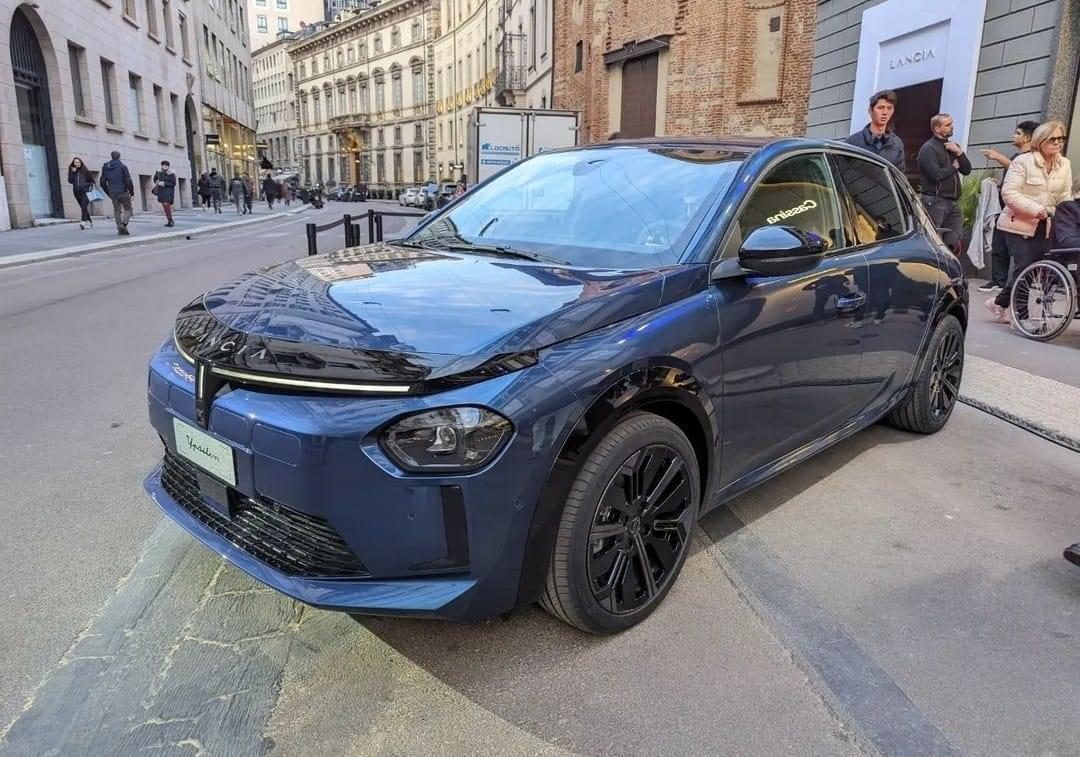

Lancia is the automobile manufacturer founded in Turin on 29 November 1906 by Vincenzo Lancia, a driver for FIAT, together with test driver Claudio Fogolin. Founded as a general partnership with a capital of 100,000 lire, in the 1930s it contended with Bianchi for second place among Italian manufacturers, with more than 9% of the national market.[1] It has tied its name to cutting-edge technical solutions, such as the Lambda's load-bearing unibody and the first production V6 engine, to the state cars of the Presidency of the Republic, and to one of the richest rally records in the world. Since 1969 it has belonged to the FIAT group, today merged into Stellantis.
The driver from Fobello
Vincenzo Lancia was born on 24 August 1881 in Fobello, in upper Valsesia, in northern Piedmont. His father Giuseppe had made his fortune in canned meat during the Crimean War and owned properties in Turin, at via Ormea 2 and corso Vittorio Emanuele II 9. After unremarkable studies at the Lagrange technical school, in 1898 the young man was hired as an employee by Giovanni Battista Ceirano, where he learned the trade from the engineer Aristide Faccioli; in 1900 he moved with Ceirano to FIAT. He was the company's test driver and racing driver for eight years, and the Dizionario Biografico degli Italiani recalls that in that period he earned "the reputation of the fastest driver of the age."[1]
From via Ormea to Borgo San Paolo
The start was difficult: in February 1907 a fire destroyed drawings and foundry patterns and damaged machinery, with losses estimated at 140,000 lire. The first workshop was at corso Vittorio Emanuele II 9, then production moved to a building at the corner of via Ormea and via Donizetti; in January 1911 the company moved to via Monginevro, in the Borgo San Paolo area, where that year 390 workers were employed. The first models took their names from Greek letters: Alfa, Beta, Gamma, Dialfa, then the Eta (491 units), the Theta (1,696) and the Kappa (1,800). Alongside automobiles, Lancia built trucks for the army as early as the Libyan war and, from 1927, the Omicron series of buses; between 1928 and 1931 it sold trucks to the Soviet Union. In 1920 Vincenzo Lancia was named a Cavaliere del Lavoro, and in 1928 he joined the board of directors of the Teatro Regio.[1]
The Lambda and the 1930s
The car that changed the company's reputation was the Lambda. The patent was filed on 7 December 1918 and registered on 28 March 1919 under number 171922; on 1 September 1921 Vincenzo Lancia personally tested the prototype on the Moncenisio pass, and the car was presented at the Paris Motor Show in October 1922. It was the first automobile without a conventional chassis: the body itself performed the load-bearing function. It had independent front wheel suspension and a narrow-angle V4 engine of 2,119 cc, producing 49 horsepower in the first series; it was the designer Battista Falchetto who translated the owner's ideas into drawings. About 13,000 were produced across nine series, until 1931.[2] With the Lambda, the historian Franco Amatori observes, Lancia moved from being a "rather conservative" quality manufacturer to one of the boldest designers on the international scene.[1]
These were followed by the Dilambda (1929), the Artena, the Astura and the Augusta (1932). In 1935, under pressure from the government, a plant was opened in Bolzano; that same year sales reached a peak of 8,085 vehicles, and between 1935 and 1939 40% of revenue came from trucks. On the eve of the war the company had more than 5,000 employees.[1] In 1937 Lancia Veicoli Industriali started up a plant for military trucks.[3] Vincenzo Lancia did not live to see the success of his last creation, the Aprilia: he died of a heart attack on 15 February 1937 in his Turin home. Leadership passed to his wife Adele Miglietti, previously his secretary.[1]
Aurelia, Flaminia, Fulvia
On 2 April 1951, at the Turin Motor Show, the Aurelia B20 made its debut, a grand tourer with the first V6 engine in automotive history, designed by the engineer Francesco De Virgilio; it cost 2,600,000 lire and raced in the Sestriere Rally, the Mille Miglia and the 24 Hours of Le Mans.[4] The B24 Spider version became famous as the car in the film Il sorpasso.[5]
The Aurelia's successor was the Flaminia, born from the relationship with Pinin Farina: the coachbuilder presented the one-off Florida in 1955, in 1956 the first Flaminia prototype was shown at the Turin Motor Show, and in 1957 the definitive version debuted in Geneva. Pinin Farina used his Florida II until his death in 1966, and liked to say: "I am reminded of that Detroit manufacturer, Olds, who lived and slept in his automobile. And I live in my Florida." In 1961, for the visit of Queen Elizabeth II, President Giovanni Gronchi had four Flaminia cabriolets prepared, named after thoroughbred horses: Belfiore, Belmonte, Belvedere and Belsito.[6] A presidential Flaminia is part of the collection of the Museo Nazionale dell'Automobile.[7]
The Fulvia was presented in Geneva in 1963, designed by Piero Castagnero under the technical direction of Antonio Fessia, who had been at Lancia since 1955. In February of that year Cesare Fiorio had founded the HF Squadra Corse, and in 1972 the Fulvia Coupé won the Monte Carlo Rally with Munari and Mannucci; about 200,000 units of the sedan were built.[8]
In the FIAT group and the rally legend
After the founder's death a long decline began, which ended with the acquisition by FIAT in 1969.[1] The first entirely new model of the FIAT management was the Beta HPE.[5] In the same years the Stratos was born: at the 1970 Turin Motor Show Bertone presented the Stratos Zero prototype designed by Marcello Gandini, and in 1971 the version with the V6 engine from the Ferrari Dino 246 arrived.[9] Of that car Nuccio Bertone said:
"it fits the driver and co-driver like a suit fits an athlete, almost putting their musculature on display"
Homologated on 1 October 1974, the Stratos won the manufacturers' world rally championship in 1974, 1975 and 1976 and three consecutive Monte Carlo Rallies; it ran its last race at the Rally di Monza in November 1982.[9] In 1983 the Rally 037 won the manufacturers' world championship against the four-wheel-drive Audis; in 1979 the five-door Delta had been born, designed by Giorgetto Giugiaro, destined to become a rally legend.[5] The heavy vehicles branch, on the other hand, was merged in 1975 into Iveco, together with Fiat, OM, Unic and Magirus-Deutz.[3]
The return
Within the Stellantis group the brand has been relaunched. In April 2025 Lancia returned to racing precisely at the Rally Regione Piemonte, on the roads of the Langhe around Alba, and in the 2026 edition 27 crews raced in Lancia cars, almost half of them in the Ypsilon.[10] On 31 August 2026, at the Rally of Paraguay, the Lancia Corse HF team won the WRC2 world team title in its first year of participation, with the Ypsilon Rally2 HF Integrale.[11] On 17 September 2026 the new Gamma was presented in Rome, a fastback crossover produced at the Melfi plant with around thirty Italian suppliers.[12] Since 1 September 2026 the brand has been led by Arnaud Belloni, who is also CEO of Fiat and Abarth, as part of the FaSTLAne 2030 plan.[13] For the 120th anniversary, on 13 and 14 September 2026 more than 140 enthusiasts from the official Lancia clubs of Italy and Europe gathered at the Heritage Hub in Turin to visit its collection.[14]
Pages linking here
- Battista Pininfarina
- Chivasso
- Fifteenth Edition of The Others Art Fair (October 2026)
- Fifth edition of the Festival Car International Concours d'Elegance (September 2026)
- Fred Buscaglione
- Giorgetto Giugiaro
- Italdesign Giugiaro
- Iveco
- Martini & Rossi
- National Automobile Museum
- Pininfarina
- Revigliasco
- The first Turin domains
- The Others Art Fair
- XV edizione di The Others Art Fair (2026)
Related articles: Iveco, Pininfarina
Sources
- Treccani — 1 January 2004
- Stellantis Heritage
- Iveco Group
- Stellantis Heritage
- Lancia
- Stellantis Heritage
- MAUTO - Museo Nazionale dell'Automobile
- Stellantis Heritage
- Stellantis Heritage
- Stellantis Media — 30 July 2026
- Stellantis Media — 31 August 2026
- Stellantis Media — 17 September 2026
- Stellantis Media — 1 September 2026
- Stellantis Media — 14 September 2026