Subsonica
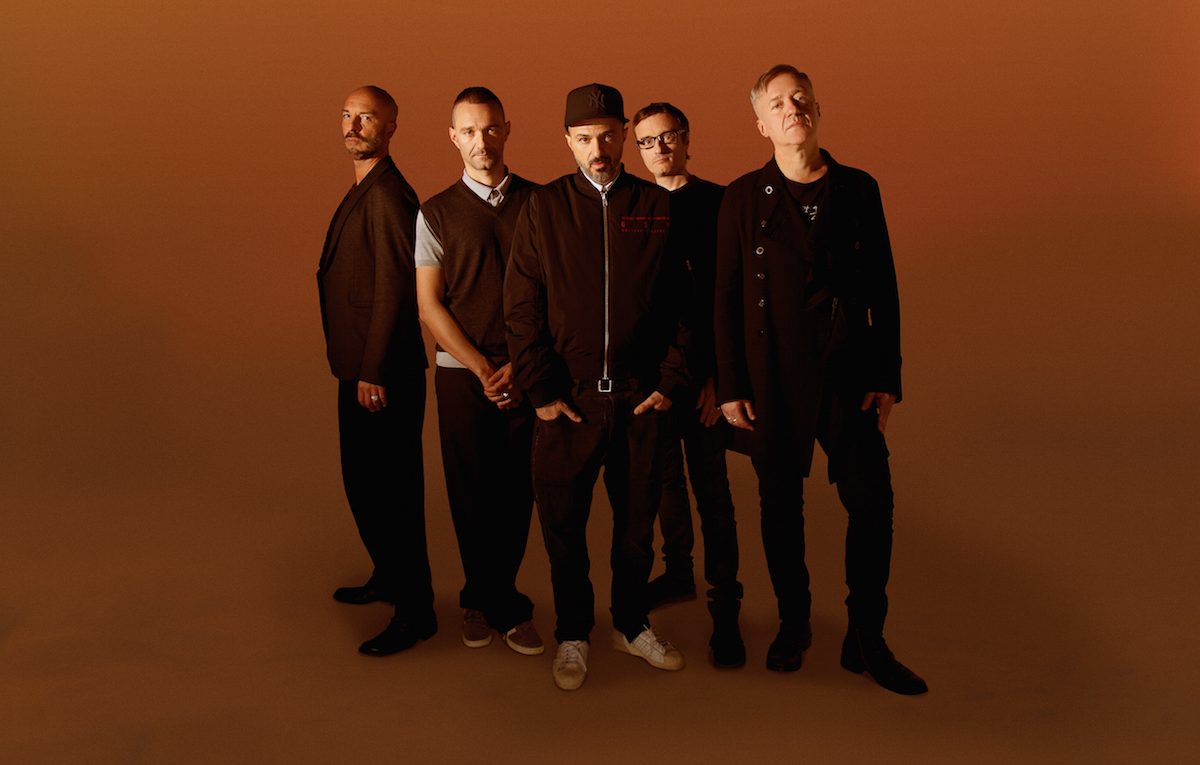
Subsonica is a band formed in Turin in 1996: a lineup that blends electronica, rock and synthesizer melodies and that, starting out in the city's underground scene, has become one of Italy's most followed bands, with an audience reaching into Europe and Japan[1]. Over thirty years they have released eleven studio albums and changed only one member, and their name has remained tied to the city where they were born[1][2].
The Murazzi and social-centre years
The original lineup brought together five musicians: Samuel on vocals, Max Casacci on guitar, Boosta on keyboards, Pierfunk on bass and Ninja on drums[2]. The Treccani encyclopedia lists them by surname: Romano, Casacci, Dileo, Matta and Peretti Griva[1]. Their first album, simply titled Subsonica, came out on 24 May 1997 on the Mescal label[2].
It was an Italy without social networks, where centri sociali (self-managed social centres) were countercultural hubs frequented by thousands of young people, and the Murazzi del Po drew youths from across the country[3]. Samuel later described that season as a response to a dark period: in those years, he recalled, in Turin people either worked in a factory, stayed at home, or destroyed themselves with heroin, and those spaces "gave communities the chance to flourish again"[4]. Max Casacci summed up the band's bond with the city in a single line[4]:
"If we weren't from Turin it would have been a different story, or there would have been no story at all…"
Microchip emozionale and Sanremo
National breakthrough came with their second album, Microchip emozionale, released in August 1999 and driven by the single Colpo di pistola[3][1]. The following year the band took the stage at the Sanremo Music Festival with Tutti i miei sbagli, and the album was reissued with that track added[3]. Twenty years later, in November 2019, the album returned in a new version, Microchip temporale, reinterpreted with some of today's leading artists, from Cosmo to Willie Peyote, plus Elisa, who debuted in the same years as the band[3]. Casacci drew a conclusion from it: the band's story, he said, proved "to a lot of kids that you can seriously make music in Italy"[3].
Casasonica, Vanchiglia and the new bassist
In 2004 the group set up its own outfit, Casasonica, at once a recording studio and a label for their own musical experiments, which later also hosted other acts such as Sikitikis and Gem Boy[2]. In the 2000s it was also a community space; its successor is Andromeda, a studio set up in the basement of a building in Vanchiglia, the district wedged between the city centre, the Po and the Dora, where their most recent albums were born, amid tape recorders and analogue effects[4]. Two blocks away stands the Askatasuna social centre[4].
The original lineup lasted until 1999; starting with Amorematico (2002), Vicio (Luca Vicini) plays bass in place of Pierfunk[2][1]. In 2004 the group moved from Mescal to EMI, a change accompanied, according to Mole24, by various disputes and mutual legal complaints[2]. These were followed by Terrestre (2005), L'eclissi (2007), Eden (2011), Una nave in una foresta (2014), 8 (2018) and Mentale strumentale (2020)[5].
The band and the city
Subsonica often weigh in on city affairs. In November 2012, when several venues along the Murazzi were sealed off for building-code violations, they were among the first to object: the closure, they argued, stemmed from complaints by a few residents about weekend noise, whereas the riverside nightlife was an asset for Turin, a source of jobs and international appeal[6]. Linea 77, Africa Unite, Negrita and rapper Ensi joined them, and the Facebook page "Salvare i MURAZZI" topped eleven thousand members within days[6].
After the eviction of Askatasuna on 18 December 2025, the band wrote that Turin reacted with irritation to what it perceived as "a heavy-handed militarized intrusion prompted by the eviction of Askatasuna," adding: "Those who try to apply here the rules that elsewhere seem to yield easy results end up with nothing in hand"[7]. Casacci, in a personal post, described Vanchiglia waking up to blocked streets, two schools shut and a convoy of police vans, criticized the Prefecture-imposed revocation of the collaboration agreement meant to return the building to the neighbourhood, and asked the City not to let its hand be forced by those who cannot tell the difference between public order and social desertification[7].
Film, arenas and thirty years
For Stefano Sollima's Adagio, presented at the Venice Film Festival, the band wrote the soundtrack[8], which in 2024 earned them the David di Donatello award for best musician[1]. Sollima's proposal influenced the making of their tenth album, Realtà aumentata, released on 12 January 2024[9][1] and mixed in London by Marta Salogni[8]. The lead single, Pugno di sabbia, speaks of a country trapped in "a past that never passes" and of young people born and raised in Italy to foreign parents, without the right to citizenship; the arena tour closed on 13 April 2024 at the Pala Alpitour, now Inalpi Arena[8]. Boosta drew a distinction between success and popularity: "Real success is still being here after twenty-seven, twenty-eight years doing what we love"[9].
The band's thirtieth anniversary was celebrated in 2026. Their eleventh album, Terre rare, came out on 20 March[4]: to write it, Samuel recounted, the band traveled, whereas they usually write songs "while staying still," something "very Turinese," like the adventure novels of Emilio Salgari[4]. Between late March and 4 April the group played four sold-out roughly three-hour shows at the OGR, with a different setlist each night[10]. Willie Peyote, Italian-Palestinian singer Tara, Veronika, and original bassist Pierfunk all joined them on stage for a short set devoted to their debut album[10]. The celebration spilled out into the city: a tram turned into a traveling disco, as in the video for Discolabirinto, an immersive exhibition, photographs from the concerts displayed under the porticoes of Via Po, and QR codes scattered across Vanchiglia; Samuel opened the segment devoted to the band's early days with a "Welcome to 1996"[10].
Pages linking here
Sources
- Treccani
- Mole24 — 25 May 2015
- Rolling Stone Italia — 19 November 2019
- Rolling Stone Italia — 14 February 2026
- Subsonica (sito ufficiale)
- Mole24 — 24 November 2012
- Rolling Stone Italia — 22 December 2025
- Rolling Stone Italia
- Rolling Stone Italia
- Rolling Stone Italia — 4 April 2026