Nutella
A hazelnut and cocoa spread created by Ferrero in Alba in 1964, heir to Supercrema and to the Piedmontese gianduia tradition.
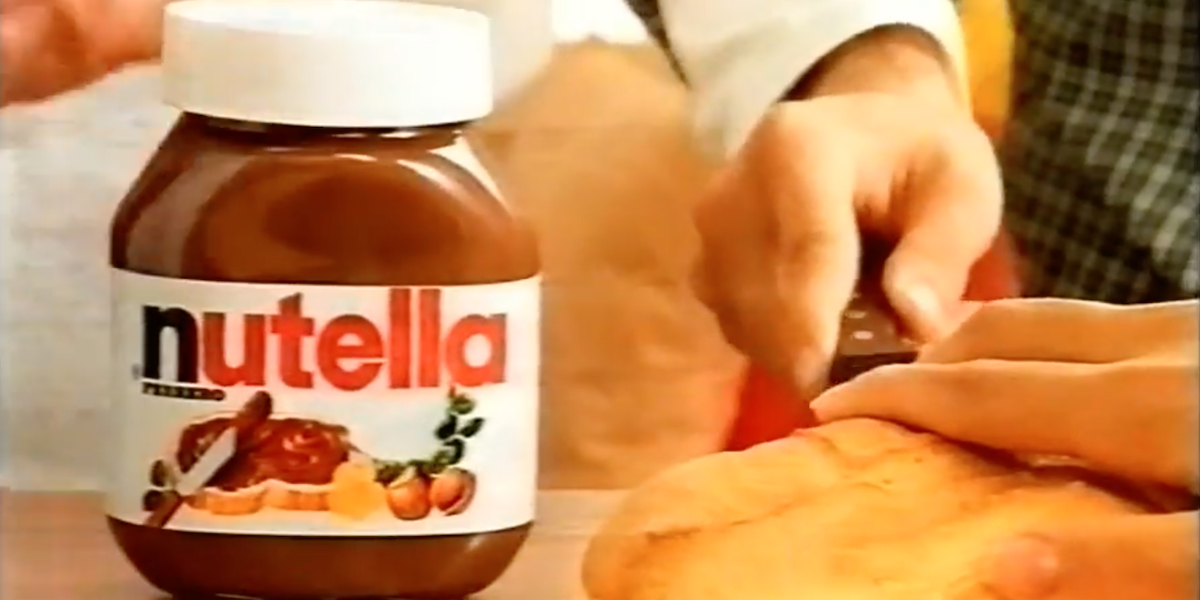
Nutella is the hazelnut and cocoa spread produced by the Ferrero group. It was perfected in 1964 at the family factory in Alba, in the province of Cuneo, where it is still produced today, and the first jar came out on 20 April of that year[1]. It descends from the long Piedmontese tradition of chocolate with hazelnuts, the same lineage as gianduia chocolate and the gianduiotto, and it has become one of the best-known Italian food products in the world.
From Giandujot to Supercrema
It all began in 1946, when brothers Pietro and Giovanni Ferrero went to work in the family pastry shop in Alba. Pietro, whom friends called «the scientist» for his passion for experimentation, was the inventor; Giovanni was the salesman, credited with building the first nationwide sales network[2]. In the postwar years cocoa was scarce and expensive to import, while hazelnuts from the Langhe were abundant: this gave rise to a sweet paste of hazelnuts, sugar and a little cocoa, sold as a block and sliced, called Giandujot[1][3]. The name recalls Gianduia, the Piedmontese mask character whom the Treccani dictionary describes as the embodiment of the peasant, «rough in manner, sharp-tongued and generous-hearted», who also gave his name to chocolate made with finely ground hazelnuts[4].
The recipe later became softer and spreadable, sold in a jar: Supercrema. Sources disagree on the date: the brand's own website places it in 1951[3], while Il Post gives 1949, the year Pietro died[5]. Giovanni Ferrero, grandson of the founder and today the group's executive chairman[5], described that research as follows:
«My grandfather devoted his life to finding this formula and arrived at the creation of what he simply called Supercrema.»
The quotation is taken from the group's history page[2].
1964: Nutella is born
After Pietro's death the company passed to his brother Giovanni, to his widow Piera Cillario and to his son Michele[1]. According to Il Post, it was Michele who improved Supercrema in 1962 by adding cocoa and cocoa butter; two years later the product changed its name, partly because the government had restricted the use of superlatives in advertising[5]. The new name, formed as an Italian-style diminutive of the English word nut, meaning «hazelnut», reflected a specific ambition: Michele Ferrero wanted to sell the spread outside Italy from the very first day[1]. The group also ties 1964 to its own family history: Giovanni Ferrero recalls that Nutella was born in the same year he himself was[2].
Expansion was rapid: the jar reached Germany in 1965, France in 1966, Australia in 1978 with the first plant outside Europe, near Sydney, and the United States in 1983[1][3]. The logo has changed appearance only once, when the light brown of the first part of the lettering turned red and the typeface became Helvetica; the glass jars, shaped like drinking glasses and designed to be washed and reused in the kitchen, have become collectors' items. Among the historic slogans, the best remembered remains: «What would the world be like without Nutella?»[1].
A multinational born in Alba
Michele Ferrero led the company for more than half a century; at his death, on 14 February 2015 in Monte Carlo, he was considered the richest man in Italy[6]. In 2018 the group produced about 365,000 tonnes of Nutella a year and had 25 plants around the world, four of them in Italy[5]; in 2024 the spread was sold in 160 countries and produced at 11 plants[1]. The largest is in Villers-Écalles, near Rouen, in Normandy: about 900 employees and 600,000 jars a day, a quarter of world production. In February 2019 it was shut down as a precaution after a semi-finished product failed quality checks[7].
A small cult has grown up around the jar. World Nutella Day, on 5 February, was launched in 2007 by blogger Sara Rosso[8]; for the fiftieth anniversary, in 2014, a postage stamp was issued, and in 2021 a silver coin featuring the jar and the Alba plant[1]. In November 2019 Nutella Biscuits arrived in Italy, produced in Balvano, in the province of Potenza, on a production line that cost more than 120 million euros[9].
Hazelnuts, palm oil and criticism
The Italian label lists sugar, palm oil, hazelnuts (13%), skimmed milk powder (8.7%) and low-fat cocoa (7.4%)[1]. Palm oil has been at the center of debates over health and sustainability, and some investigations have implicated the company in the exploitation of migrant workers, including minors, in hazelnut harvesting in Turkey, the leading producer country; in 2020 Ferrero donated 4 million dollars to a United Nations agency[1].
The group uses about a third of the hazelnuts produced worldwide[5]. Piedmont harvests about 20,000 tonnes a year, less than Lazio and Campania and far short of the company's needs; for this reason the Progetto Nocciola Italia (Italy Hazelnut Project) aims at 20,000 hectares of new hazelnut orchards, with Ferrero committing to buy 75 percent of the harvest[10]. In the Tuscia area the rush to plant hazelnuts has provoked opposition: film director Alice Rohrwacher has denounced it: «The heart of the landscape is being turned into a perennial monoculture that wipes out everything»[10].
Pages linking here
Related articles: Ferrero, Gianduja chocolate, Langhe, Michele Ferrero