Gianduiotto
Turin chocolate of gianduia paste shaped like a little boat, born in the nineteenth century and named after the carnival mask Gianduja; a PGI has been sought since 2017.
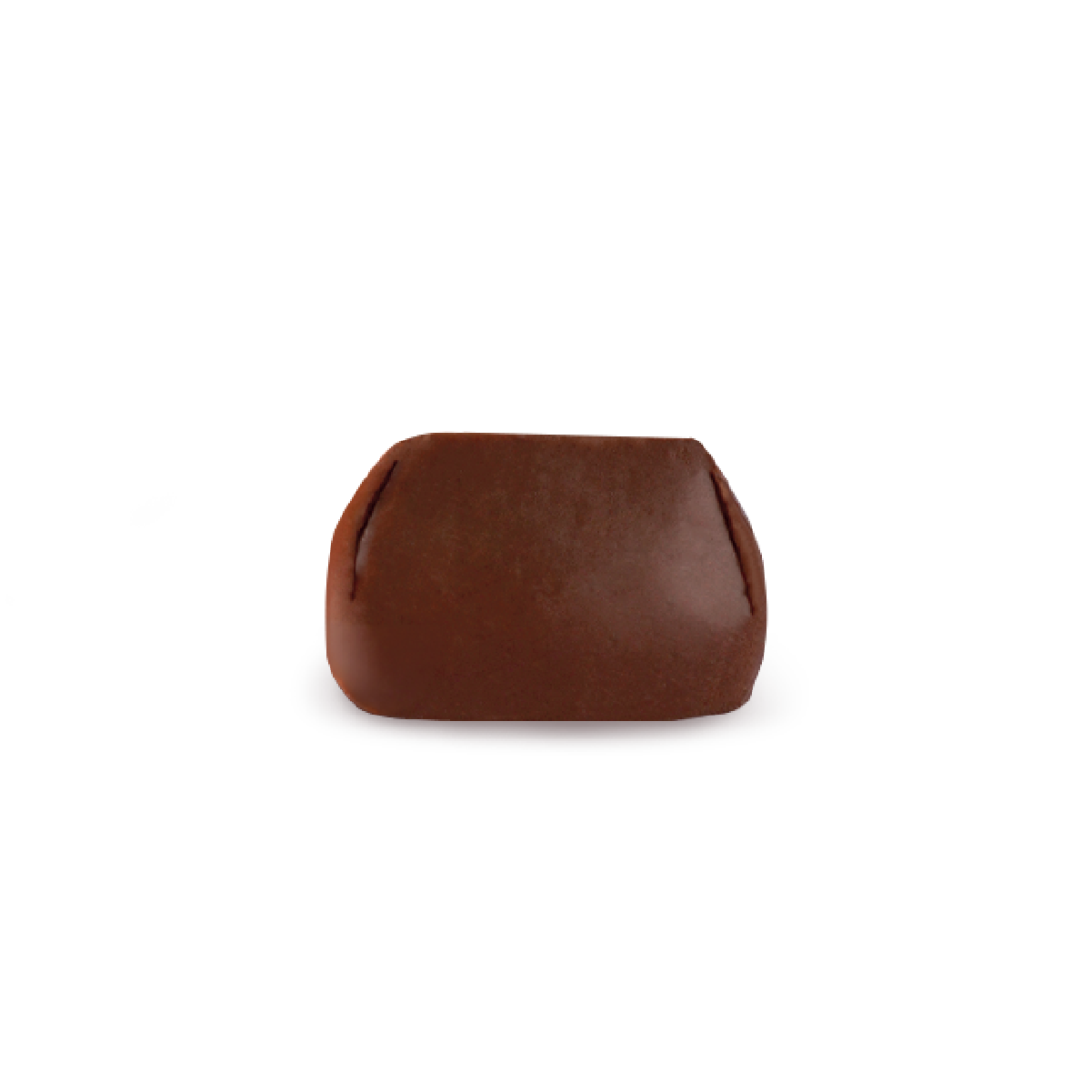
The gianduiotto (also spelled giandujotto in Piedmontese) is the gianduia chocolate made in Turin in the nineteenth century: wrapped in foil, it has a shape recalling the tricorn hat of the Turin carnival character Gianduja, after whom it is named.[1] Made of toasted hazelnuts, cocoa and sugar, it is both a product of Turin's confectionery industry and an emblem of the city, for years at the centre of a dispute over the protection of its name at European level.
The name and the carnival mask
The word comes from gianduia, itself the name of the Piedmontese carnival character: in dialect Giandouja, meaning "Giovanni of the mug".[2] The entry the Istituto dell'Enciclopedia Italiana devotes to the character describes him thus: «He embodies the peasant, rough in manners, sharp of tongue and generous of heart».[2] The costume includes the tricorn hat, a brown jacket trimmed in red, a striped waistcoat, green breeches and a large umbrella; during the Risorgimento the figure became a symbol of Piedmontese popular steadfastness, and by the late nineteenth century he was the leading mask of the Turin carnival, with his own puppet theatre, the d'Angennes.[2] The character's creation is attributed to the puppeteer Gian Battista Sales, in 1798.[3]
The origin: hazelnuts instead of cocoa
The traditional account links the hazelnut paste to the cocoa shortage that followed Napoleon's continental blockade, which had sent the price of the raw material soaring: Piedmontese confectioners then decided to combine cocoa with a local fruit, the hazelnut.[4] Hazelnut chocolate already existed, but with chopped, untoasted hazelnuts: the invention is credited to the craftsman Michele Prochet, who in 1852 had the idea of blending toasted, ground hazelnuts into chocolate[4] (see gianduia chocolate).
Prochet worked with the firm Caffarel until the two companies merged into Caffarel-Prochet; today no trace remains of the name Prochet.[4] Accounts of the public debut diverge: according to a 2012 article by Mole24, the «Gianduiotti Caffarel» were handed out to the public by the Gianduja mask during the Carnival of 1865, and it was then that the character lent his name to the product[4]; according to another article from the same outlet, the sweets went on sale in 1865, wrapped in gold paper, and were distributed by Gianduja at the 1867 Carnival.[3] According to this second account, the first popular name would have been givù, Piedmontese for "fag end, stub".[3] Prochet's partner, too, is named differently in the two accounts: Isidore Caffarel in the first text[4], Ernesto Alberto Caffarel in the second.[3]
How it is made
The basic recipe calls for hazelnuts toasted and ground in a refiner until they become a paste, cocoa, cocoa butter and sugar.[3] Two techniques compete in its production. Extrusion allows the chocolates to be cut by machine while keeping an artisanal process and the product's organoleptic qualities; conching, an industrial method in which the paste is poured into moulds, instead produces a harder chocolate with a lower percentage of cocoa.[3] Caffarel has retained the right to print Gianduja's face on the wrapper.[3]
Turin's artisans
Alongside industry, the gianduiotto has for decades been the domain of the city's workshops. Guido Gobino is based on via Cagliari, at the address of the old Maras workshop.[5] Giuseppe Gobino joined that firm in 1964 as production manager and in 1980 became its sole owner, steering it towards specialising in chocolate; Guido Gobino, who joined in 1985, renamed it «Laboratorio Artigianale del Giandujotto» and focused on the extrusion technique.[6] In 1995 the Tourinot was born, a five-gram version of the classic giandujotto[6], whose name was registered that same year.[5] Gobino explained the choice to the weekly Sette in 2015:[5]
«I noticed that ladies ate the chocolate split in two.»
In 1997 came the Tourinot Maximo, which follows the original recipe without milk powder.[6] The chocolate has also travelled outside the city: in 2024 Giraudi of Castellazzo Bormida, in the province of Alessandria, launched a vegan line, including a dark chocolate with 40% Piedmont Hazelnut PGI, awarded at the International Chocolate Awards in 2017, and a 200-gram «Gianduione».[7]
The battle for PGI status
The application for European recognition as a Protected Geographical Indication was launched in 2017.[8] In early 2020 a committee of about thirty Piedmontese chocolatiers was formed, led by Guido Castagna and Guido Gobino, with the support of hazelnut producers from the Langhe, the Chamber of Commerce and, for the scientific side, the University of Turin, whose Department of Agriculture was tasked with drafting the specification on shape, quality and ingredients.[9] In 2022 the Piedmont Region backed the proposal to seek PGI status for the «Gianduiotti di Torino», with Piedmont hazelnut as an essential ingredient.[10]
The sticking point is the recipe. The committee argues that the historic chocolate had only three ingredients (Piedmont Hazelnut PGI, cocoa mass and sugar) with 30 to 45% hazelnuts; Lindt, the Swiss group that has controlled Caffarel since 1997 and claims the 1865 invention, has proposed allowing milk and lowering the hazelnut share to 26%.[8] In 2023 the regional president Alberto Cirio sided with the committee, represented by Castagna and lawyer Antonio Borra, won the backing of Agriculture Minister Francesco Lollobrigida, and took the matter to European Commissioner Janusz Wojciechowski.[8]
A symbol of the city
The gianduiotto ranks alongside the bicerin among Turin's signature sweets. Presenting the 2015 edition of CioccolaTò, the event held in piazza San Carlo, Torino Sette called it «an authentic symbol of the Piedmontese capital»; the programme included a «Gianduiotto Day» with the awarding of a Gianduiotto Award.[11]
Pages linking here
Related articles: Bicerin, Gianduja chocolate
Sources
- Treccani
- Treccani
- Mole24 — 22 January 2015
- Mole24 — 11 January 2012
- Sette – Corriere della Sera (rassegna stampa Slow Food) — 25 September 2015
- Guido Gobino
- Mole24 — 12 September 2024
- Mole24 — 9 November 2023
- Mole24 — 7 January 2020
- Mole24 — 3 October 2022
- Torino Sette – La Stampa (rassegna stampa Slow Food) — 20 November 2015