Galleria Sabauda
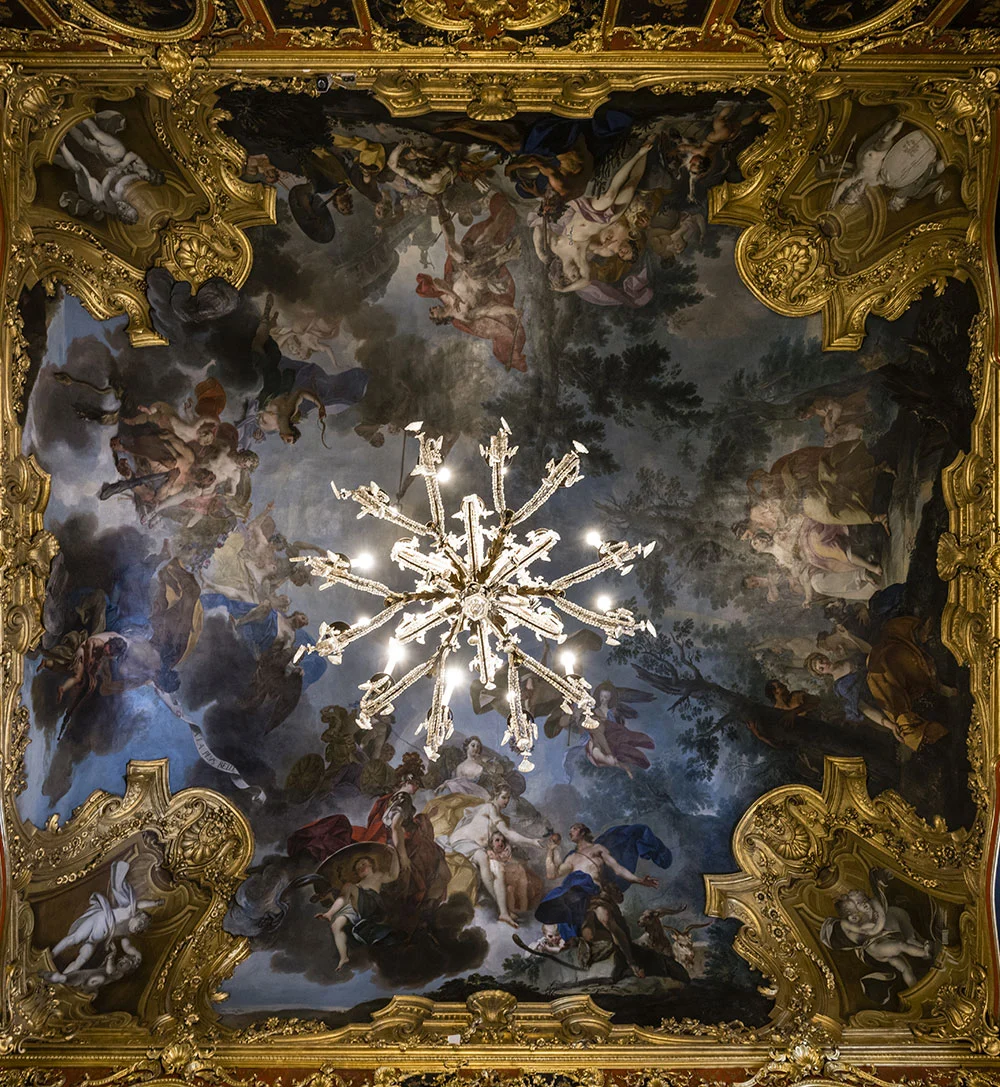
The Galleria Sabauda is the main art gallery of Turin and one of Italy's most important collections of old master painting. Founded in 1832 at the behest of Carlo Alberto with paintings accumulated over centuries by the dukes and kings of the House of Savoy, it is now part of the Musei Reali and displays around five hundred works across four floors of the Manica Nuova of Palazzo Reale, spanning the 14th to the 20th century: Piedmontese, Italian, Flemish and Dutch masters.[1]
From the court picture collection to the public gallery
The core of the collection is the dynastic picture gallery, assembled over generations by the dukes and kings of Savoy and by the family's cadet branches; Carlo Alberto established the gallery in 1832, the year after he ascended the throne.[2] Alongside the paintings from Palazzo Reale, works from the Durazzo palace in Genoa, acquired by the crown in 1824, were added from the very beginning.[1] Among the collections linked to the dynasty, that of Prince Eugene of Savoy-Soissons stands out, rich in Flemish and Dutch paintings; other works came from the Carignano branch.[2] The first home of the gallery was Palazzo Madama, in Piazza Castello;[3] according to the Touring Club Italiano, however, the first display was in the Beaumont gallery, now part of the Royal Armoury.[2]
From the king to the State: the long era of the Accademia
In 1860, on the eve of unification, Victor Emmanuel II ceded the gallery to the State, and it passed from being a crown collection to becoming a national museum.[1] Five years later, in 1865, the paintings were moved to the Collegio dei Nobili building, at via Accademia delle Scienze 6, which also housed the Accademia delle Scienze.[3] There the Sabauda remained open to the public until 2012, for nearly a century and a half; from 4 April of that year part of the collections began to be displayed in the Manica Nuova of Palazzo Reale.[3]
The Gualino collection
The last major addition came in 1930 with the collection of Riccardo Gualino, an industrialist born in Biella in 1879, who donated it to the State.[4] Gualino had assembled the bulk of his collection during the 1920s, and in 1927 he had designed a villa-museum on the San Vito hill to house it, which was never completed; in early October 1930 he was attacked by Mussolini in a speech to the Council of Corporations and, branded a speculator by Confindustria, was arrested in January 1931 and sentenced by the special tribunal to five years of forced confinement on Lipari, from which he emerged free in September 1932.[5] The collection ranges from ancient Egypt to the 19th century, spanning painting, sculpture and decorative arts; its two most celebrated pieces are a Madonna by Duccio di Buoninsegna and the so-called Venus of Turin, attributed to Botticelli and his workshop.[4] Of those "naked females" that Vasari recalled seeing in Florentine homes, only three versions survive: the Turin one, one at the Gemäldegalerie in Berlin, and one in a private collection in Geneva. In 2016 the exhibition Venere incontra Venere brought the Turin and Berlin panels together in Turin for the first time.[6]
The move to the Manica Nuova
The complete transfer to the Manica Nuova of Palazzo Reale, a building constructed between the late 19th and early 20th century to a design by Emilio Stramucci, was completed in December 2014.[1] The spaces had been vacated by the Piedmont Region, which had moved its offices to the new skyscraper in the Lingotto area.[7] The new layout, inaugurated on 4 December 2014 with an entrance at via XX Settembre 86, was designed by Studio Albini, led by Marco and Francesco Albini, with lighting by Studio Castagna Ravelli: a "double-skin" system of walls and sliding panels, conceived so as not to touch the historic masonry.[7] The public was let back in the following day, Friday 5 December.[8]
«Stramucci's scheme called for a high degree of permeability in the masonry structures, which had openings in both the transverse and longitudinal directions, creating an effect of visual transparency between the rooms and a fluidity of space.»
During the years of renovation work, the best-known paintings travelled a great deal: "Over the past 4-5 years this painting has travelled a lot," said director Annamaria Bava in 2016, speaking of the Venus.[6]
The collections
The display follows a chronological path. The 14th to 16th centuries feature Fra Angelico, Mantegna, Paolo Veronese and the Piedmontese painter Gaudenzio Ferrari; the 17th and 18th centuries are represented by Orazio Gentileschi, Guido Reni and Bernardo Bellotto; the Flemish and Dutch section, one of the museum's great strengths, includes Jan van Eyck, Rubens, Anton van Dyck and Rembrandt.[1]
The Sabauda today
In November 2016 two rooms dedicated to works on paper were opened, lit below 50 lux as required for antique sheets, with the display rotated three times a year; the first exhibition, L'occhio fedele, presented thirty 17th-century Dutch prints, from Rembrandt to van Ostade. "There are still unexplored vaults here," explained Enrica Pagella, then director of the Musei Reali.[9] In December 2022 the Gualino collection was moved from the third to the second floor, into seven new rooms in the south wing.[4]
Pages linking here
- Carlo Alberto
- Chivasso
- Massimo d'Azeglio
- Museo Egizio
- Palazzo Madama
- Palazzo Reale
- Piazza Castello
- Residenze sabaude
- Royal Library of Turin
Sources
- Musei Reali Torino
- Touring Club Italiano
- MuseoTorino
- Artribune — 1 December 2022
- Treccani, Dizionario Biografico degli Italiani —
- Artribune — 22 July 2016
- Artribune — 3 December 2014
- Artribune —
- Artribune — 11 November 2016