Stadio delle Alpi
Stadium built in Turin for the 1990 World Cup, home to Juventus and Torino until 2006, dismantled in 2008-2009 to make way for the Juventus Stadium.
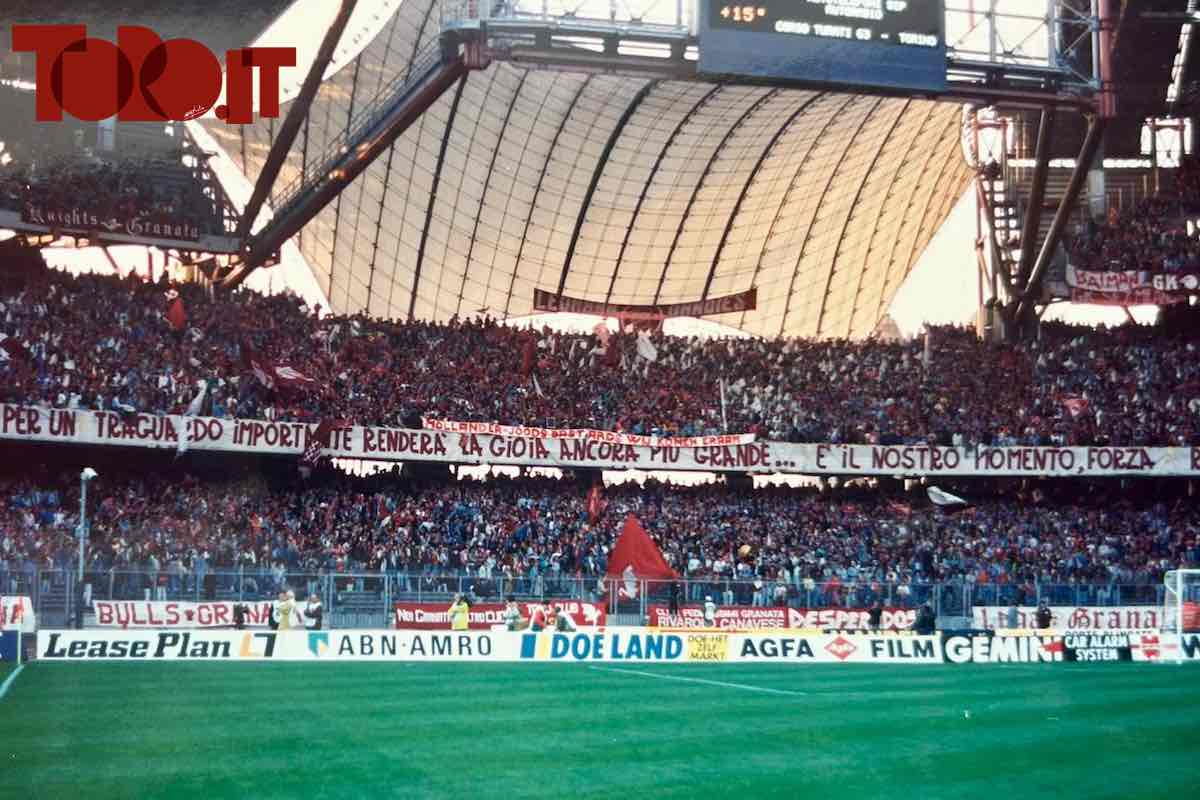
The Stadio delle Alpi was the large football stadium built on the northern outskirts of Turin for the 1990 football World Cup[1]. For sixteen years it was the shared home of Juventus and Torino, who played there until 2006[2]. A groundbreaking work in terms of its roof, it proved poorly suited to football; it was dismantled between 2008 and 2009, and the Juventus Stadium now stands on its site[1].
The project for Italia '90
The client for the work was the City of Turin; construction lasted from 1988 to 1990[3]. The stadium could hold about 70,000 spectators, according to the Turin-based Ossola studio, which took part in the design and puts the construction cost at 57 billion lire[3]. The most ambitious element was the roof: a 27,000-square-metre tensile structure, which the studio describes as one of the largest and most complex roofs of its kind in the world, able to bear a load ten times its own weight[3]. In 1991 the structure won the European Award for Steel Structures, presented in Odense[3].
An athletics track ran around the pitch, following the multi-purpose stadium layout typical of the time[2]. It was precisely this choice that would determine the stadium's fate.
The inauguration of 31 May 1990
The first match was played on 31 May 1990, a few days before the start of the World Cup: a combined selection of Torino and Juventus players took on Porto and won 4-3[2]. About 41,600 paying spectators were in the stands; the first goal in the stadium's history was scored by Torino's Haris Škoro, who netted a hat-trick, and the takings, more than 954 million lire, were donated to charity[2]. The evening began with a gesture that united the two sets of supporters:
"Before kick-off, a minute of silence was observed in memory of the Grande Torino, the victims of Heysel and Gaetano Scirea."
The memory of the Grande Torino and of Scirea, the Juventus defender after whom the Juventus end would later be named, thus opened the history of a stadium that the two rival clubs would have to share[2].
The great European nights
The fullest nights were the European ones. On 15 April 1992 Emiliano Mondonico's Torino beat Real Madrid 2-0, with an own goal by Rocha and a goal by Fusi, in front of more than 60,000 Torino fans: the stadium had sold out hours before kick-off, and the celebrations in the Maratona end carried on all night[4]. It was the first European cup final in the club's history[4].
Two weeks later, on 29 April 1992, the Delle Alpi hosted the first leg of the UEFA Cup final against Ajax, which ended 2-2 with a brace from Walter Casagrande[5]. In the return leg, in Amsterdam, on 13 May 1992, the match finished 0-0 and the trophy went to the Dutch side[6]. Years later the Spaniard Rafael Martín Vázquez recalled that match with bitterness:
"In my second season I played that final, which unfortunately we lost without deserving to."
The quote is reported in the recollection of the match published by Toro.it[5].
A stadium far from the game
The flaws emerged almost immediately. The Torino-focused chronicle sums them up this way: "sightlines very often compromised, spectators far from the pitch because of an avoidable athletics track, and an atmosphere considered cold by both sets of fans"[2]. Added to these problems were the costly maintenance of the playing surface and poor visibility from many sections of the stands[1]. Looking back on the opening of the new stadium, the sports press bluntly called it an "architectural flop due to its poor suitability for a football match"[7].
The last match was played on 11 June 2006: Torino, coached by Gianni De Biasi, beat Mantova 3-1 in the Serie B play-off final and returned to Serie A[2]. After that night the Delle Alpi remained closed.
Dismantled piece by piece
Demolition began in November 2008 and finished in March 2009. Rather than being torn down, the stadium was dismantled: the technique chosen made it possible to recover almost all of the metal and concrete and reuse it on the site of the new stadium, with an estimated saving of around 2.3 million euros[1]. According to Juventus, 40,000 cubic metres of concrete, 5,000 tonnes of steel, 2,000 square metres of glass and 300 tonnes of aluminium were recovered from the old stadium and reused in the new construction or on nearby building sites[8].
From the Delle Alpi to the Juventus Stadium
On the same site Juventus built its own stadium, inaugurated on 8 September 2011: about 41,000 seats, more compact and intimate, and above all without an athletics track[1][7]. The Ossola studio, which had worked on the Delle Alpi, describes the operation as a radical transformation that reduced capacity from 70,000 to 40,000 seats while increasing the facilities and comfort for spectators[3]. Of the old World Cup stadium, what remains are the materials recycled into the new one, the memory of Torino's European nights, and the lesson of a stadium too big and too far from the pitch.
Pages linking here
Related articles: Andrea Agnelli, Juventus Football Club, Juventus Stadium, Stadio Olimpico Grande Torino
Sources
- Il Post — 8 September 2011
- Toro.it — 31 May 2026
- Studio Ossola
- Toro.it
- Toro.it
- Rivista Contrasti
- TUTTOmercatoWEB
- Juventus.com