Pier Giorgio Frassati
Engineering student at the Politecnico, mountaineer and Catholic activist from Turin (1901-1925), son of the editor of La Stampa; beatified in 1990, a saint since 7 September 2025.
Pier Giorgio Frassati (Turin, 6 April 1901 – Turin, 4 July 1925) was an engineering student, mountaineer and Catholic activist from Turin, son of the editor of La Stampa. He died of poliomyelitis at the age of twenty-four[1], was declared Blessed in 1990 and canonised a saint on 7 September 2025: he is remembered for his service to the poor of Turin's neighbourhoods and for his passion for the mountains.[2]
A family of liberal Turin
He was the eldest son of Alfredo Frassati and Adelaide Ametis[1], a painter; he had one sister, Luciana.[3] His father, born in 1868 in Pollone, in the Biella area, had taken control of La Stampa in 1900 and had turned it into one of the country's most influential newspapers, reaching 300,000 copies in May 1915. A liberal, hostile both to clerical influence and to fascism, Alfredo was appointed senator in 1913 on Giolitti's proposal and ambassador to Berlin in November 1920, a post from which he resigned in October 1922, after the March on Rome; in November 1925, a few months after his son's death, he was forced to leave the newspaper.[4] In the home of a secular publisher, the son developed an intense, practising faith: the Catholic press still describes him today as «the son of the staunchly secular editor of La Stampa».[5]
Studies, associations and politics
He attended the state secondary school named after Massimo d'Azeglio and then the Jesuits' Istituto Sociale.[1] In 1918 he enrolled at the Politecnico di Torino, in the mechanical and industrial engineering course with a mining specialisation; at his death he still had two exams left before graduating.[2] The choice had a specific reason: he wanted one day to go to Latin America to work among miners.[3]
In those same years he built up a dense network of affiliations: in 1918 the Marian Congregation and the Conference of St Vincent de Paul, in 1919 the «Cesare Balbo» circle of FUCI, in 1920 the Partito Popolare Italiano, within whose left wing he placed himself.[1] In 1922 he joined the Dominican Third Order under the name Fra Girolamo.[2] He was also active in Azione Cattolica, which has made him one of its own role models.[6] According to the Dizionario Biografico degli Italiani, his trips to Germany in the retinue of his ambassador father brought him into contact with the priest Carl Sonnenschein, who worked among the workers of Berlin. A declared anti-fascist, in 1924 he was expelled from the Turin FUCI for his political positions.[1]
«Frassati Impresa Trasporti»
Charity was the least visible and most constant part of his life. With the St Vincent de Paul society he visited the sick and poor families in the city's most destitute neighbourhoods.[2] He was seen pushing handcarts loaded with aid through the streets of Turin, so much so that his friends had nicknamed him «Frassati Impresa Trasporti» ("Frassati Transport Company"), as Pope Leo XIV recalled in his canonisation homily.[7] Every day he attended Mass, and he practised eucharistic adoration and frequent confession.[2]
The mountains
At seventeen he joined the Club Alpino Italiano; he was also a member of the Giovane Montagna, the Catholic mountaineers' association founded in Turin. Before outings he would call on his friends at dawn so they could go together to the half-past-four Mass. «The lure of the mountains draws me», he used to say from a young age.[3] The last photograph shows him during a climb in the Val di Lanzo; underneath, in his own hand, he had written:
«To the heights»
The phrase, taken up by Leo XIV in 2025, has become the motto by which Frassati is remembered.[7]
Death and veneration
He died on 4 July 1925, struck down by a fulminant case of poliomyelitis after four days of illness. A huge crowd, largely made up of poor people, flocked to his funeral.[1] According to the Holy See, he had probably contracted the disease precisely while caring for the poor.[2] We also owe to Leo XIV the memory of one of his sayings: «The day of my death will be the most beautiful day of my life».[7]
The process of beatification opened in 1932.[1] Karol Wojtyła already knew of him as archbishop of Kraków: opening an exhibition dedicated to him on 27 March 1977, he said that Frassati «can be considered - even though not yet raised to the altars - a patron, the spiritual guide of academic youth».[8] Having become John Paul II, he declared him Venerable on 23 October 1987 and Blessed on 20 May 1990.[2] On that occasion he called him «the boy of the eight beatitudes».[9]
His tomb is in the Duomo di Torino (Turin Cathedral), a destination for pilgrims; on 21 June 2015 Pope Francis stopped there.[3] In July 2016 his remains left Turin for World Youth Day in Poland, stopping in Milan, Bolzano, Vienna, Bratislava and numerous Polish cities, until their arrival in Kraków on 23 July.[10] In 2013 the San Paolo publishing house released, edited by Caritas, the audiobook Mille colpi di cannone ("A Thousand Cannon Shots"), in which, among others, Luciana Littizzetto reads his writings.[9]
The canonisation
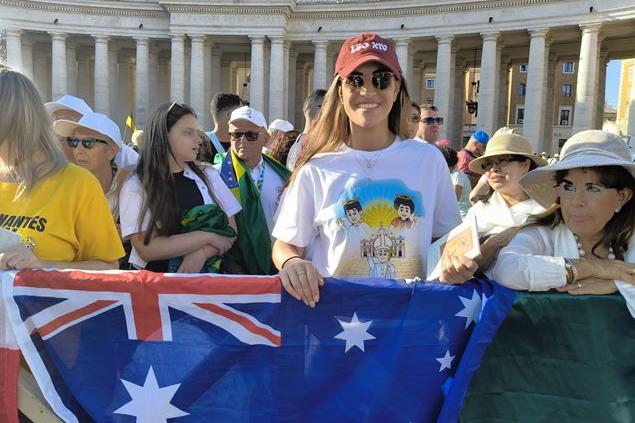
The miracle recognised for the canonisation concerns a priest, Father Juan Manuel Gutiérrez: a complete rupture of the Achilles tendon diagnosed on 31 October 2017 was found to be healed on 15 November, after a novena to Frassati.[2] The canonisation had been announced for the Jubilee of Youth in the summer of 2025.[6] It was finally celebrated on 7 September 2025 in St Peter's Square, together with that of Carlo Acutis, presided over by Leo XIV.[7] About a hundred thousand faithful were in the square; from Turin came just under a thousand pilgrims with Archbishop Roberto Repole, head of the Archdiocese of Turin, who concelebrated.[5] His liturgical memorial falls on 4 July, the anniversary of his death.[2]
Pages linking here
- Archdiocese of Turin
- Azione Cattolica Diocesana di Torino
- Biella
- Giovanni Giolitti
- La Stampa
- Pier Giorgio Frassati Trail on Monte San Giorgio in Piossasco (2026)
- Piossasco
- Politecnico di Torino
- Turin Cathedral
Related articles: Biella, Giovanni Agnelli (1866–1945), Giovanni Giolitti, La Stampa, Politecnico di Torino
Sources
- Treccani
- Dicastero delle Cause dei Santi
- Famiglia Cristiana — 4 July 2015
- Treccani
- Famiglia Cristiana — 7 September 2025
- Azione Cattolica Italiana
- Santa Sede — 7 September 2025
- Associazione Pier Giorgio Frassati
- Famiglia Cristiana — 11 June 2013
- Famiglia Cristiana — 22 July 2016