Guido Gozzano
Turin poet (1883-1916), the foremost of the Crepuscolari: author of La via del rifugio and I colloqui, an ironic chronicler of the bourgeoisie and of the Canavese.
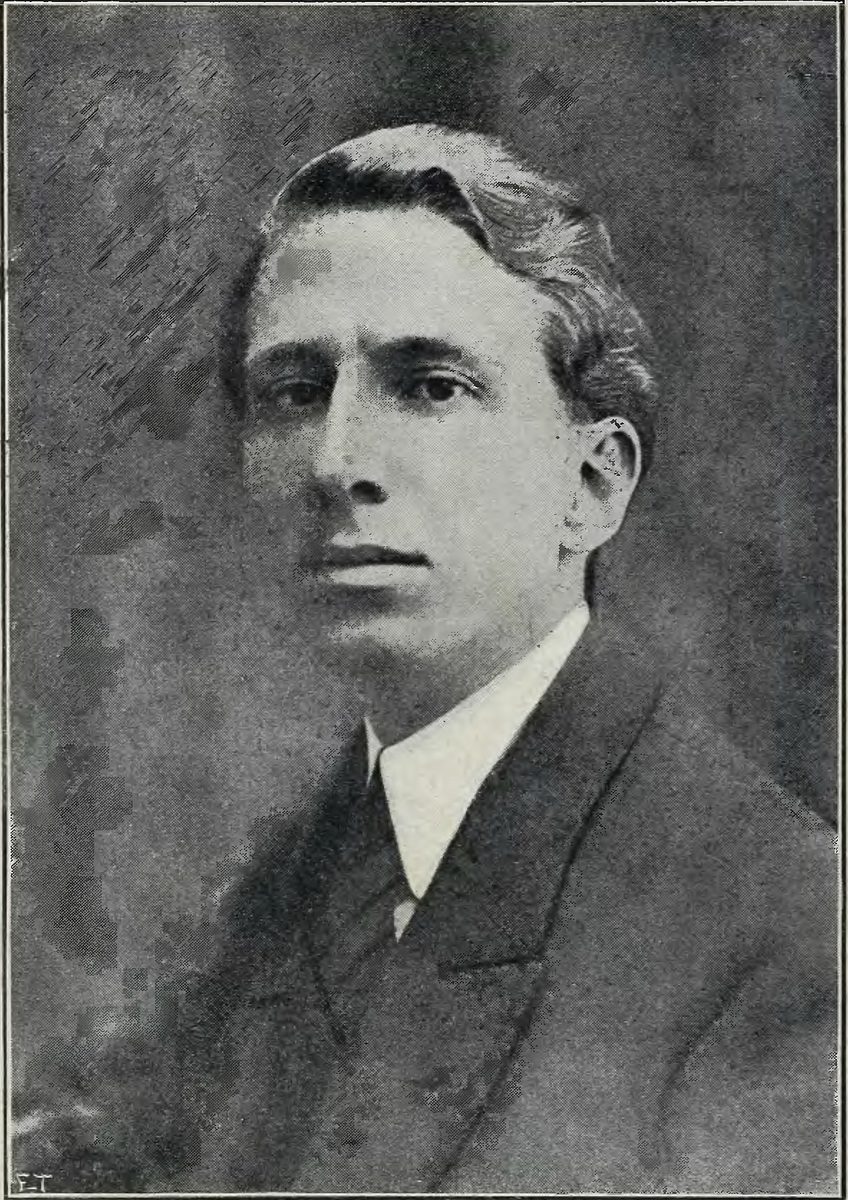
Guido Gozzano (Turin, 19 December 1883 – Turin, 9 August 1916) was a poet and prose writer, regarded as the foremost of the Crepuscolari: with La via del rifugio (1907) and I colloqui (1911) he brought to Italian poetry the tone of spoken language, irony and the small things of bourgeois life, in open contrast with the rhetoric of D'Annunzio[1][2]. Born and dying in Turin, he divided his short life between the city's salons and cafés, his family's villas in the Canavese, and the stays imposed by his tuberculosis treatment[1].
Family and education
His parents came from Agliè: his father Fausto (1839-1900) was an engineer, his mother Diodata Mautino was the daughter of senator Massimo Mautino[1]. His father worked on the railway between Turin and the Canavese valleys, and his grandfather Carlo had been a doctor in the Crimean War[3]. In Turin the family lived at via Bertolotti 2, where Guido was born the fourth of five children[3]. In Agliè the Gozzano family owned three houses: villa Amarena, casa Mautino next to the Castello di Agliè, and villa Il Meleto, the house that provides the backdrop to his youthful Primavere romantiche[1].
He attended elementary school at the Moncenisio school, the same one described in Cuore by Edmondo De Amicis, and then the Cavour gymnasium[1]. After his father's death in 1900, his studies became irregular: he failed at the liceo and obtained his school-leaving diploma in Savigliano in 1903[3]. The following year he enrolled in law at the University of Turin, but his real education came from Arturo Graf's course on Italian literature in the faculty of letters and the «sabatine», the Saturday afternoon lectures open to the public[1]. He never obtained his law degree and left his studies in 1908[3][4].
The Turin of cafés and salons
In the early twentieth century Gozzano was a recognisable figure of Turin's literary life. Mario Vugliano remembered him as «bowing, ceremonious, shy, a fair-haired young man polished from his hair to his shoes», wearing a black bow tie[1]. His first verses appeared in 1903 in the periodical Il Venerdì della Contessa; with friends he frequented the Caffè Molinari on via Santa Teresa, and tradition links the poem Le golose to the ladies who crowded the Caffè Baratti in piazza Castello[3]. His name also appears among the illustrious guests remembered by the Caffè Al Bicerin[5]. He wrote prose pieces and short stories for La Stampa, the Gazzetta del Popolo and Il Momento[1].
In the summer of 1907 he was involved with the Turin poet Amalia Guglielminetti, whom he had met only recently: the relationship lasted until the spring of 1908 and later turned into a friendship that made the former lover a «sister»[1][4]. According to Mole24 the two had already met in 1906[3].
The collections and Crepuscolarismo
La via del rifugio, published in 1907 with around thirty poems, revealed the poet's originality[3][4]. I colloqui (1911), divided into three sections («Il giovenile errore», «Alle soglie», «Il reduce»), contains La signorina Felicita, set in the Canavese, and was favourably reviewed by Emilio Cecchi in the Tribuna[1]. Critics recognise in it the cadence of spoken language grafted onto traditional metre, and an ambiguous relationship with D'Annunzio: a distaste for grandiloquent formulas coexists with an identification with the model of the dandy man of letters[2]. He said so himself, with self-deprecating irony, in the verses of L'altro:
«Invece di farmi gozzano / Un po' scimunito, ma greggio, / Farmi gabrieldannunziano: / Sarebbe stato ben peggio!»
Alongside poetry he worked on a poem about butterflies, the Epistole entomologiche, left unfinished and published posthumously, and he wrote children's fairy tales collected in I tre talismani (1914)[1]. In the song Torino d'altri tempi he looked back with nostalgia on the eighteenth-century city[3].
Illness and the journey to India
The lung condition diagnosed in 1907 marked the rest of his life[3]. There followed stays for treatment at Ceresole Reale, Ronco Canavese, Bertesseno, at Fiéry in the Aosta Valley, and then on the Ligurian riviera, between Genoa, Sturla and Bogliasco[1]. On 16 February 1912 he left for India with his friend Garrone, who was also ill: they stopped at Naples, Port Said and Aden, landed at Bombay on 8 March, and he also visited Kandy, in Ceylon[1]. The prose pieces born of that journey appeared in newspapers between 1914 and 1916 and were collected after his death in Verso la cuna del mondo (1917)[1][4].
Gozzano took an early interest in cinema, which in Turin was living through its golden age: in December 1910 he announced his intention to work with the Ambrosio production company, for which he contributed to the documentary Vita delle farfalle, and in the early months of 1916 he wrote the outline for a film on the life of Saint Francis[1].
Death and legacy
On 16 July 1916 a violent haemoptysis struck him at Sturla; admitted to the Protestant hospital in Genoa, he returned to Turin on 21 July and died on 9 August, attended by his childhood friend Mario Dogliotti, who had become a Benedictine monk under the name Silvestro[1]. He was buried in Agliè[1]. With many friends at the front, the funeral was attended mainly by family members[3]. Two days after his death, Avanti! published an obituary attributed to Antonio Gramsci, according to whom Gozzano had been «the first Italian poet who, sitting down at his desk, did not sound the brass horns of heroic furies and forgot history»[1].
Villa Il Meleto, at via Meleto 23 in Agliè, is today the poet's house, cared for by the Amici di Guido Gozzano[6][3]. In Turin the university preserves his memory through the Centro Studi Guido Gozzano-Cesare Pavese, which has also dedicated its activity to Cesare Pavese: for the centenary of his death, in the autumn of 2016, it organised an international conference titled «L'immagine di me voglio che sia», exhibitions at the Archivio Storico and the Rettorato, a season of silent cinema at the Cinema Romano, and an edition of his correspondence including letters previously scattered and unpublished[7]. His works, from poems to fairy tales and the prose pieces from India, are freely available in the digital editions of Liber Liber[4].
Pages linking here
Related articles: Canavese, Castello di Agliè
Sources
- Treccani - Dizionario Biografico degli Italiani
- Treccani - Enciclopedia
- Mole24 — 26 September 2022
- Liber Liber
- Caffè Al Bicerin
- Comune di Agliè
- TorinoClick — 5 October 2016