Thales Alenia Space
European manufacturer of satellites and crewed modules (Thales 67%, Leonardo 33%); Turin builds the pressurised environments of the ISS, Orion and the Gateway.
Thales Alenia Space is a European manufacturer of satellites, crewed modules and probes, controlled by Thales (67%) and Leonardo (33%): with about 8,000 employees across 14 sites in seven countries, in 2025 it posted consolidated revenues of €2.36 billion[1]. Together with Telespazio it forms the Space Alliance, the partnership between the Italian and French groups created in 2005[2]. For Turin it matters for a specific reason: at the Turin plant, one of the company's four Italian production sites, the pressurised environments in which astronauts live are designed and integrated, alongside scientific satellites and exploration probes[3].
From Spacelab to the Space Station
Turin's tradition in crewed modules goes back to the 1970s, when the city worked on the foundations of Spacelab, the first European pressurised module built for the Space Shuttle's cargo bay. The company tells it this way: "Our journey towards excellence began in the 1970s, in Turin, by working out how best to design the foundations of Spacelab"[4]. According to the same account, 63 of the 135 missions of the American Shuttle carried into orbit hardware developed by its teams[4].
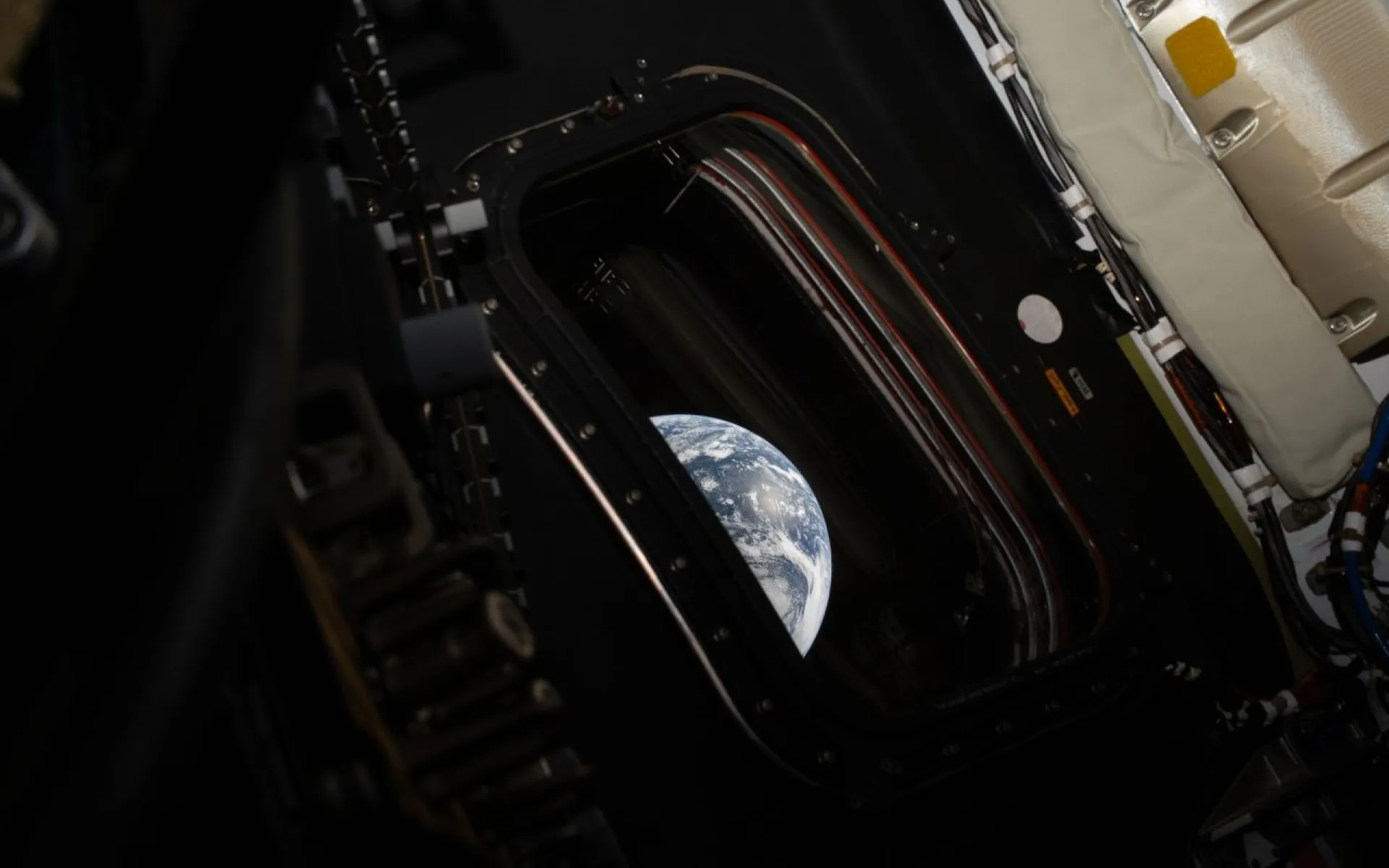
The most visible contribution is to the International Space Station. The elements built include Nodes 2 and 3, three Multi-Purpose Logistics Modules (MPLM), the Permanent Multipurpose Module (PMM), the European laboratory Columbus, the Bishop airlock and the Cupola, the panoramic window that, in the manufacturer's words, "quickly became one of the places most loved by astronauts, a privileged observation point over Earth"[4]. With the launch of the Leonardo logistics module in March 2001, Italy became the third nation, after Russia and the United States, to send an element of the Station into orbit; according to the Italian Space Agency, today more than 40 percent of the ISS's habitable volume is built in Italy[5], while according to the magazine Industria Italiana the Turin site alone contributes more than 50 percent of the pressurised volume[3].
Cargo spacecraft also stem from the MPLM experience. The pressurised section of the ATV, the European automated vehicle that flew five resupply missions between 2008 and 2015, was built by Thales Alenia Space on the basis of the Italian-built logistics module[6]. The same work continues with the pressurised modules of the Cygnus capsules, of which the twenty-fourth and twenty-fifth examples were in preparation in 2026[4].
Living in orbit also means reckoning with rationed water and food. Cesare Lobascio, head of innovation for infrastructure systems, explained it this way:
"What does zero food miles mean for space missions? It means devising a new approach to supplying essential resources, an issue that connects us to the problems of Earth's ecological balance"
According to Lobascio, an astronaut must not consume more than 0.6 kilograms of food and 3.5 litres of water a day, against the roughly 200 litres of water used on average by a person on Earth[3].
Mars and the scientific probes
The second Turin strand is robotic exploration. In August 2010 the ESA extended to Thales Alenia Space Italia, prime contractor of the ExoMars programme, a contract worth €98 million: the company was responsible, among other things, for the descent and landing demonstrator module, the radar altimeter, the analytical laboratory and the rover's integration[7]. In 2026 the structural models of the ExoMars 2028 mission were integrated in Turin and transferred to Cannes for the first tests, with a campaign set to continue in the city with shock tests, separation tests and static structural tests; the Rosalind Franklin rover will carry a drill capable of reaching two metres below the Martian surface, with arrival expected in 2030[8].
The Euclid space telescope also passed through Turin: on 24 March 2022, at the city plant, the service module and the payload module were joined, an operation requiring tolerances of under 50 microns at the connection points[9].
The return to the Moon
In the Artemis programme the company supplies essential subsystems for all six European Service Modules (ESM) of the Orion capsule: structure, thermal control and life-support components[10]. The thermal control system with its radiators and the system distributing water, oxygen and nitrogen are designed and built at the Turin plants[11]. In July 2026 Artemis II commander Reid Wiseman and mission specialist Christina Koch came to Turin with a NASA delegation, as part of a European recognition tour, and honoured three employees for their work on the service module[12].
For the lunar station Gateway, Thales Alenia Space builds the primary structure and micrometeoroid protection of the HALO module, in partnership with Northrop Grumman, and is prime contractor for the European I-Hab and ESPRIT modules[13][10]. For ESPRIT, awarded under a €265.5 million contract signed on 7 January 2021, the ESA's then director of human and robotic exploration, David Parker, said: "Development of the Gateway is accelerating thanks to this new contract and to European expertise"[13]. On the lunar surface the company is the main industrial partner of the European Argonaut lander and, on behalf of the Italian Space Agency, develops the MPH multi-purpose habitation module[11].
In Piedmont's aerospace district
The plant sits within a sector that weighs on Piedmont's value added more than the national average: in the Bank of Italy's 2025 report on the regional economy, while the automotive industry was slowing, aerospace was identified as one of the most dynamic and innovation-prone sectors[14]. In the corso Marche area, the Città dell'Aerospazio (Aerospace City) is planned, meant to bring together research, large companies, small firms and laboratories; nearby stands the historic airfield on the border between Turin and Collegno, inaugurated on 10 July 1916: in May 2026 the Politecnico di Torino and the Aero Club Torino signed a new agreement there, and the airstrip could become an operational component of the new hub[15].
Related articles: Aeroporto di Torino-Caselle, Piemonte
Sources
- Thales Alenia Space
- Leonardo
- Industria Italiana
- Thales Alenia Space — 3 April 2026
- Agenzia Spaziale Italiana
- Agenzia Spaziale Italiana
- ESA — 10 August 2010
- Thales Alenia Space — 12 May 2026
- Media INAF — 19 April 2022
- Report Difesa — 24 August 2022
- Thales Alenia Space — 31 March 2026
- Thales Alenia Space — 16 July 2026
- AstronautiNEWS — 10 January 2021
- TorinoFree — 17 June 2026
- Mole24 — 26 August 2026