Massimo Gramellini
Massimo Gramellini is a journalist, writer and television host born in Turin in 1960.[1] For nearly three decades he was one of the leading bylines at La Stampa, where he rose to deputy editor, and for eighteen years he wrote the front-page column «Buongiorno», a few lines published daily. Since 2017 he has been a columnist for Corriere della Sera.[1] His autobiographical book Fai bei sogni, set in Turin between the 1960s and the 1990s, has sold more than a million copies.[2]
From sports to political reporting
Gramellini began his career as a sports journalist, working at Corriere dello Sport in 1985-86 and at Il Giorno from 1986 to 1988.[1] In 1988 he joined La Stampa, his hometown newspaper, where he covered first sport and then politics. During the Mani Pulite years he reported on the Milan investigation, and in 1993 he was sent as a correspondent to Sarajevo during the siege of the Bosnian capital.[1] These very experiences — the sports desk, the war reporting, the publication of his first novel — would later become the subject matter of his best-known book.[2]
In 1998 he took over the editorship of Specchio, the paper's weekly supplement; eight years later, in 2006, he became deputy editor of La Stampa.[1]
The «Buongiorno» column
The column that defined him for nearly two decades was born, according to Gramellini himself, from an idea inspired by Michele Serra's short columns, which the then editor Marcello Sorgi decided to put into the paper. The agreement was struck over a meal, in the heart of the city:[3]
«Then there was the great courage of Marcello Sorgi, the editor at the time, to actually do it: the Buongiorno took shape in Piazza San Carlo during a lunch with him.»
The lunch took place in Piazza San Carlo. Gramellini has described the «Buongiorno» as something different from an editorial, capable of picking up a story overlooked by others or a marginal angle on the main news, and he summed up its technical difficulty thus: «Twenty lines are easy to read but hard to write».[3]
In November 2015, when the editorship of La Stampa passed to Maurizio Molinari, Gramellini — long seen as the likely successor to Mario Calabresi at the helm of the paper — was appointed creative director of Itedi, the publishing company behind La Stampa and Il Secolo XIX. Chairman John Elkann explained the choice by saying that «Massimo Gramellini's talent and unique personality will be able to find even broader outlets for expression».[4]
The move to Corriere della Sera
In December 2016 news emerged that Gramellini would be leaving La Stampa for Corriere della Sera: the offer came from Urbano Cairo, the new publisher of the Milan-based daily, and included a new daily column, «Il Caffè», modelled on the «Buongiorno», as well as the offer of a programme on La7, the broadcaster belonging to the same group.[5]
Gramellini's last «Buongiorno» appeared on 21 January 2017;[6] from the following Monday, 23 January, the column passed to Mattia Feltri. Gramellini left the Turin newspaper after twenty-eight years, eighteen of which he had spent writing the «Buongiorno».[3] The impact of his departure also showed up in the numbers: La Stampa, presenting its data at a meeting for journalists on Facebook, reported a marked drop in traffic from the social network in the following February, which was later recovered by the column's new author with a different approach.[6] At Corriere, Gramellini has worked as a columnist ever since.[1]
Fai bei sogni and Bellocchio's film
Published by Longanesi in 2012, Fai bei sogni is the autobiographical account of how the author coped with his mother's death, which occurred when he was nine years old. The book, divided into seven parts each titled after its opening sentence, has sold more than a million copies.[2] According to the publisher it has gone through more than thirty-five editions and stayed on bestseller lists for a hundred weeks.[7]
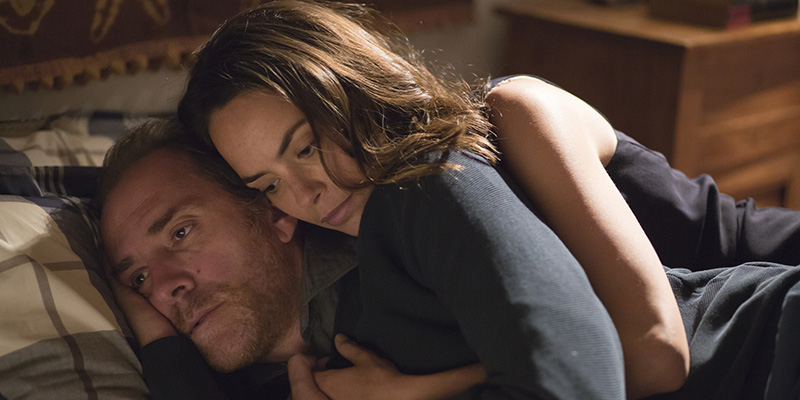
In 2016 Marco Bellocchio adapted it into a film, written with Valia Santella and Edoardo Albinati, starring Valerio Mastandrea as the adult Gramellini and featuring Bérénice Bejo; released in cinemas on 10 November 2016, it had previously been presented at the Cannes Film Festival.[2] The film opened the Quinzaine des Réalisateurs; the story unfolds in Turin across two time periods, the late 1960s and the late 1990s, and critics read into it a portrait of a conformist Italy, more inclined to hide uncomfortable truths than to confront them.[8] Of his adaptation, the director said: «I portrayed his story fairly faithfully, but in my own way».[2]
Other books and television work
Gramellini's bibliography includes, among others, Granata da legare (2006), Cuori allo specchio (2008), La patria, bene o male (2010, with Carlo Fruttero), L'ultima riga delle favole (2010), La magia di un Buongiorno (2014), a collection of his column, Avrò cura di te (2014, with Chiara Gamberale), Prima che tu venga al mondo (2019), C'era una volta adesso (2020) and L'amore è il perché (2025).[1] In addition to «Il Caffè», he writes the column «7 di cuori» for the weekly magazine 7.[7]
On television he hosted Le parole della settimana and later Le Parole from 2016 to 2023, and Cyrano in 2018; since 2023 he has presented the talk show In altre parole on La7.[1]